
Wamkelekile, Welkom
Tracking adherence to fair work principles
07 June 2019 | Story Helen Swingler. Photo Rawpixel.com. Read time 5 min.
Two months after launching the first-ever international ranking of working conditions and standards in the platform economy, Fairwork has released four new ratings for South African digital labour platforms.
Fairwork is a collaboration between the University of Cape Town (UCT) and the University of the Western Cape (UWC) in South Africa, and the universities of Oxford and Manchester in the UK.
The rating system offers a comparison of the best and worst working standards in the digital or gig economy. The platforms evaluated in the newest survey were Wumdrop, Domestly, Uber Eats and Nomad Now.
As part of a 30-month project funded by the Global Challenge Research Fund, UCT’s Professor Jean-Paul van Belle and Dr Paul Mungai (Department of Information Systems) measured digital labour platforms’ levels of adherence to five Fairwork principles: fair pay, fair contracts, fair conditions, fair management and fair representation.
These include evaluating whether a company pays the minimum wage and ensures the health and safety of its workers.
“By comparing platforms in similar sectors, the Fairwork ratings can serve to set best practices in each sector.”
Ratings a useful measure
Fairwork scores are useful to companies that want to highlight how the jobs they create are better than those of their competitors. They are also useful to regulators who seek benchmarks against which to evaluate platforms.
“They are useful to consumers and clients who seek to make more informed decisions about how they spend their money,” added Van Belle.
“And they are also useful to workers as they seek to achieve better working conditions.”
The ratings help consumers to make ethical and informed choices about the platforms they choose when ordering commodities and services such as food, cleaning services and transport – or outsourcing a simple task.
Oxford’s Professor Mark Graham, lead researcher on the Fairwork project, said the addition of these new platforms will allow a greater comparison among companies with similar missions.
“This is critical in the development of international standards in the gig economy, as workers, clients and managers will now be able to draw direct comparisons between competing platforms,” he said.
Van Belle, the lead South African researcher, said that the first-year ratings, released on 21 March, had already highlighted both discrepancies and best practices between firms in India and South Africa.
“By comparing platforms in similar sectors, the Fairwork ratings can serve to set best practices in each sector.”
Three new ratings
Three such comparisons are now possible.
First, in domestic cleaning services, Fairwork has rated both Domestly and SweepSouth. While both platforms were awarded points for fair pay, management and contracts, SweepSouth was able to show that it had actively improved working conditions by providing work-related insurance as well as the facilitation of worker voice mechanisms on the platform.
“SweepSouth was able to show that it had actively improved working conditions by providing work-related insurance as well as the facilitation of worker voice mechanisms on the platform.”
The second compares WumDrop and Picup, both involved in the delivery sector. The latter was able to demonstrate that it not only paid workers the minimum wage, but that pay on the platform also included costs incurred by drivers on the job.
It also provided evidence of a clear and accessible employee contract, as well as clearly signposted and minimal data collection. The latter refers to the data the platforms collect from their workers and whether workers are aware of this and have given consent.
The third survey compared Nomad Now and NoSweat, which achieved high scores of seven and eight out of 10 – the highest Fairwork ratings in South Africa. The platforms, which provide freelance work, fulfilled most Fairwork standards but struggled to demonstrate mechanisms through which they recognised worker voice, said Van Belle.
Workers said they felt their contracts did not always accurately reflect the nature of their work. However, NoSweat was able to provide evidence for its health and safety checks mechanism.
It is important to note that platforms are only given a score when they can satisfactorily demonstrate their implementation of the principles.
“Fairwork aims to encourage platforms to be transparent about the work that they provide and to ultimately create better, and fairer, jobs,” said Van Belle.
 This work is licensed under a Creative Commons Attribution-NoDerivatives 4.0 International License.
Please view the republishing articles page for more information.





New Generation of Academics Programme (nGAP)
UCT has responded energetically to the New Generation of Academics Programme (nGAP), an opportunity provided by the Department of Higher Education (DHET) to build a new generation of black South African academics. The DHET’s 2015 vision document, “Staffing South Africa’s Universities Framework: A comprehensive, transformative approach to developing future generations of academics and building staff capacity”, proposes a suite of initiatives to address the challenge, with nGAP being the major instrument to increase the numbers of black South African academics.
The programme “involves the recruitment of highly capable scholars as new academics, against carefully designed and balanced equity considerations and in light of the disciplinary areas of greatest need”. The nGAP scholars are appointed into permanent positions where from the outset their conditions are customised to ensure their successful induction into the ranks of established academics.
The DHET provides funding over a six-year period to support the appointment of an nGAP lecturer, and their time is protected to provide the best possible opportunity for the completion of a doctorate degree in the shortest possible time. Once the degree is completed, the nGAP lecturer’s teaching commitments are steadily increased until they shoulder a full teaching load.
Since the first advertisement for nGAP posts in 2015, UCT has been awarded 17 nGAP positions: 5 (Phase 1), 4 (Phase 2), 3 (Phase 3) and 5 (Phase 4). These are distributed across all faculties.
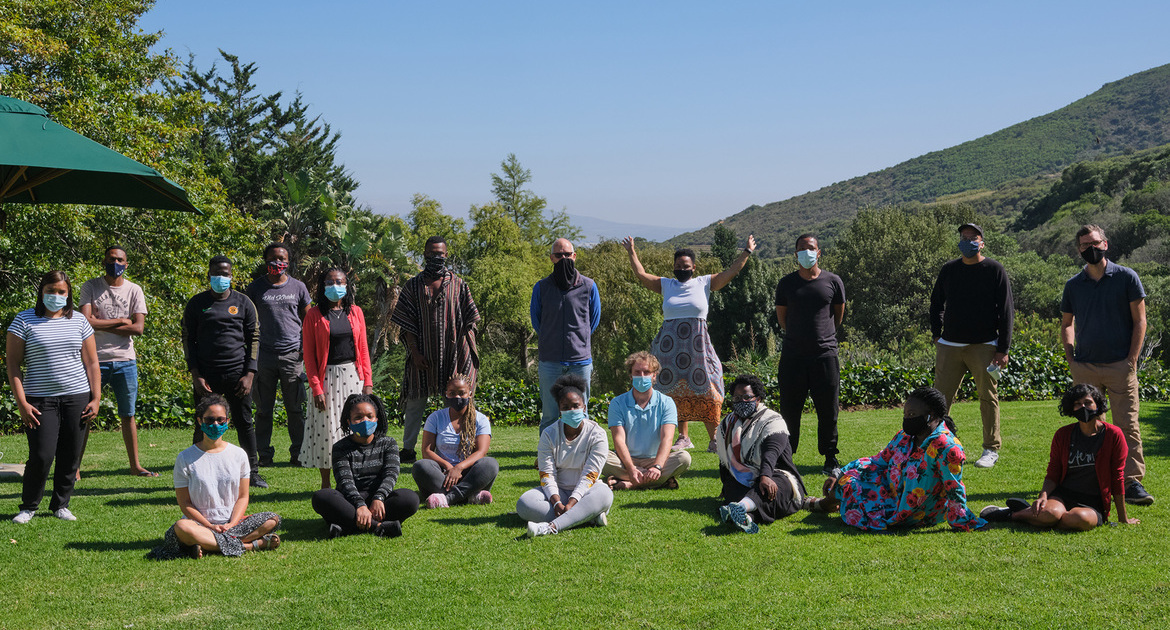
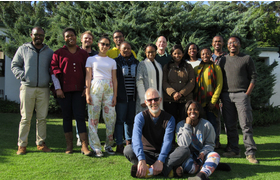
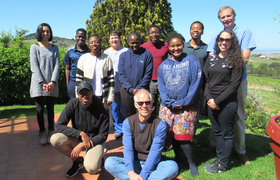
UCT’s nGAP scholars operate as a single cohort, managed and coordinated by Dr Robert Morrell. Lecturers meet for quarterly meetings, writing retreats and various capacity-building activities all designed to support the completion of postgraduate qualifications (particularly doctorates) and to develop records of achievement that will testify to their emergence as self-standing, excellent academics. Each lecturer is mentored by a senior scholar, who provides support and guidance on the challenges that routinely face academics.
The nGAP manager sets great store in building the cohesion of the cohort and encouraging the establishment of new UCT networks while producing a collaborative, mutually supportive and embracing work culture.
According to Dr Morrell, “This group of academics will lead UCT in 15 to 20 years’ time ... Their vision of excellence, of being African and South African, of serving a wider community and producing knowledge for the planet, the continent and the country, will power UCT in years to come.”
Newsletters
In the news