
Wamkelekile, Welkom
Innocent Francis simultaneously completes PhD, subspeciality training in gastroenterology
30 March 2026 | Story Niémah Davids. Photo Supplied. Read time 8 min..png)
At the age of seven, Innocent Francis scribbled his career dream on a wall in his parents’ house. The one-liner read: one day, I will be a doctor. A few years later he made a nameplate for his bedroom door, which boldly read: Dr Innocent Francis. His dream carried meaning and he was determined to fulfil it.
Innocent held on firmly to that dream, especially as he ploughed the fields on his family’s farm in Bayelsa State, Nigeria, while still at school. His dream of becoming a doctor held the promise of a better life. But life dealt him a heavy hand. His parents passed away, and with his older brother, Daminola Amakiri, on a fully funded scholarship studying medicine in Bulgaria, he was left in the care of his uncle. There was no money for university. After completing school, Innocent was actively engaged in farming. And for every year he worked, his dream of studying slipped further and further away.
“When I finished school, I dreamed of furthering my education.”
“My uncle funded my secondary school fees, and to meet the family’s needs we engaged in farming. Initially, we practised mixed farming – rice, potatoes, plantain. Later, we concentrated only on rice,” Innocent said. “I learned to juggle between school and farming. When I finished school, I dreamed of furthering my education. But that wasn’t possible. I worked on the farm for seven years.”
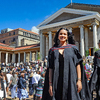
Innocent’s story is one of fortitude, perseverance and strength in character. And as he prepares to graduate with his PhD in medicine from the University of Cape Town (UCT) on Tuesday, 31 March, his advice to anyone, especially those going through adversity, is simple: don’t lose sight of your dreams.
When a dream becomes reality
After almost a decade of working on the farm, Innocent gave up on studying medicine completely. And while be believed that education held the key to a better life, he decided that if an opportunity to pursue tertiary studies came knocking, he would opt for a degree in computer science instead.
When Daminola returned to Nigeria as a qualified medical doctor, Innocent listened attentively to his stories about his studies abroad and his commitment to saving lives. This is exactly what it took to reignite his dream of becoming a doctor. His brother committed to financially supporting him. And to make up for the years he missed, Innocent enrolled for an advanced level programme in chemistry, physics and biology. Following successful completion, he was accepted to complete his undergraduate degree in medicine at the University of Jos in Nigeria.
“This was a dream come true for me. I was so grateful to my brother who made it possible on his intern salary. That was not easy,” Innocent said.
Burning the midnight oil
The next few years at university were challenging. His academic programme was rigorous and took a toll on his mental health. But Innocent was determined to make his brother proud. To maintain good grades, he spent late nights studying on campus and would often nod off in the lecture theatre and spend the night there.
“I was trying to avoid being a burden on the family members I was living with. So, I decided to maximise this time to benefit my studies. That meant studying late into the night and taking short naps in between. In the morning, I’d shower at my friend’s house and go back to class for the day. This continued for the duration of my studies,” Innocent said.
“I needed to catch up on the years I wasted at home. It felt like I was behind. My nose was always in my books. Studying and making a success of the opportunity afforded to me was everything. It was up to me to do well.”
Hard work pays off
As they say, with effort comes reward. Innocent passed his degree with flying colours and qualified as a doctor in July 2006 – making a lifelong dream a reality. By then, the academic bug bit hard. Innocent was committed to seeking knowledge and professional growth. So, he enrolled for a postgraduate diploma in medicine at UCT and made the long journey to Cape Town to start his academic programme, which he completed in 2016. The following year he completed his master’s in medicine and in 2019 he became a Fellow of the College of Physicians. He didn’t stop there. He tackled his PhD and subspeciality training in gastroenterology (simultaneously) next.
“You need to keep going no matter what.”
“This [PhD and subspeciality training] was indeed a challenging task. Balancing the load between my clinical duties and research was hard and required many sacrifices. Sometimes, my clinical work temporarily suffered, even though I did this intentionally to keep up with my deadlines,” he said.
“What’s hard is that during times like these, when you are forced to make tough decisions, people judge you and that breaks your spirit. But you need to keep going no matter what.”
Innocent’s dissertation is titled: “Clinical and environmental risk factors of Helicobacter pylori (H. pylori), gastric cancer, and the gastric microbiome signatures in a South African cohort”. His research was designed to unravel the “so called African enigma”, which seeks to understand the contrast between the high incidence of H. pylori – a spiral shaped bacterium that infects the stomach lining, causing chronic inflammation, ulcers and a significantly higher risk of stomach cancer, versus the reported low incidence of gastric cancer on the African continent. He said his research findings indicate that a dearth of studies focusing on gastric cancer exist among African nations. This, he said, highlights the need for a well-coordinated registry across regions on the continent. And according to data from the World Health Organization, his research in fact revealed low incidence of gastric cancer on the continent.
Reaching the finish line
Now that he is finally at the finish line, Innocent is beaming with pride. But reaching this point would’ve been impossible without the support of his supervisors, Professor Mashiko Setshedi, the chair and head of UCT’s Department of Medicine; and Professor Adrian Brink of the Division of Medical Microbiology. Professor Setshedi’s and Professor Brink’s encouragement and motivation carried him through “tough moments” during his PhD. Other academic collaborators in the Division of Gastroenterology also helped him navigate bumps in the road – and there have been many. At home, his wife, Umavie Ruth, was his “backbone”. Giving up was not an option. And as a devout Christian, Innocent said, his faith was his anchor.
As he takes stock of the last few years and prepares for this new phase of his life, Innocent said he looks forward to continuing his research in unison with his clinical practice and supporting students during their research endeavours.
“Giving back is important. I’m here because my brother didn’t’ give up on me. I intend to always pay it forward in whichever way I can. After all, we all need a chance in life,” Innocent said.
Here’s to your new beginning and growing your crop, Dr Francis!
Innocent Francis extends his heartfelt gratitude to the South African Medical Research Council for the Clinician Scientist Scholarship; the Gastroenterology Foundation of South Africa for the Solly Marks Scholarship Award and the Abbot Scholarship; the Harry Crossley Foundation for the Harry Crossley Foundation Scholarship; and to UCT’s Department of Medicine for Department of Medicine and Groote Schuur Hospital Award.
 This work is licensed under a Creative Commons Attribution-NoDerivatives 4.0 International License.
Please view the republishing articles page for more information.