
Wamkelekile, Welkom
Student entrepreneurs scoop R80 000
10 May 2019 | Story Carla Bernardo. Photos Je’nine May. Read time 5 min.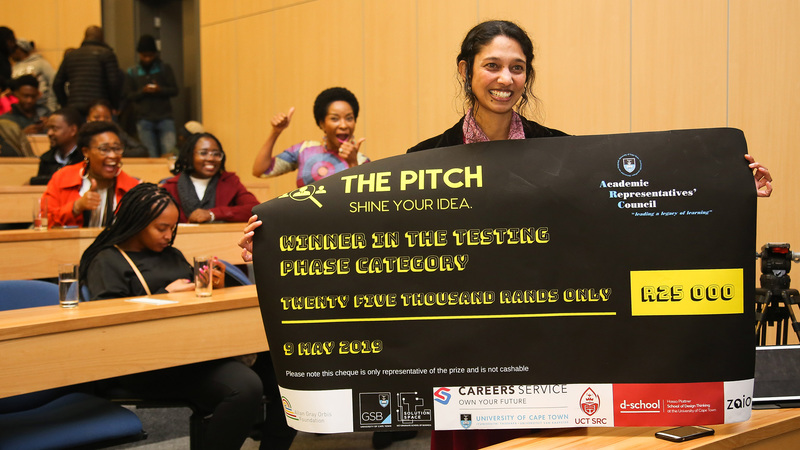
Three students with a passion for universal access to quality healthcare, and one with first-hand knowledge of struggling with ultra-sensitive skin, were crowned the University of Cape Town’s (UCT) top entrepreneurial minds at The Pitch finals on Thursday night.
The competition is an event run by the Academic Representativesʼ Council that gives students the chance to pitch their business or business idea and stand a chance of winning a monetary and mentorship prize.
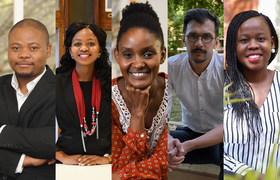
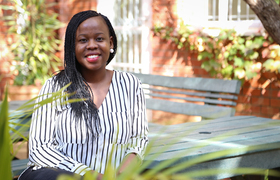
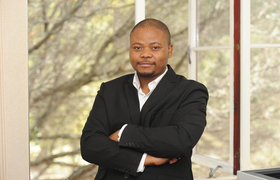
4IR Mobile Clinic – the brainchild of Tlotliso Jonas, Namhla Juqu and Evans Tjabadi – took first prize in the Ideation category at the finals held at UCT on 9 May. Top honours in the Testing category went to Jasantha Singh for her product Aurora Rose.
The 4IR Mobile Clinic team identified poor access to healthcare facilities and lack of personalised medical consultations as a major problem in South Africa. Their winning idea is to address the challenge with a convenient, digitalised mobile clinic.
The mobile clinic is divided into sections. The first is where machines conduct vital-signs checks, such as pulse rate and blood pressure. The data is sent to the doctor in the second section, the examination area. The doctor uploads a prescription to the patient’s smart card and at the final set of machines, the patient retrieves their medication from a self-help dispensary.
Winning product
Singh’s winning product was created out of her own frustration with the use of products too harsh for her ultra-sensitive skin. The cosmetic formulation scientist tried all the so-called natural products and visited numerous dermatologists before coming up with her own unfragranced Castile soap, which is now on sale. Singh is a cosmetic formulation science student in the Hair and Skin Laboratory, Division of Dermatology.
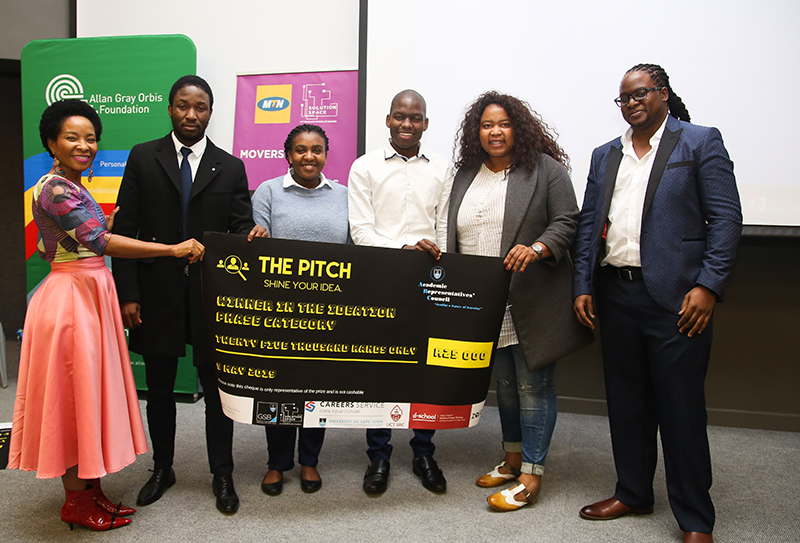
As winners in their categories, both 4IR and Aurora Rose won R25 000 as well as a six-month mentorship from the Allan Gray Orbis Foundation (AGOF).
Second prize in the Ideation category went to MyDoc mobile app and in the Testing category to Botlhale AI. The former aims to address healthcare access in Zimbabwe and the latter uses artificial intelligence in surveillance. Both won R15 000.
“Our view is that every student who graduates out of UCT should have an entrepreneurial mindset.”
The Pitch, UCT’s own version of the hit TV shows Shark Tank and Dragon’s Den which feature aspiring entrepreneurs pitching their service or product to a panel of potential investors, is run by the Academic Representatives’ Council and the Office of the Vice-Chancellor, in partnership with the AGOF.
Entrants received design-thinking training from the Hasso Plattner School of Design Thinking (d-school) and AGOF taught the finalists how to deliver the perfect pitch.
To be eligible, entrants had to be enrolled at UCT and have an idea that was in either the idea or testing phase.
In the “Dragon’s Den”
There were over 150 applications, eventually whittled down to the eight finalists who pitched their ideas and products to the judges this week.
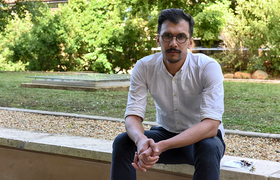
Deciding their fates were founder and managing director at AM Group Anda Maqanda, founder at 3DIMO Nneile Nkholise, co-founder of Cheri Yase Kasi Sunshine Shibambo, founder of Digest and Prospa Dhanyal Davidson, and Dragonʼs Den judge and entrepreneur Lebo Gunguluza.
Cheering them on in the “den” with the finalists and judges were fellow students, Vice-Chancellor Professor Mamokgethi Phakeng, Deputy Vice-Chancellor Professor Loretta Feris, former vice-chancellor Professor Njabulo Ndebele and current AGOF chief executive Professor Yogevelli Nambiar.
Phakeng, who presented the winners and runners-up with their prizes, said the Office of the Vice-Chancellor supports initiatives like The Pitch because “entrepreneurship can reduce graduate unemployment to zero”.
“Our view is that every student who graduates out of UCT should have an entrepreneurial mindset.”
Addressing all the finalists, she said: “Win or not, it’s the journey that matters. Even if you don’t win the prize today, you have won greatly in the lessons and the workshops that were run in the last few weeks.”
 This work is licensed under a Creative Commons Attribution-NoDerivatives 4.0 International License.
Please view the republishing articles page for more information.


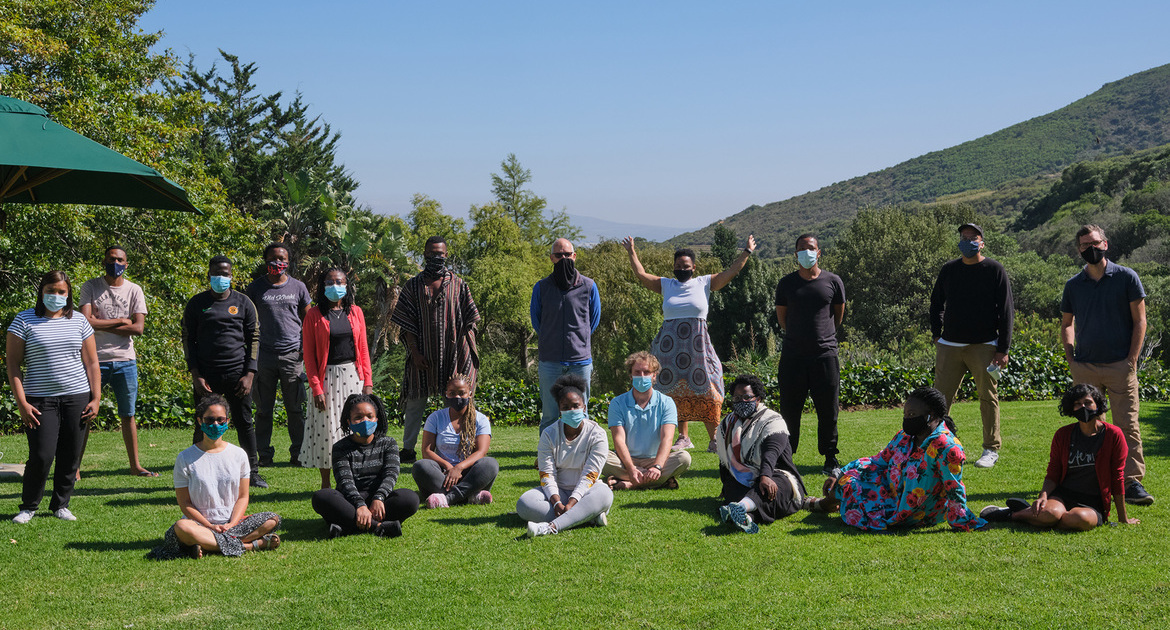
New Generation of Academics Programme (nGAP)
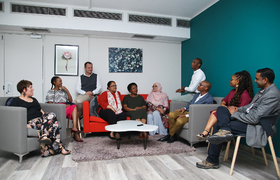
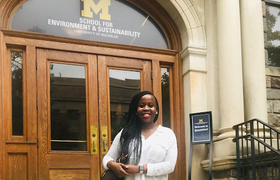
UCT has responded energetically to the New Generation of Academics Programme (nGAP), an opportunity provided by the Department of Higher Education (DHET) to build a new generation of black South African academics. The DHET’s 2015 vision document, “Staffing South Africa’s Universities Framework: A comprehensive, transformative approach to developing future generations of academics and building staff capacity”, proposes a suite of initiatives to address the challenge, with nGAP being the major instrument to increase the numbers of black South African academics.
The programme “involves the recruitment of highly capable scholars as new academics, against carefully designed and balanced equity considerations and in light of the disciplinary areas of greatest need”. The nGAP scholars are appointed into permanent positions where from the outset their conditions are customised to ensure their successful induction into the ranks of established academics.
The DHET provides funding over a six-year period to support the appointment of an nGAP lecturer, and their time is protected to provide the best possible opportunity for the completion of a doctorate degree in the shortest possible time. Once the degree is completed, the nGAP lecturer’s teaching commitments are steadily increased until they shoulder a full teaching load.
Since the first advertisement for nGAP posts in 2015, UCT has been awarded 17 nGAP positions: 5 (Phase 1), 4 (Phase 2), 3 (Phase 3) and 5 (Phase 4). These are distributed across all faculties.
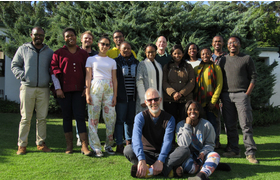
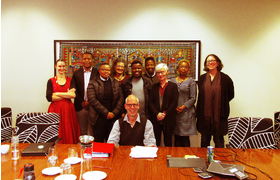
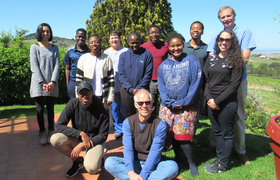
UCT’s nGAP scholars operate as a single cohort, managed and coordinated by Dr Robert Morrell. Lecturers meet for quarterly meetings, writing retreats and various capacity-building activities all designed to support the completion of postgraduate qualifications (particularly doctorates) and to develop records of achievement that will testify to their emergence as self-standing, excellent academics. Each lecturer is mentored by a senior scholar, who provides support and guidance on the challenges that routinely face academics.
The nGAP manager sets great store in building the cohesion of the cohort and encouraging the establishment of new UCT networks while producing a collaborative, mutually supportive and embracing work culture.
According to Dr Morrell, “This group of academics will lead UCT in 15 to 20 years’ time ... Their vision of excellence, of being African and South African, of serving a wider community and producing knowledge for the planet, the continent and the country, will power UCT in years to come.”
Newsletters
In the news