
Wamkelekile, Welkom
On-campus sport and recreation activities benefit students with disabilities
10 February 2026 | Story Niémah Davids. Photo Ruairi Abrahams. Read time 5 min.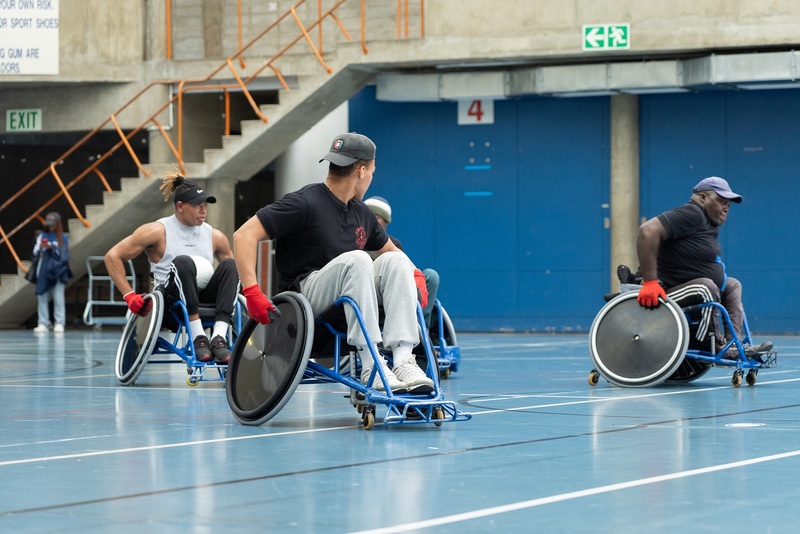
Students with disabilities must have access to sport and recreational activities to foster social inclusion and nurture a sense of belonging at university.
This is according to Dr Muya Koloko, a postdoctoral research fellow in the University of Cape Town’s (UCT) Division of Disability Studies in the Department of Health and Rehabilitation Sciences. Dr Koloko’s research focuses on how sport and recreational activity influence the well-being of students with disabilities at tertiary institutions.
“This topic is understudied, particularly in the Global South, and obtaining this kind of data is an important step towards trying to influence policies and practices so that students with disabilities have equitable access to sporting opportunities while pursuing their degrees,” he said.
Building resilience, social inclusion
Koloko said past research demonstrates that students with disabilities often struggle to adapt to university life and the demands that accompany their academic programmes. This, he explained, is attributed to a range of social factors, which also affects their mental health.
But participating in sport and other recreational activities can change this. It helps build resilience, social inclusion, and in turn builds community and creates a welcoming environment, which contributes to academic success.
“Studies show students use sport and recreational activities to connect with their peers and their institutions.”
“Studies show students use sport and recreational activities to connect with their peers and their institutions. It helps to foster a sense of belonging. This applies to students with disabilities too, who sometimes struggle to settle into a huge academic environment and battle with feelings of isolation and alienation,” Koloko said.
Changing perceptions
According to Koloko, sport also plays a role with changing how students who don’t have disabilities perceive students with disabilities.
“There’s a perception that sport and disability are opposite but it’s not – and participating in sport counters that. It also assists students who don’t have disabilities to understand various disabilities better and develop a more positive attitude about disabilities in general,” he said.
In his research, Koloko said students indicated that through participating in sport, they felt welcome at university and were able to establish meaningful relationships with their peers. Interestingly, he noted, some students indicated that the social engagement that went with participating in sport was more important than the sporting activity itself.
Providing on-campus opportunities
Over the years, Koloko said, UCT has come a long way with providing equal sporting opportunities to students with disabilities. He said establishing the ParaSport Club has been one of the first steps in the right direction. What’s needed now, he added, is to get more students involved with the club at both a sporting and administrative level. In addition, finding ways to increase the number of student participants both with and without disabilities is essential to grow parasport on campus.
Further, collaborating with other institutions to develop parasport on a much broader level is needed too. To date, UCT has done a “very good job” with partnering with universities in the Western Cape, as well as sporting organisations to get this right. But there’s still work to be done.
“We need to be strong willed to make the changes that will ensure equal opportunities for all.”
As he immerses himself further in this research, Koloko said one of his long-term goals is to ensure sporting opportunities are tied to the academic project, so that everything is evidenced-based. This will help to measure the impact sport has on students’ academic success.
“Everyone has a role to play to ensure equitable access to sport and recreation for students with disabilities – from our sports clubs to our residences and every other entity within the university system. We need to be strong willed to make the changes that will ensure equal opportunities for all,” he concluded.
The next step in Koloko’s research involves conducting an online survey that highlights students’ attitudes towards students with disabilities and their participation in sport and recreational activities on campus. He’ll also be conducting focus group discussions and a photovoice project with students with disabilities, who participate in on-campus sport, to get their take.
 This work is licensed under a Creative Commons Attribution-NoDerivatives 4.0 International License.
Please view the republishing articles page for more information.