
Wamkelekile, Welkom
‘The queue hasn’t moved’
02 March 2026 | Story Nomfundo Xolo. Photos Lerato Maduna. Voice Cwenga Koyana. Read time 9 min.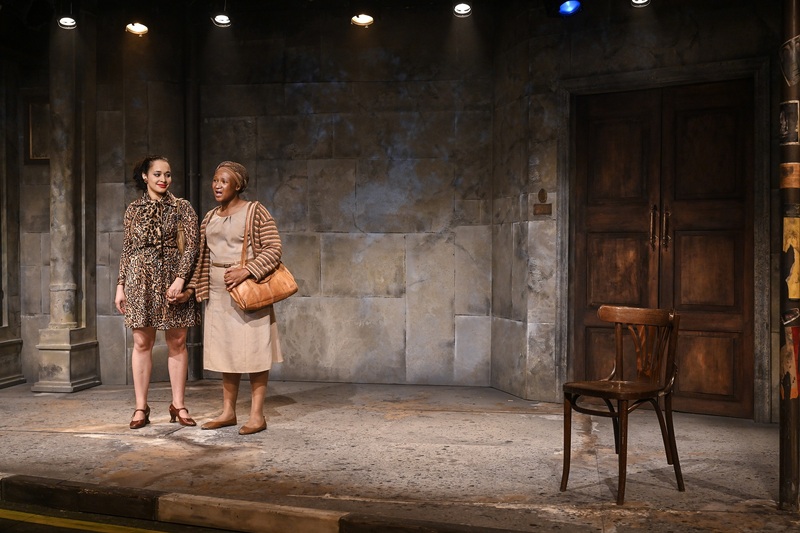
There is a chair. It travels everywhere with The Lady, who carries it the way she carries everything: with performance, with defiance, with the stubborn insistence that she is not like the others waiting on this pavement. When she finally sets it down outside a government food warehouse somewhere in Maseru, Lesotho, she has already been waiting for four days…
Beside her, The Woman – weary, sharp-tongued in her own quieter way – has no chair. She has only her wits and the particular exhaustion of someone who has spent a lifetime cleaning other people’s homes and asking for nothing. Both of them are waiting for rice. Subsidised, state-issued, technically available rice, locked behind a door that opens only when the bureaucrats inside decide it should.
This is the image at the centre of Zakes Mda’s And the Girls in their Sunday Dresses, written in 1988 and now receiving a charged new production at The Baxter Theatre under the direction of Mdu Kweyama, a movement lecturer in the University of Cape Town’s (UCT) Centre for Theatre, Dance and Performance Studies; and artistic director of The Baxter’s Zabalaza Theatre Festival. It runs until 7 March.
The queue that barely moved
“Working on this play made me confront how little today’s reality has changed. SASSA [South African Social Security Agency] recipients sleep on pavements for days just to be first in line, because if you’re not at the front, you might not be served. That’s not theatre. That’s reality,” Kweyama noted.
He is not wrong. News reports have ongoingly revealed that at SASSA offices across the country, beneficiaries leave home before 04:00 and still find themselves at the back of the line. People rent camping chairs and bring blankets. Community workers sleep in queues overnight to hold spots for elderly and disabled grant recipients who cannot do it themselves. Some are told to come back tomorrow. Some wait from before sunrise and are turned away at 15:00.
His play puts two women on that pavement. The Lady and The Woman, because in South Africa, a lady and a woman are often not the same thing.
A production built from UCT
Kweyama brings the institutional knowledge of someone who has long navigated the intersection between formal theatrical training and community access – his Zabalaza programme exists precisely to give theatre practitioners from in and around the Western Cape the platforms that institutions do not always extend.
“Bringing this story about black women waiting outside government buildings into this space matters. It says our stories belong here too.”
Awethu Hleli, who plays The Woman, is a UCT drama graduate who grew up in Khayelitsha, and a Fleur du Cap Award winner whose trajectory from township to stage has been watched closely. Tamzin Daniels, who plays The Lady, is part of The Baxter’s resident Fire’s Burning Company. Alongside Hleli, the pair was most recently celebrated as part of the Best Ensemble award-winning cast of Metamorphoses.
That three UCT alumni have returned to their institution to tell this particular story carries its own weight. “The Cape Town theatre space has historically not reflected the full breadth of the city it sits in,” Hleli said. “So, bringing this story about black women waiting outside government buildings into this space matters. It says our stories belong here too.”
The Lady, The Woman and the system
The Lady arrives with her chair and with a story she has carefully edited. She is a sex worker who has turned her exploitation into strategy, wielding her circumstances as armour against the men who have used her. She is not, she makes clear, like the other women in this queue. The Woman has no such armour and no such illusions. She has spent her life in domestic service, invisible in other people’s homes and has ended up exactly where she started: outside, waiting.
For Hleli, playing The Woman demanded something that technique alone could not supply. “This woman has lived. She has seen things that sit in her bones. You can’t fake that. Anyone can act older, but you can’t act lived experience.” What she found underneath The Woman’s weariness surprised her. “She’s not just tired – she’s angry; angry that women are always the ones at the bottom of the queue; angry that you can work your whole life cleaning other people’s houses and still end up begging the state for rice.”
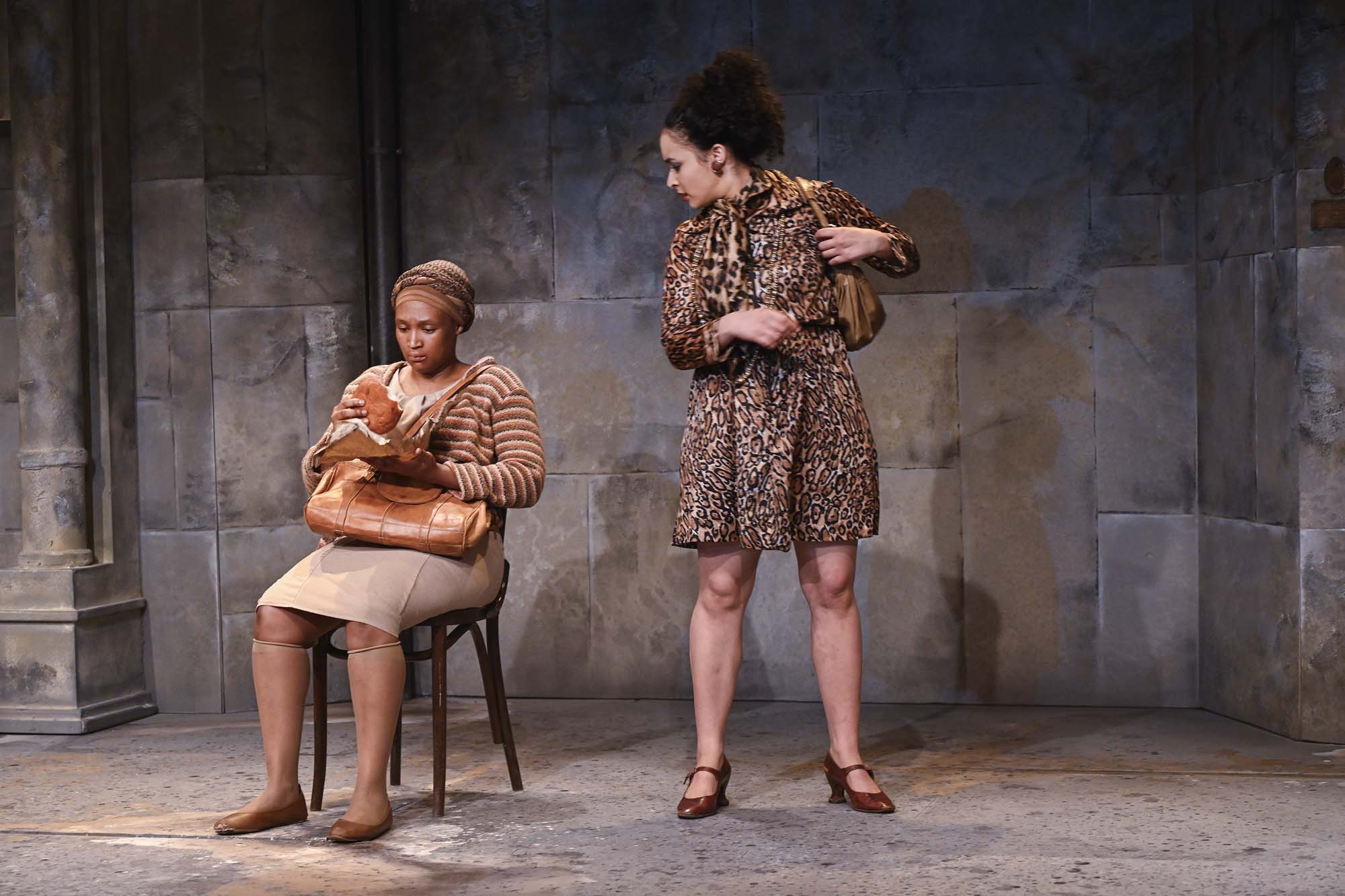
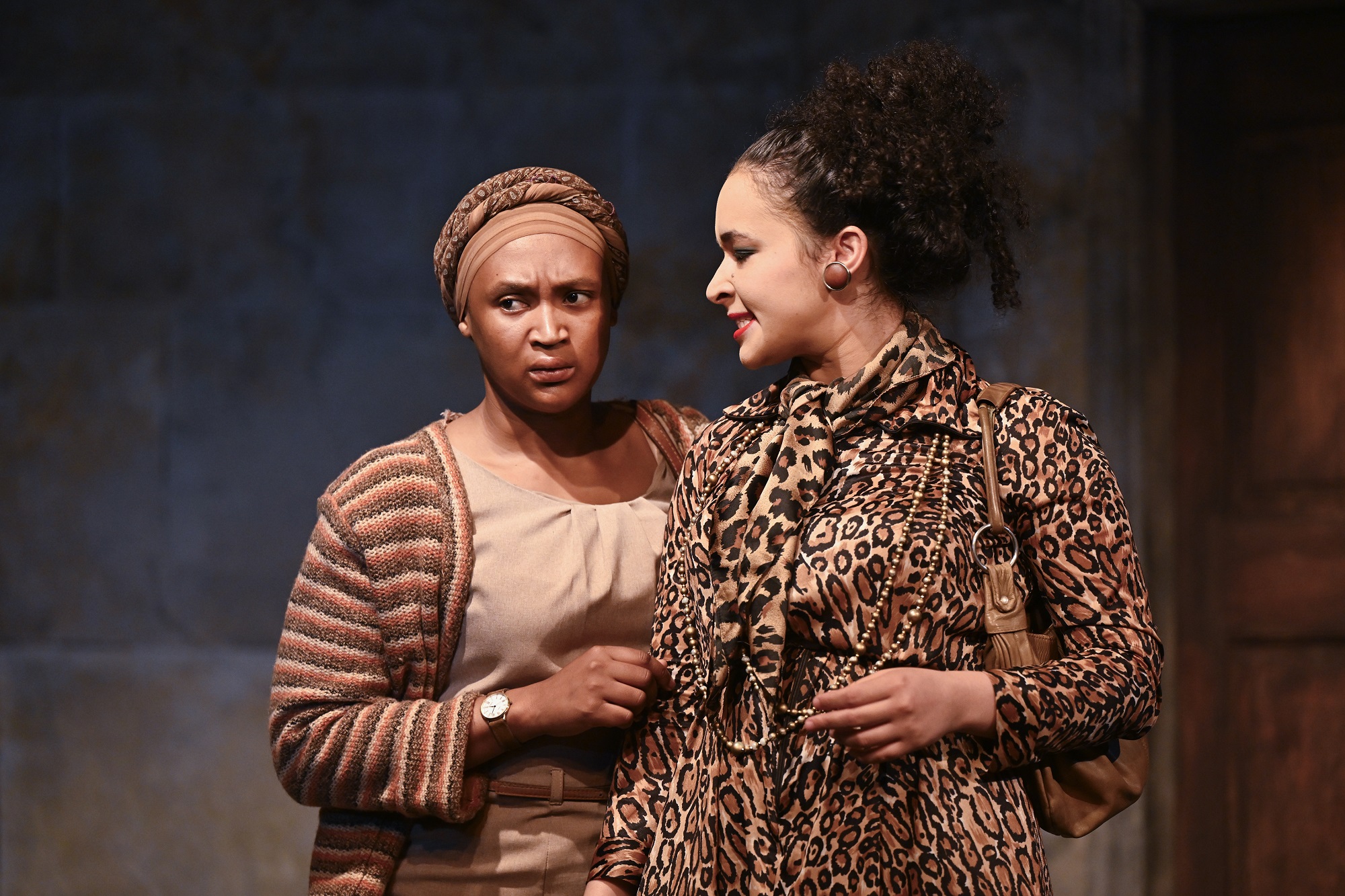
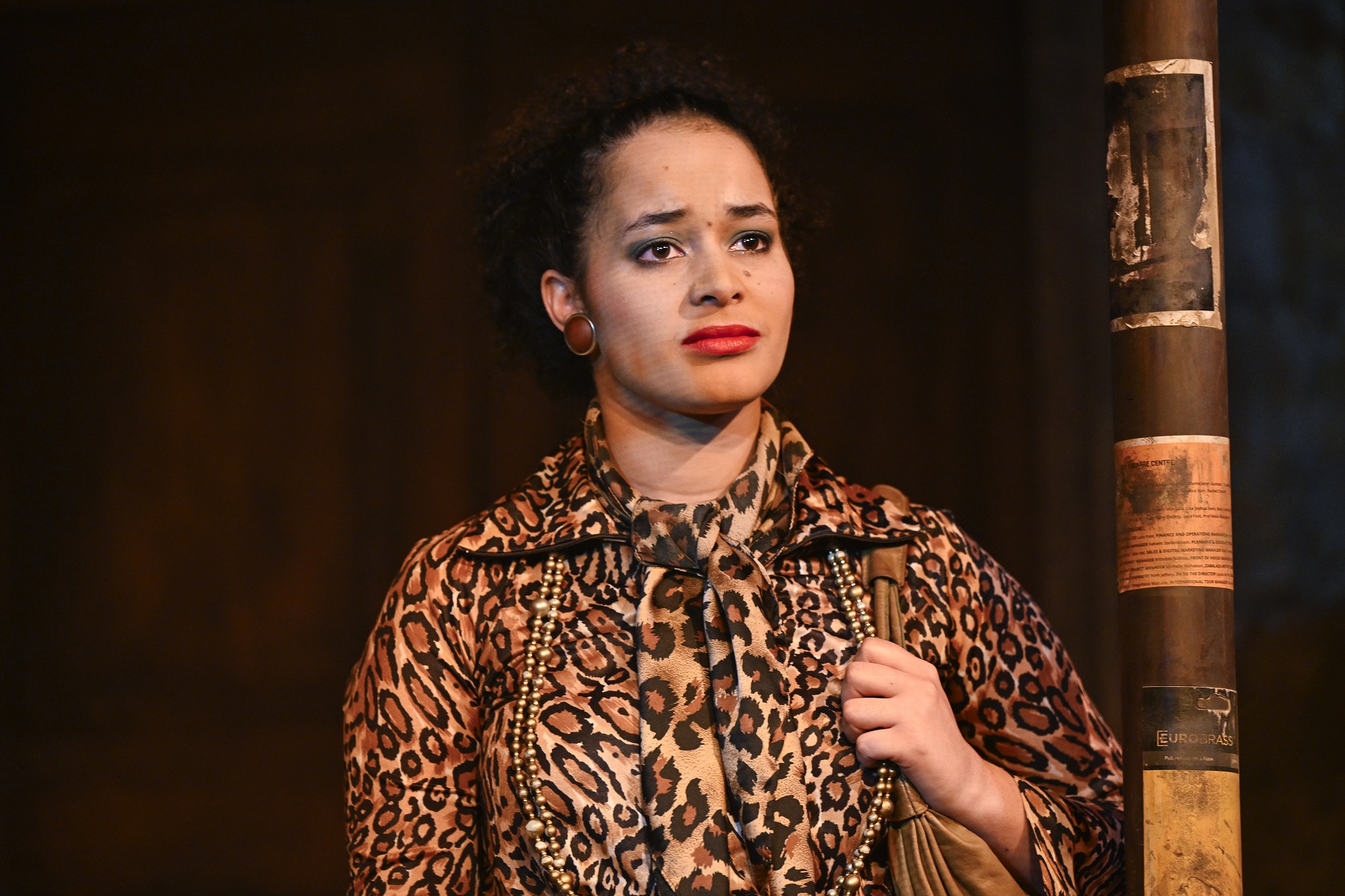
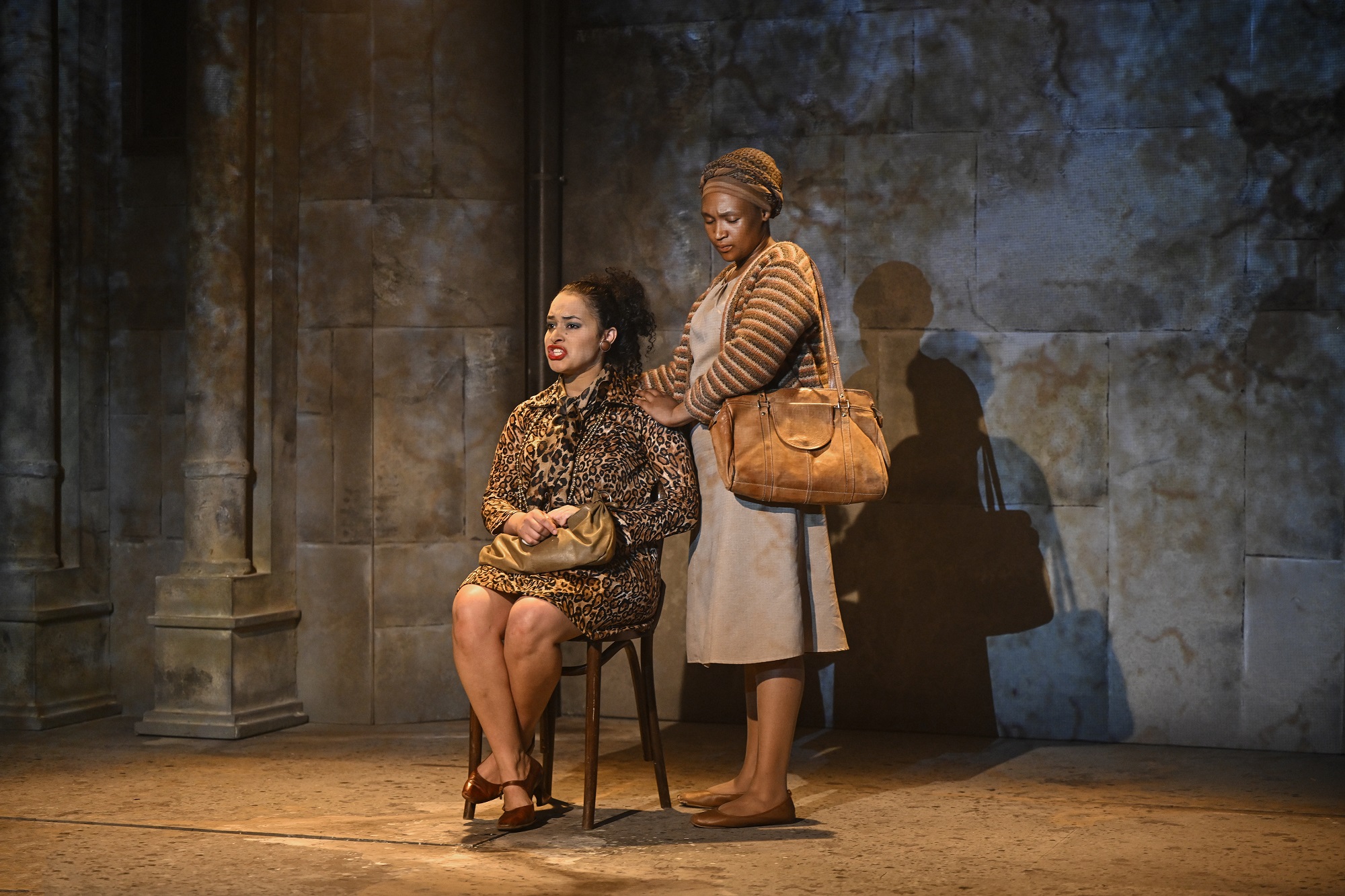
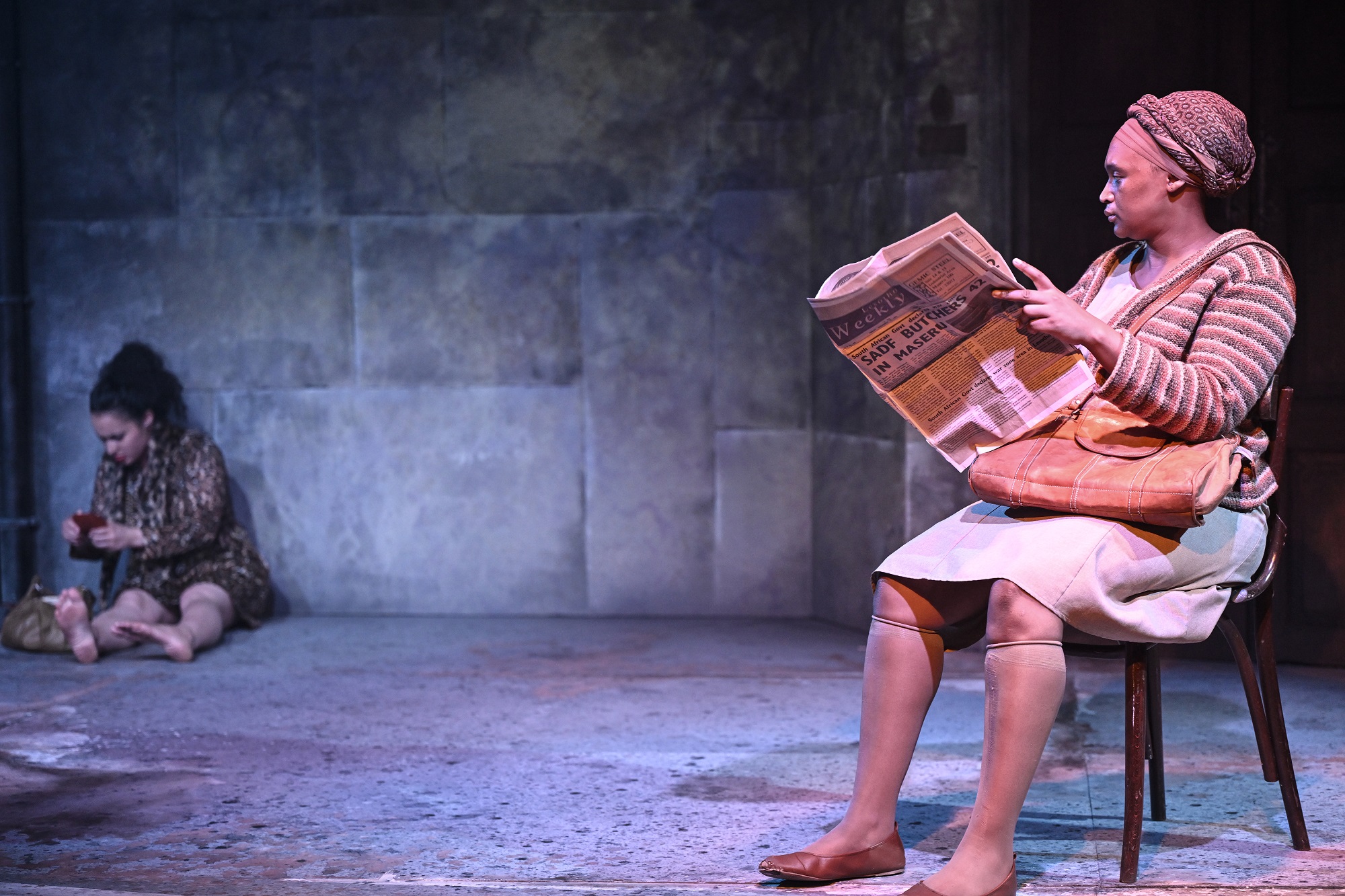
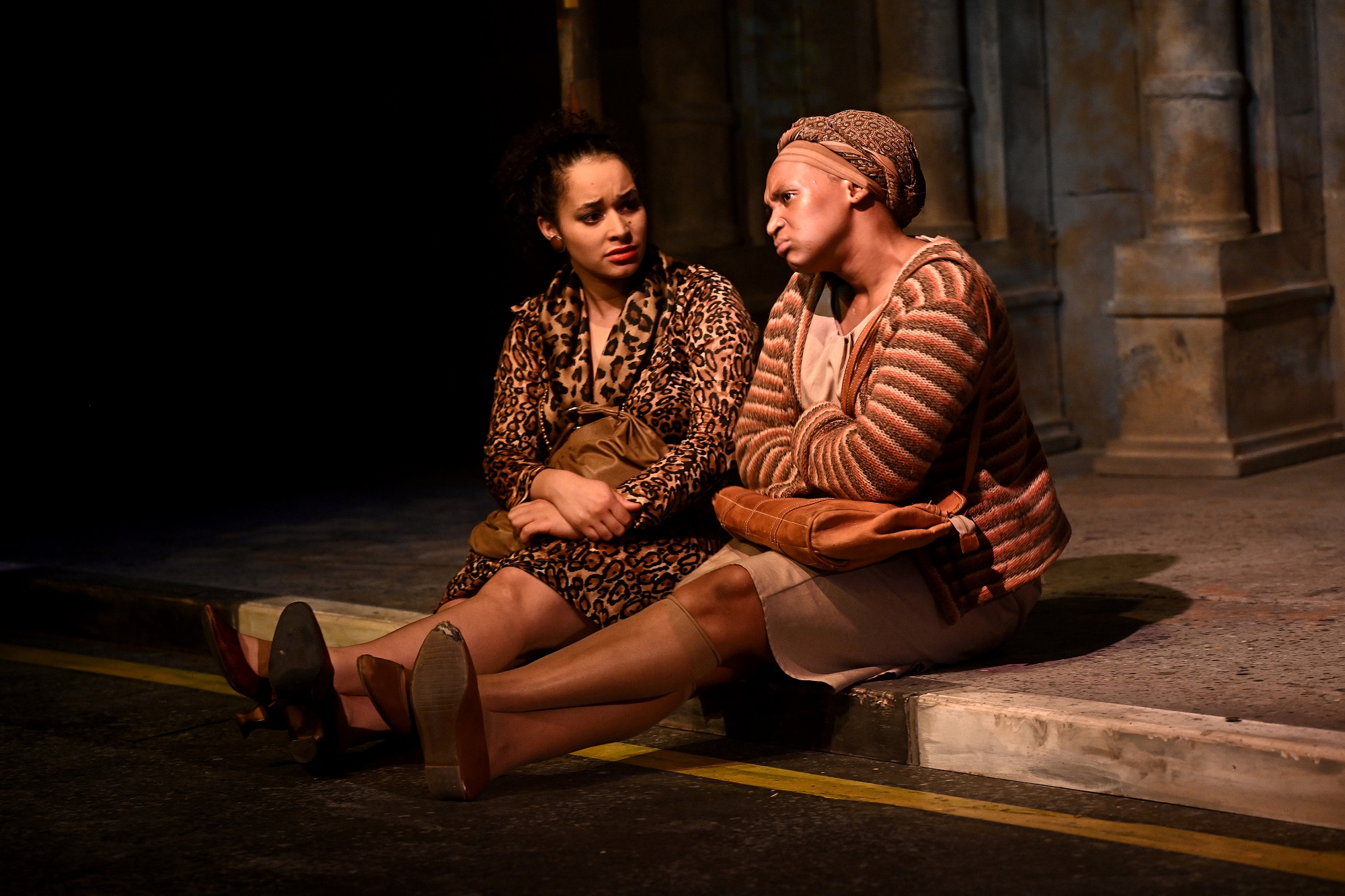
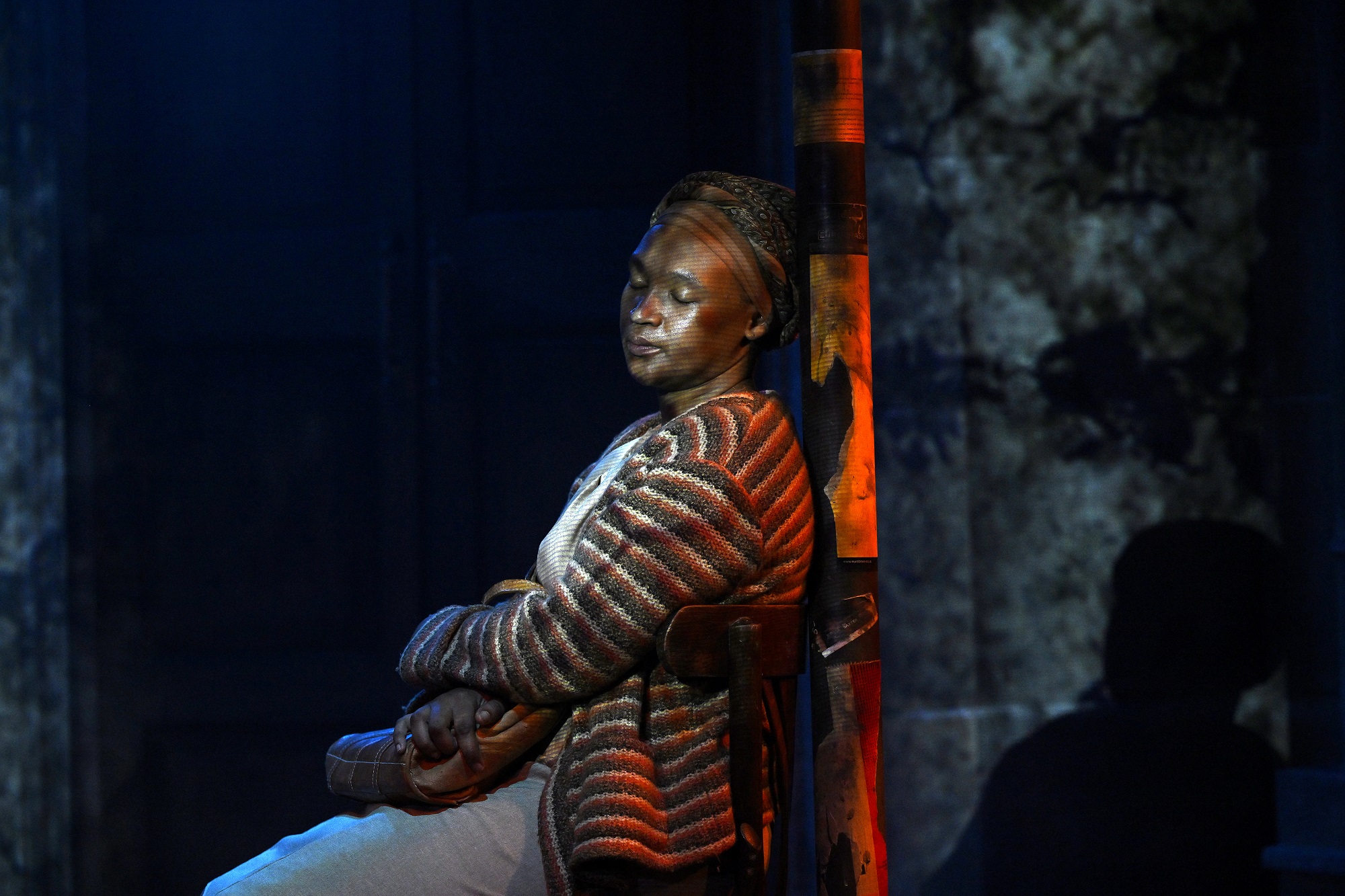
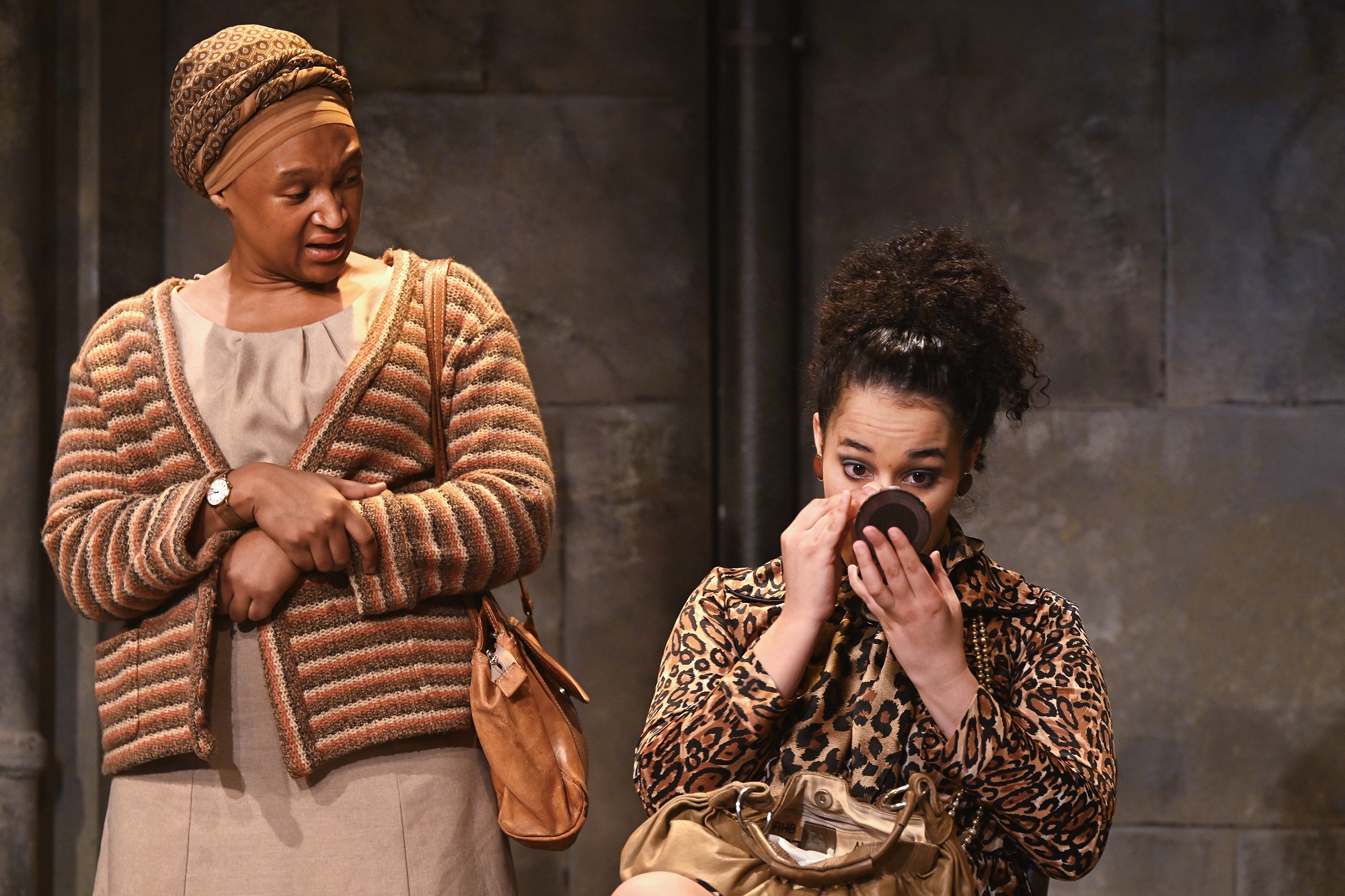
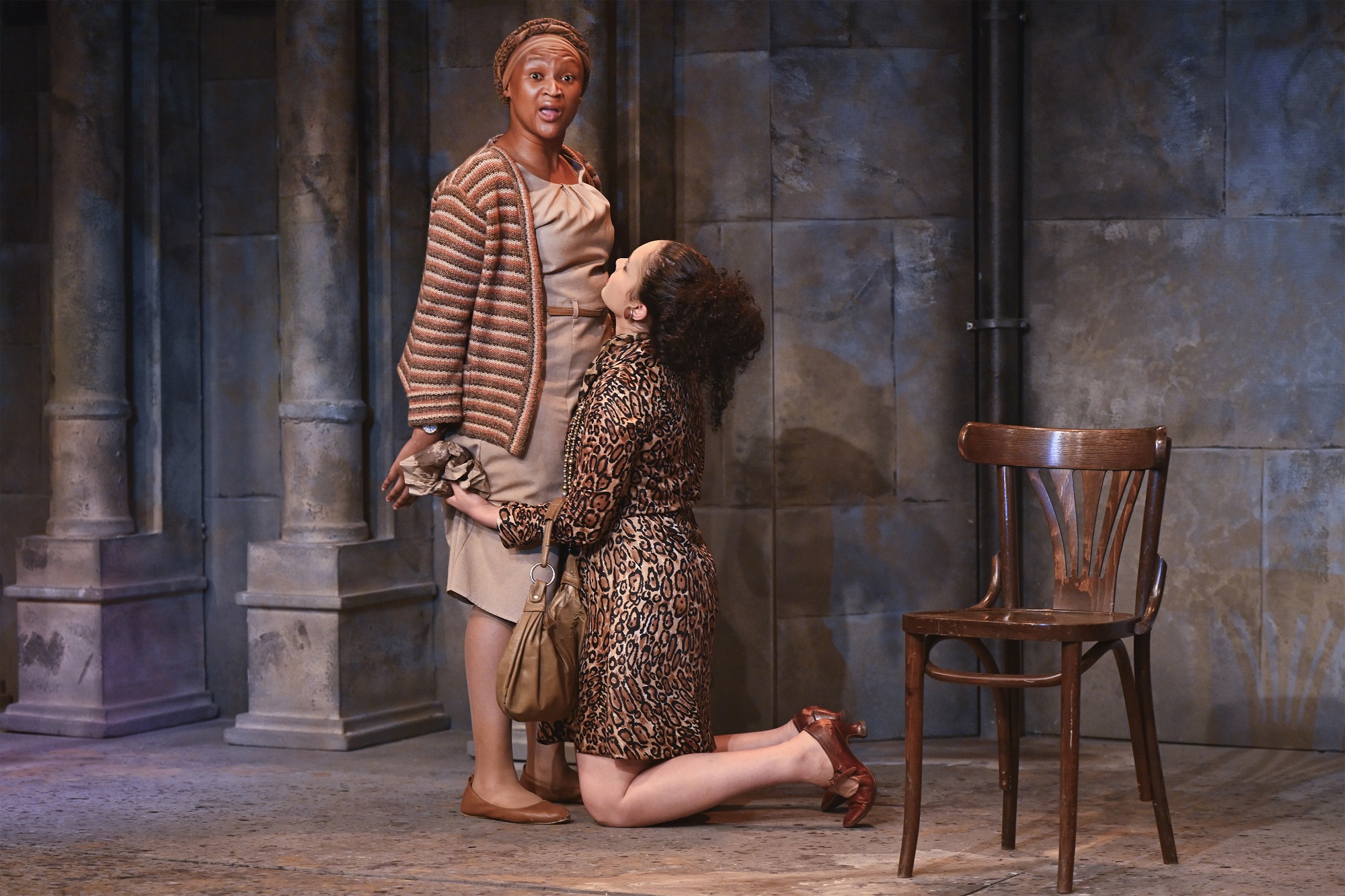
Daniels faced a different challenge with The Lady – refusing to reduce her to spectacle. “Sex work is just the work that she does. It’s her strategy for survival. It’s not glamour. It’s not tragedy. It’s a job. And if you reduce her to shock value, you miss her humanity.” Underneath the performance of confidence, Daniels found something more fragile. “She believes she’s going to escape. That belief keeps her alive. Even when she’s sitting in the same queue, waiting for the same rice, she tells herself she’s not like them. That illusion is protective – but it’s also fragile."
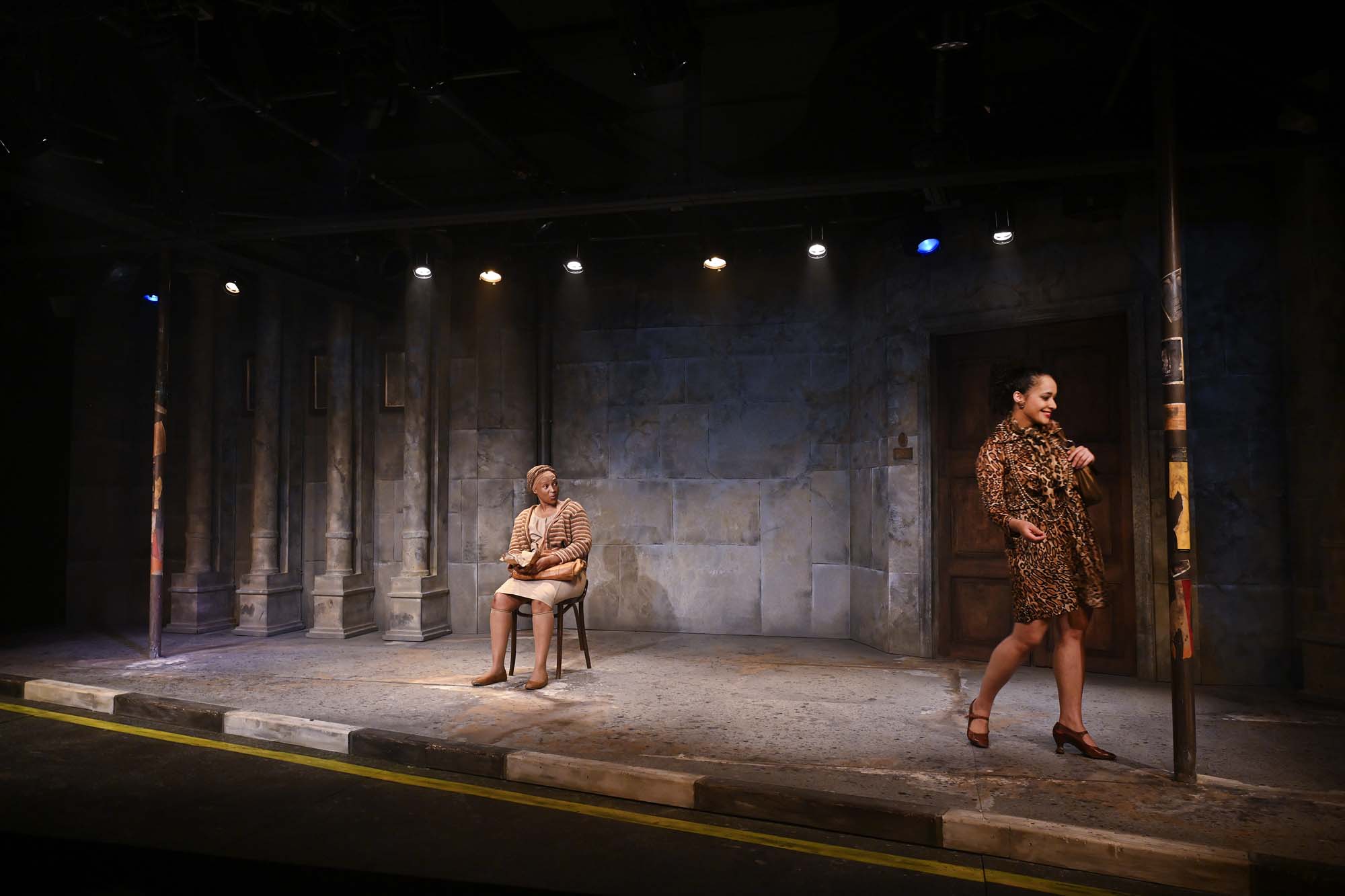
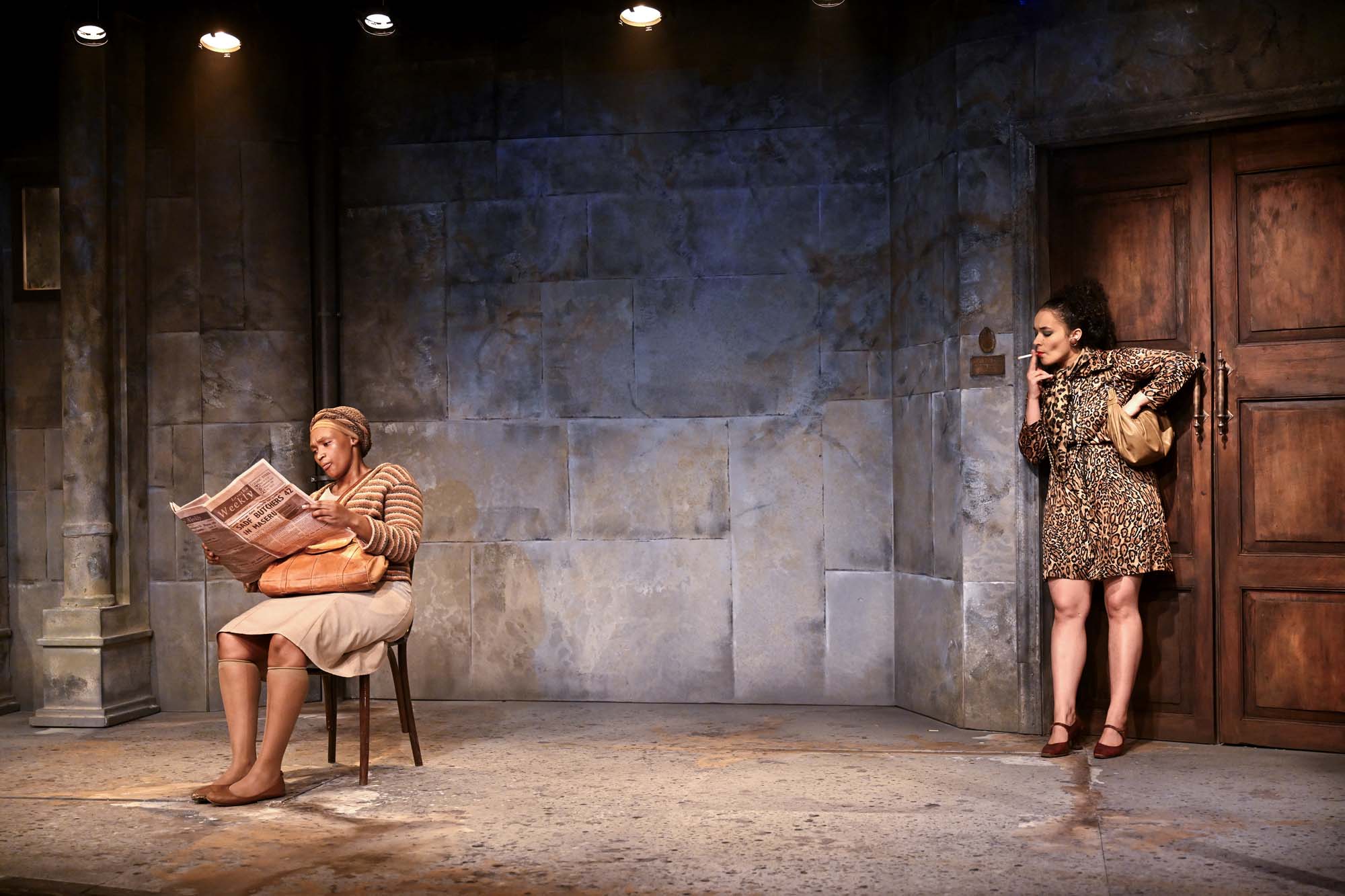
The Lady looks down at The Woman. The Woman looks sideways at The Lady. The system looks straight through both of them. “These women come from very different lives,” Daniels said, “but they experience the same humiliation, just from different angles. The system doesn’t care about your moral positioning. It treats you the same.”
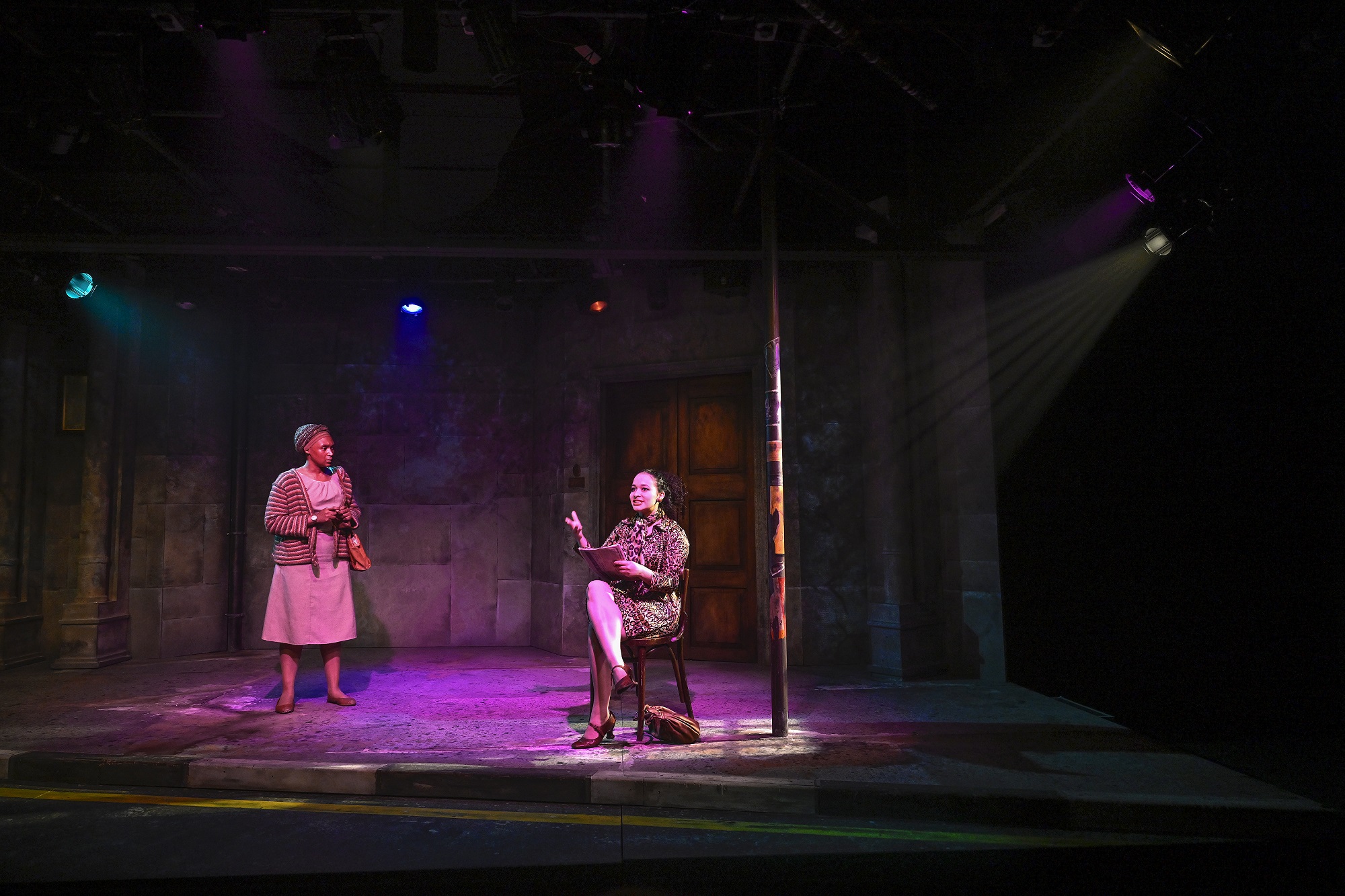
“I wanted the doors to feel big so that the women feel small in comparison. That’s how bureaucracy makes you feel – insignificant.”
Kweyama’s direction makes that indifference physical. Between scenes, the actors perform sequences of compulsive, repetitive gesture – writing on walls and air, starting again, starting again. “The repetition is deliberate,” Kweyama explained. “Waiting is repetition. It’s the same form, the same queue, the same instruction – over and over. So, the bodies repeat. The physical vocabulary had to grow out of the condition of waiting. The monotony is political.”
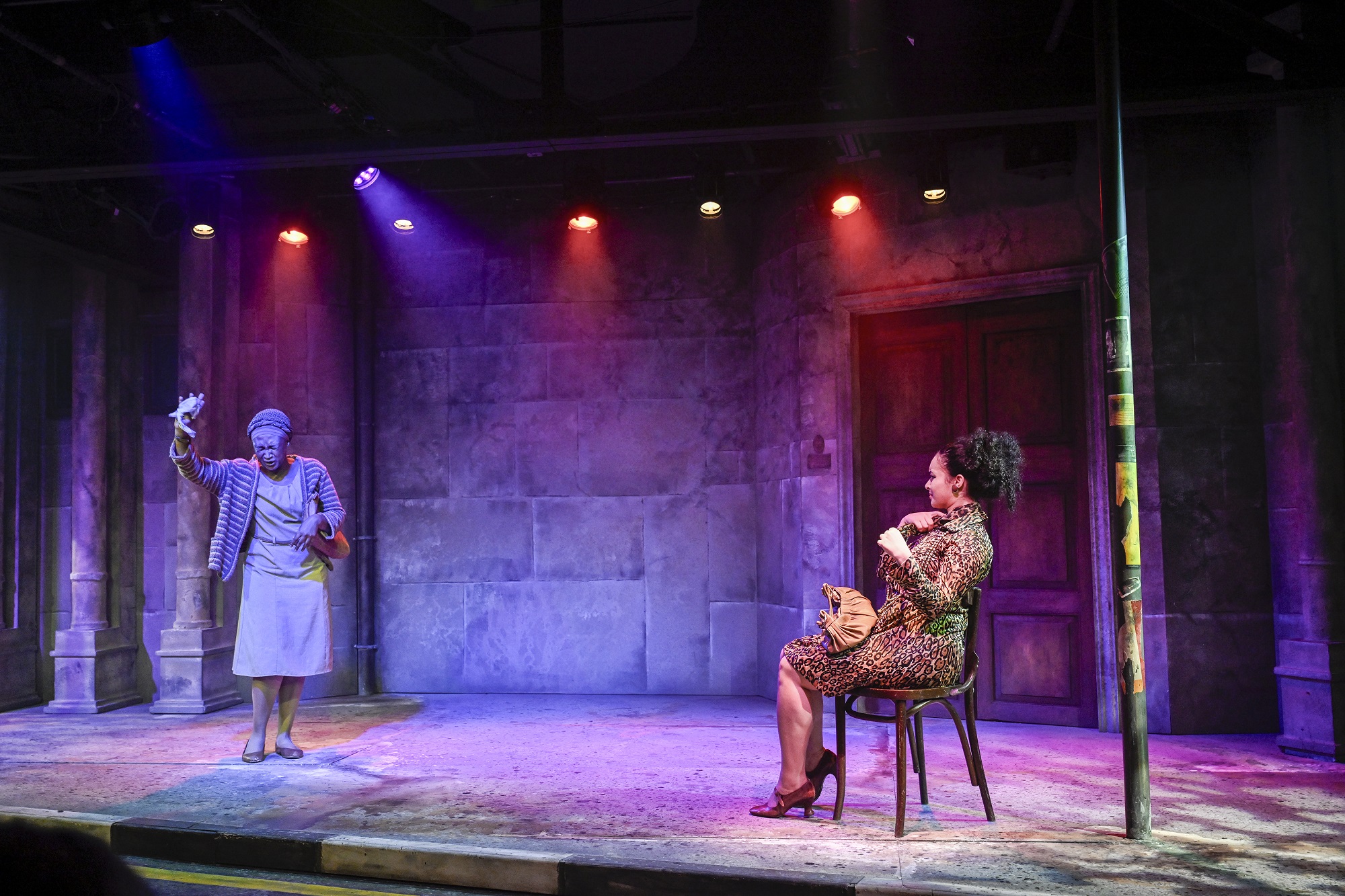
The doors of the government warehouse loom large, imposing, almost overwhelming in scale. “I wanted the doors to feel big,” Kweyama noted, “so that the women feel small in comparison. That’s how bureaucracy makes you feel – insignificant. You stand outside something vast and immovable. The set isn’t merely a background – it represents the system.”
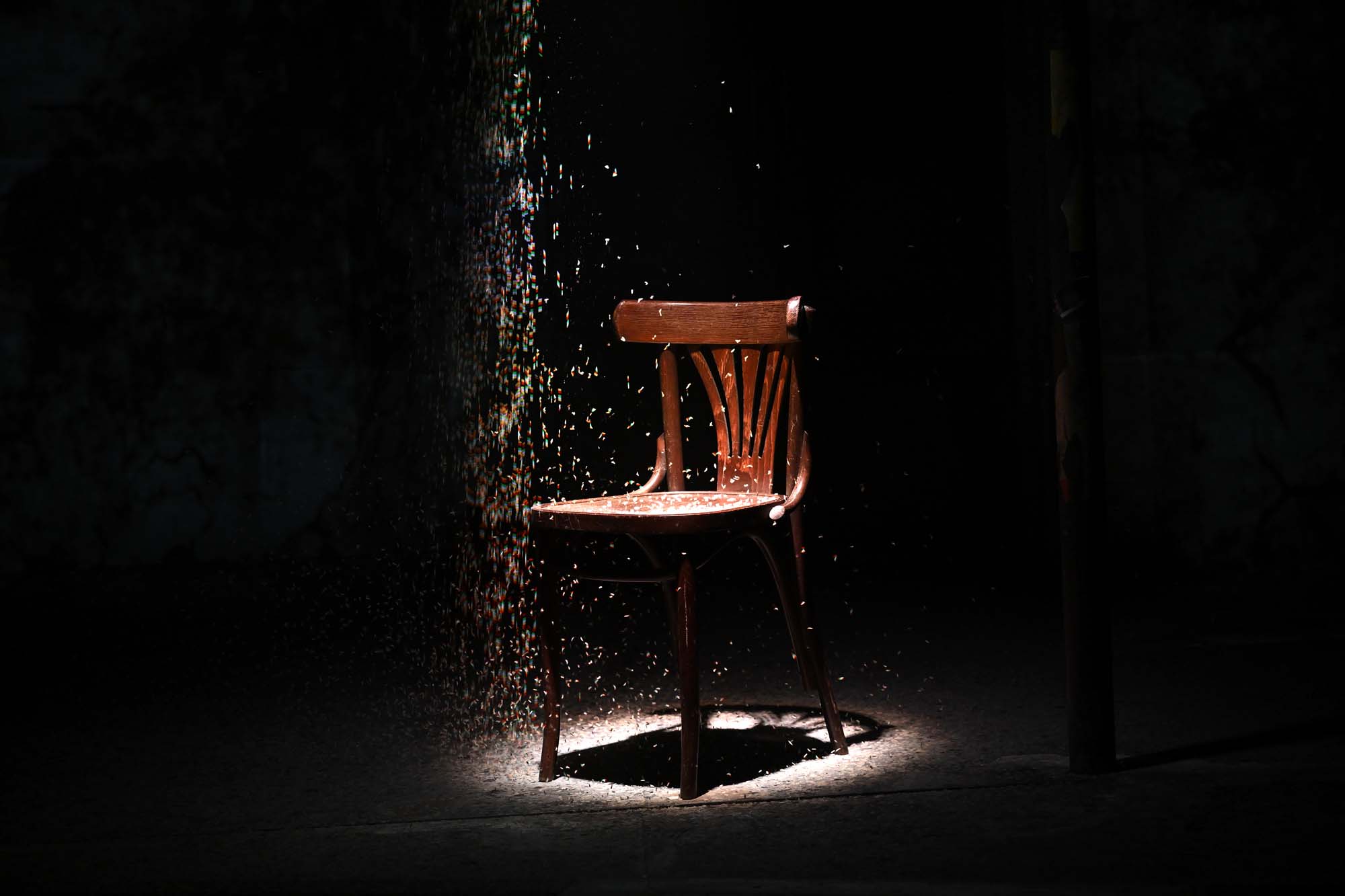
And then there is the chair itself. The Lady and The Woman fight over it – and the fight, Kweyama said, is the point. “It symbolises the lack of resources. They are fighting over one chair while there are 20 more locked inside, where only a few get a seat. Outside, they share one chair and split igwinya – a vetkoek between them.” Everything they have, they have in spite of the system. Everything inside those doors remains just out of reach.
Done waiting
“This was written in 1988,” Hleli said quietly, “and today nothing is so different.”
The play ends with both The Lady and The Woman choosing themselves – choosing dignity over degradation, each other over the system that put them on that pavement. As Kweyama explained: “In the end, the women realise they can no longer be victims.” The rice spills over in the end, on top of the chair. “I needed the rice to be there; they are strong individually but I wanted to leave even stronger. The Lady is not going to be patiently waiting for something to change, and The Woman is done begging, and so they leave.”
He concluded: “It is not a solution but a courageous act of refusal. In the end, the women realise they can no longer be victims.”
 This work is licensed under a Creative Commons Attribution-NoDerivatives 4.0 International License.
Please view the republishing articles page for more information.