

Welcome to the University of Cape Town News
Wamkelekile, Welkom
Wamkelekile, Welkom
Teaching the uncomfortable truths of women’s health
15 December 2025 | Story Myolisi Gophe. Photo Lerato Maduna. Read time 8 min.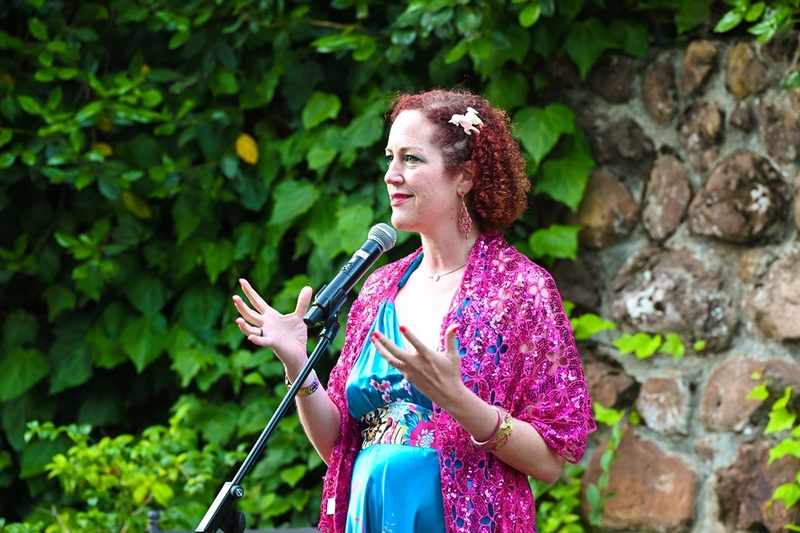
When Dr Chiv Gordon steps into a lecture room, she is not just teaching pathology, clinical decision-making or professional ethics. She is inviting students into deeply human conversations – the kind many would rather avoid – about gender-based violence, reproductive rights, social justice and the lived realities of the women they will one day treat.
It is this rare blend of courage, reflexivity and humanity that has earned Dr Gordon, from the University of Cape Town’s (UCT) Department of Obstetrics and Gynaecology, one of the university’s highest honours: the Distinguished Teacher’s Award (DTA).
For Gordon, the recognition still feels surreal. “I already knew I was a good teacher – students tell me, and I have won other teaching awards,” she said. “But the DTA … that’s the ultimate accolade. It tells the institution that you really are doing something meaningful. It makes you feel seen.”
Yet her path to becoming one of UCT’s most impactful educators was anything but straightforward.
Gordon completed her undergraduate medical degree at UCT before heading into internship, community service and, initially, a surprising choice: psychiatry.
“I saw many women in severe distress because of abuse,” she recalled. “And I realised that we were never taught about this in medical school. Nobody knew what to do about it.”
The experience became the turning point of her career. It sparked a deep curiosity – and frustration – about the absence of gender-based violence in the medical curriculum. Even after leaving psychiatry to work in HIV medicine and later clinical trials, the same pattern followed her.
“I just started asking every woman I saw, and so many were experiencing IPV. My colleagues weren’t trained. Nobody knew how to help them. That’s when I realised: something is very wrong here.” It also gave her the tools to do what had driven her from the beginning: embed gender-based violence and other socially sensitive issues into the curriculum, not as add-ons but as essential clinical competencies.
Teaching the topics no one wants to touch
The DTA committee praised Gordon for tackling “all the uncomfortable things others avoid” – a description she admits is often accurate.
“I teach all the controversial topics: gender-based violence, termination of pregnancy, sexual and gender minorities (LGBTQIA+) health. Basically, anything you would never discuss with your grandmother at Sunday lunch,” she quipped.
But the work is not simply controversial – it is emotionally taxing and pedagogically complex.
“What makes these topics difficult is that students come in with strong opinions shaped by how they were raised. Some have never encountered gender-based violence; others have lived through it. So, when we talk about IPV, I’m confronting them with realities they’re either deeply wounded by or completely oblivious to.”
Her approach is grounded in feminist pedagogy, trauma-informed practice and what she calls “the pedagogy of discomfort” – intentionally encouraging students to sit with difficult truths long enough to learn from them.
“I push them to think about the most vulnerable people in our society and the ethical dilemmas they will face as doctors. It’s uncomfortable, but that’s where the learning happens.”
“Humour is a teaching tool”
Though the themes are heavy, Gordon’s classes are surprisingly lively. Humour, she insists, is not a distraction – it is a powerful educational strategy.
“Positive emotions are critical for learning. For COVID-19, I made over 100 teaching videos, many of them hilariously over the top. Students loved them because they were funny and memorable. If the material makes you feel good, you want to learn more.”
Her creativity extends beyond videos: she uses props, storytelling, roleplay and visual metaphors to help students grasp complex clinical concepts.
“I’m naturally light-hearted,” she said. “But I also know that if you don’t create a safe, positive environment, students shut down. And when you are teaching trauma, ethics and social justice, you cannot afford for students to shut down.”
Gordon was first nominated for the DTA in 2020, at the height of the pandemic, by her students. But her application fell short.
Being nominated again this year, she decided to give it another try – this time with reflection, mentorship and a more robust teaching portfolio.
“When I compare the first portfolio to the second, the growth is huge. I worked incredibly hard. That’s why winning feels so good – because I know I truly earned it.”
Gordon’s impact extends far beyond the classroom. Former students regularly contact her to say they used her teachings to help a patient in crisis – something she considers the ultimate reward.
“You can take a horse to water, but you can’t make it drink. So, when they write and say, ‘I’m drinking; I’m using what you taught me’ – that is everything.”
Her next step is a PhD, focused on understanding why her IPV teaching works so well and how it shapes clinical practice.
“I want to know what it is about this curriculum that equips young doctors to act. Because if we can understand that, we can replicate it and scale it.”
She added the critical importance of clinical teachers being able to role model how to deal with being wrong and the inevitability of making mistakes. “Often, in clinical medicine, the teaching is extremely hierarchical, and mistakes are frowned upon and shameful. When I was first teaching, it was so important for me to be right all the time – it felt threatening to be wrong. But as I’ve matured, I realise that kind of vulnerability is so important in medicine. If you can’t admit where your limits are, patients are going to suffer. I am now much more intentional about creating space to be wrong and for me and my students to learn from our mistakes together.”
It is this rare blend of courage, reflexivity and humanity that has earned Dr Gordon, from the University of Cape Town’s (UCT) Department of Obstetrics and Gynaecology, one of the university’s highest honours: the Distinguished Teacher’s Award (DTA).
For Gordon, the recognition still feels surreal. “I already knew I was a good teacher – students tell me, and I have won other teaching awards,” she said. “But the DTA … that’s the ultimate accolade. It tells the institution that you really are doing something meaningful. It makes you feel seen.”
Yet her path to becoming one of UCT’s most impactful educators was anything but straightforward.
Gordon completed her undergraduate medical degree at UCT before heading into internship, community service and, initially, a surprising choice: psychiatry.
“For reasons that are still a mystery to me, I started specialising in psychiatry,” she joked. But the two-year stint proved transformative. She encountered scores of women admitted to psychiatric wards whose mental health crises were rooted in intimate partner violence (IPV).“That’s when I realised: something is very wrong here.”
“I saw many women in severe distress because of abuse,” she recalled. “And I realised that we were never taught about this in medical school. Nobody knew what to do about it.”
The experience became the turning point of her career. It sparked a deep curiosity – and frustration – about the absence of gender-based violence in the medical curriculum. Even after leaving psychiatry to work in HIV medicine and later clinical trials, the same pattern followed her.
“I just started asking every woman I saw, and so many were experiencing IPV. My colleagues weren’t trained. Nobody knew how to help them. That’s when I realised: something is very wrong here.” It also gave her the tools to do what had driven her from the beginning: embed gender-based violence and other socially sensitive issues into the curriculum, not as add-ons but as essential clinical competencies.
Teaching the topics no one wants to touch
The DTA committee praised Gordon for tackling “all the uncomfortable things others avoid” – a description she admits is often accurate.
“I teach all the controversial topics: gender-based violence, termination of pregnancy, sexual and gender minorities (LGBTQIA+) health. Basically, anything you would never discuss with your grandmother at Sunday lunch,” she quipped.
But the work is not simply controversial – it is emotionally taxing and pedagogically complex.
“What makes these topics difficult is that students come in with strong opinions shaped by how they were raised. Some have never encountered gender-based violence; others have lived through it. So, when we talk about IPV, I’m confronting them with realities they’re either deeply wounded by or completely oblivious to.”
Her approach is grounded in feminist pedagogy, trauma-informed practice and what she calls “the pedagogy of discomfort” – intentionally encouraging students to sit with difficult truths long enough to learn from them.
“I push them to think about the most vulnerable people in our society and the ethical dilemmas they will face as doctors. It’s uncomfortable, but that’s where the learning happens.”
“Humour is a teaching tool”
Though the themes are heavy, Gordon’s classes are surprisingly lively. Humour, she insists, is not a distraction – it is a powerful educational strategy.
“Positive emotions are critical for learning. For COVID-19, I made over 100 teaching videos, many of them hilariously over the top. Students loved them because they were funny and memorable. If the material makes you feel good, you want to learn more.”
Her creativity extends beyond videos: she uses props, storytelling, roleplay and visual metaphors to help students grasp complex clinical concepts.
“I’m naturally light-hearted,” she said. “But I also know that if you don’t create a safe, positive environment, students shut down. And when you are teaching trauma, ethics and social justice, you cannot afford for students to shut down.”
Gordon was first nominated for the DTA in 2020, at the height of the pandemic, by her students. But her application fell short.
“I didn’t take the committee’s advice. I just thought they would look at what I do and recognise that I’m good,” she admitted. “Not getting it was really hard.”“Positive emotions are critical for learning.”
Being nominated again this year, she decided to give it another try – this time with reflection, mentorship and a more robust teaching portfolio.
“When I compare the first portfolio to the second, the growth is huge. I worked incredibly hard. That’s why winning feels so good – because I know I truly earned it.”
Gordon’s impact extends far beyond the classroom. Former students regularly contact her to say they used her teachings to help a patient in crisis – something she considers the ultimate reward.
“You can take a horse to water, but you can’t make it drink. So, when they write and say, ‘I’m drinking; I’m using what you taught me’ – that is everything.”
Her next step is a PhD, focused on understanding why her IPV teaching works so well and how it shapes clinical practice.
“I want to know what it is about this curriculum that equips young doctors to act. Because if we can understand that, we can replicate it and scale it.”
She added the critical importance of clinical teachers being able to role model how to deal with being wrong and the inevitability of making mistakes. “Often, in clinical medicine, the teaching is extremely hierarchical, and mistakes are frowned upon and shameful. When I was first teaching, it was so important for me to be right all the time – it felt threatening to be wrong. But as I’ve matured, I realise that kind of vulnerability is so important in medicine. If you can’t admit where your limits are, patients are going to suffer. I am now much more intentional about creating space to be wrong and for me and my students to learn from our mistakes together.”
 This work is licensed under a Creative Commons Attribution-NoDerivatives 4.0 International License.
Please view the republishing articles page for more information.


Related

Innovative, expandable: Smart School Shoes
08 Apr 2026

‘Fundisa le nto iphambi kwakho’
08 Apr 2026
isiXhosa


‘Share your talent’
07 Apr 2026