

Wamkelekile, Welkom
Prof Elena Moore champions the unseen labour of care
09 March 2026 | Story Stephen Langtry. Photo Lerato Maduna. Read time 8 min.
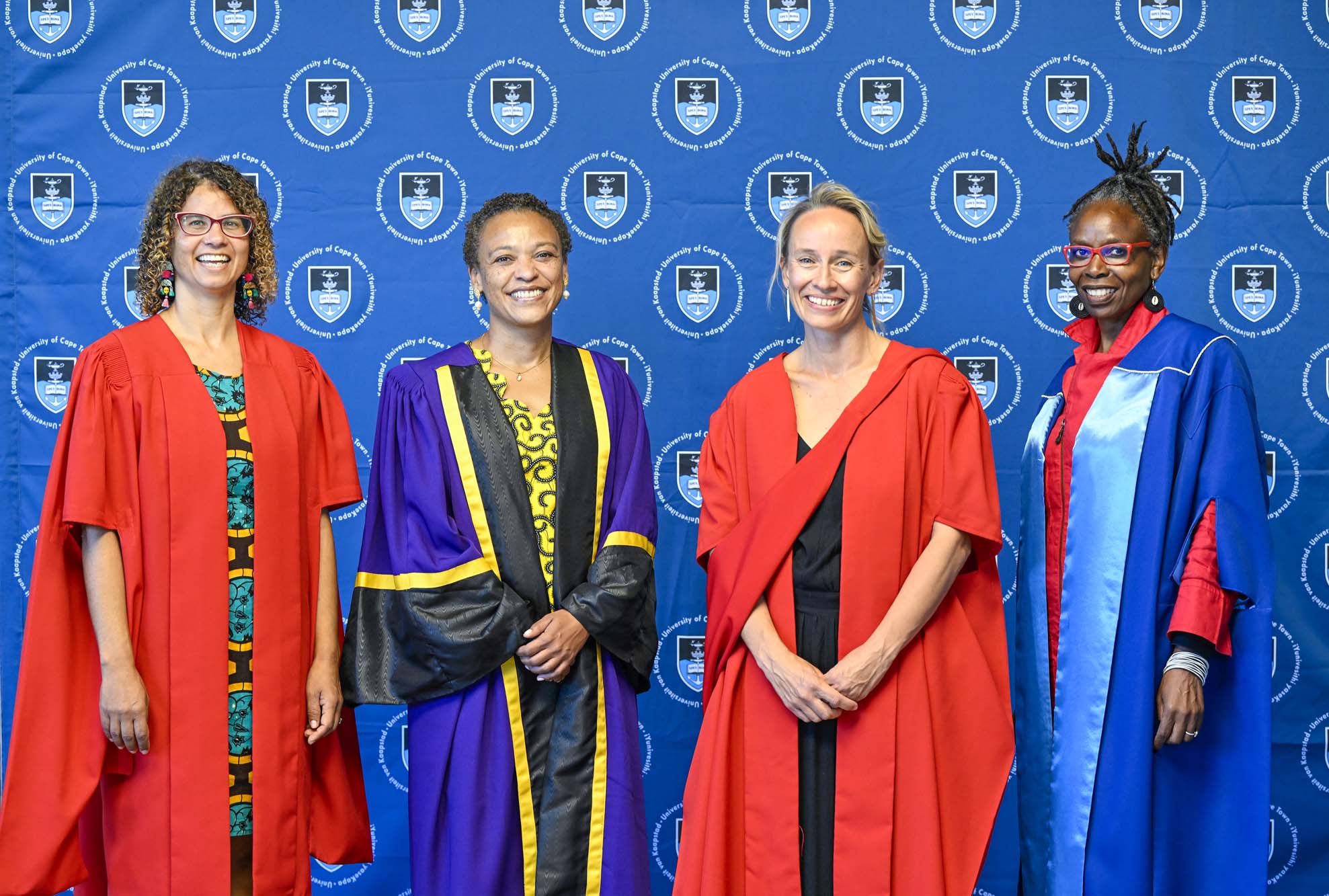
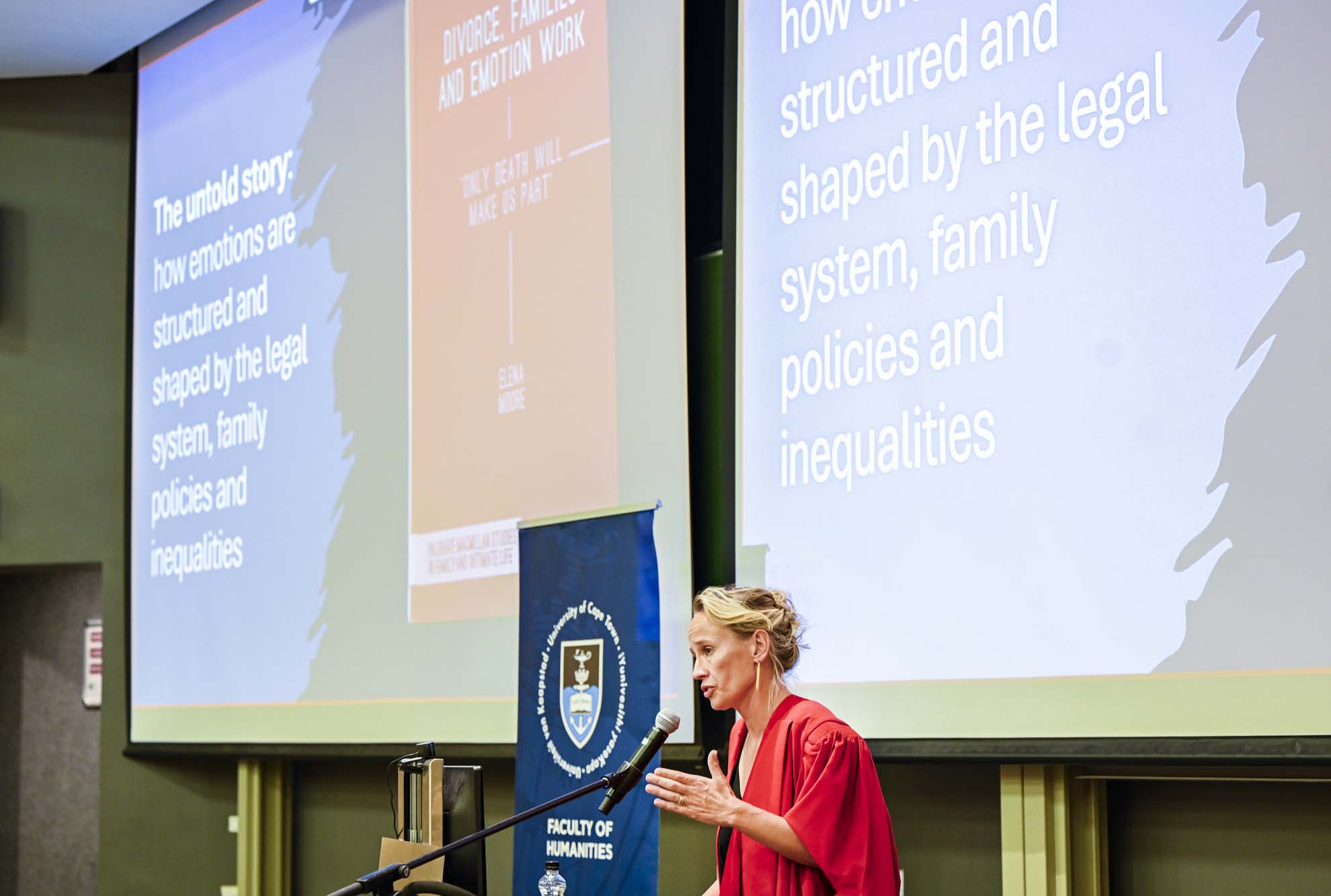
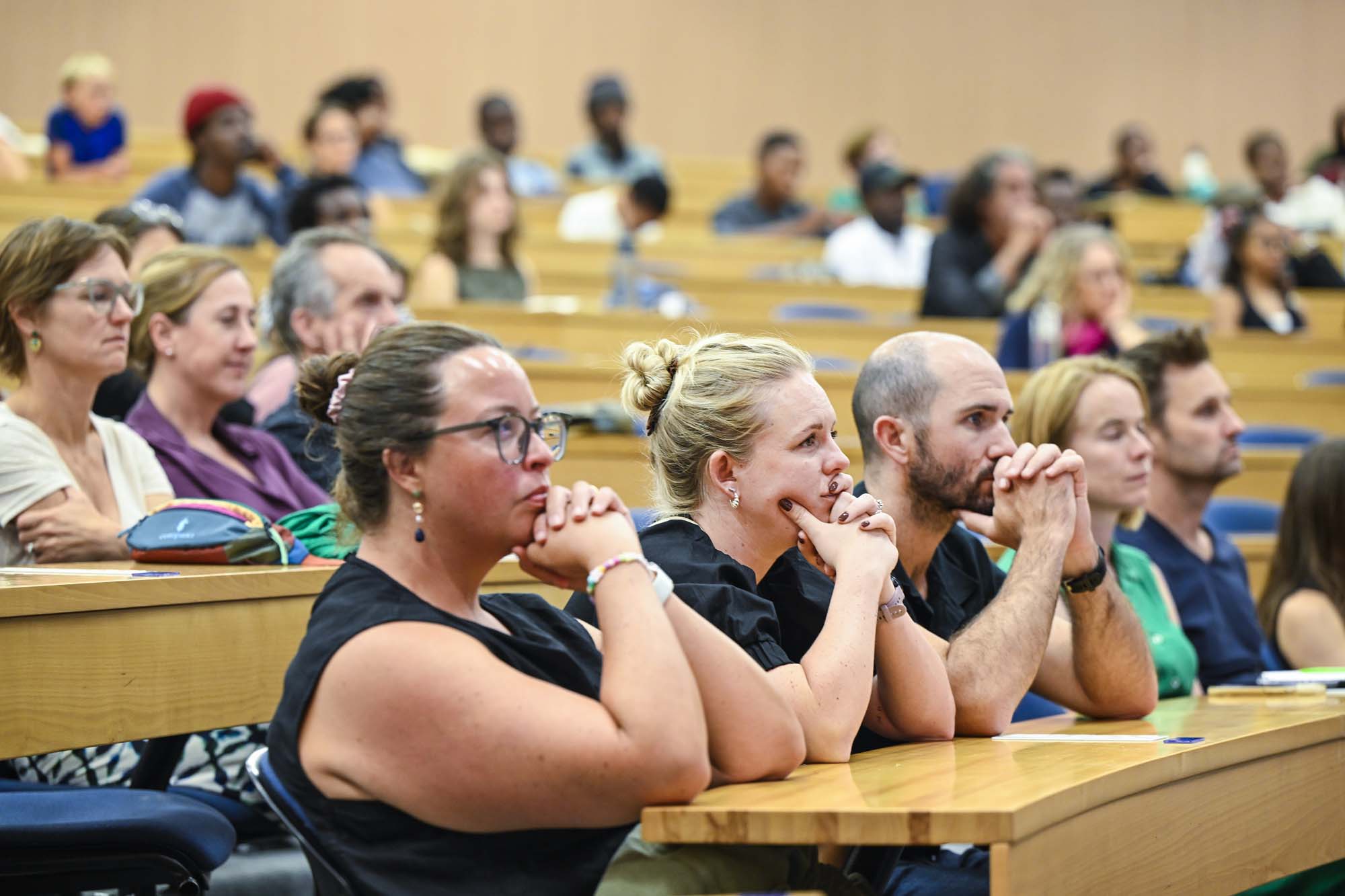
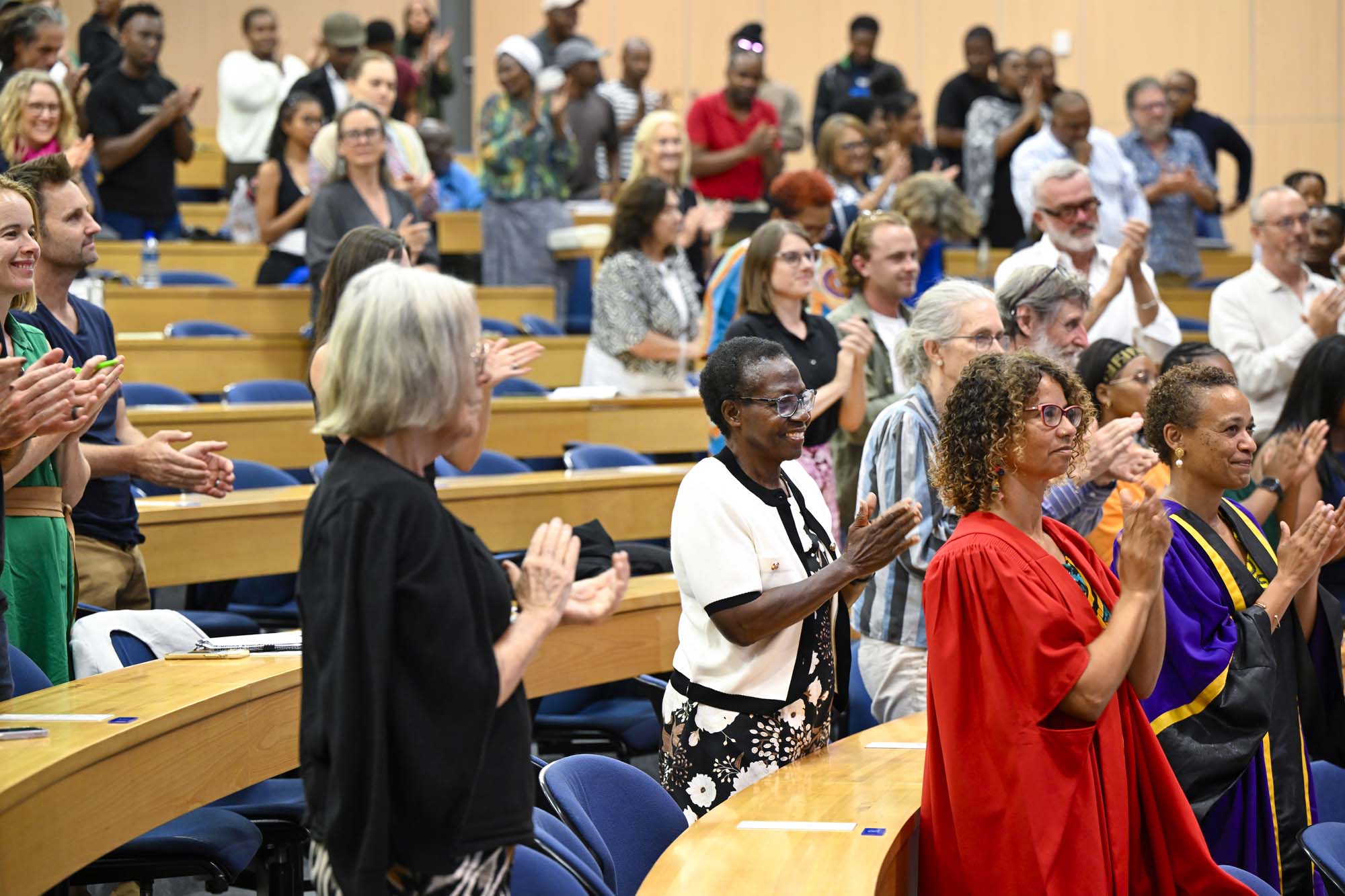
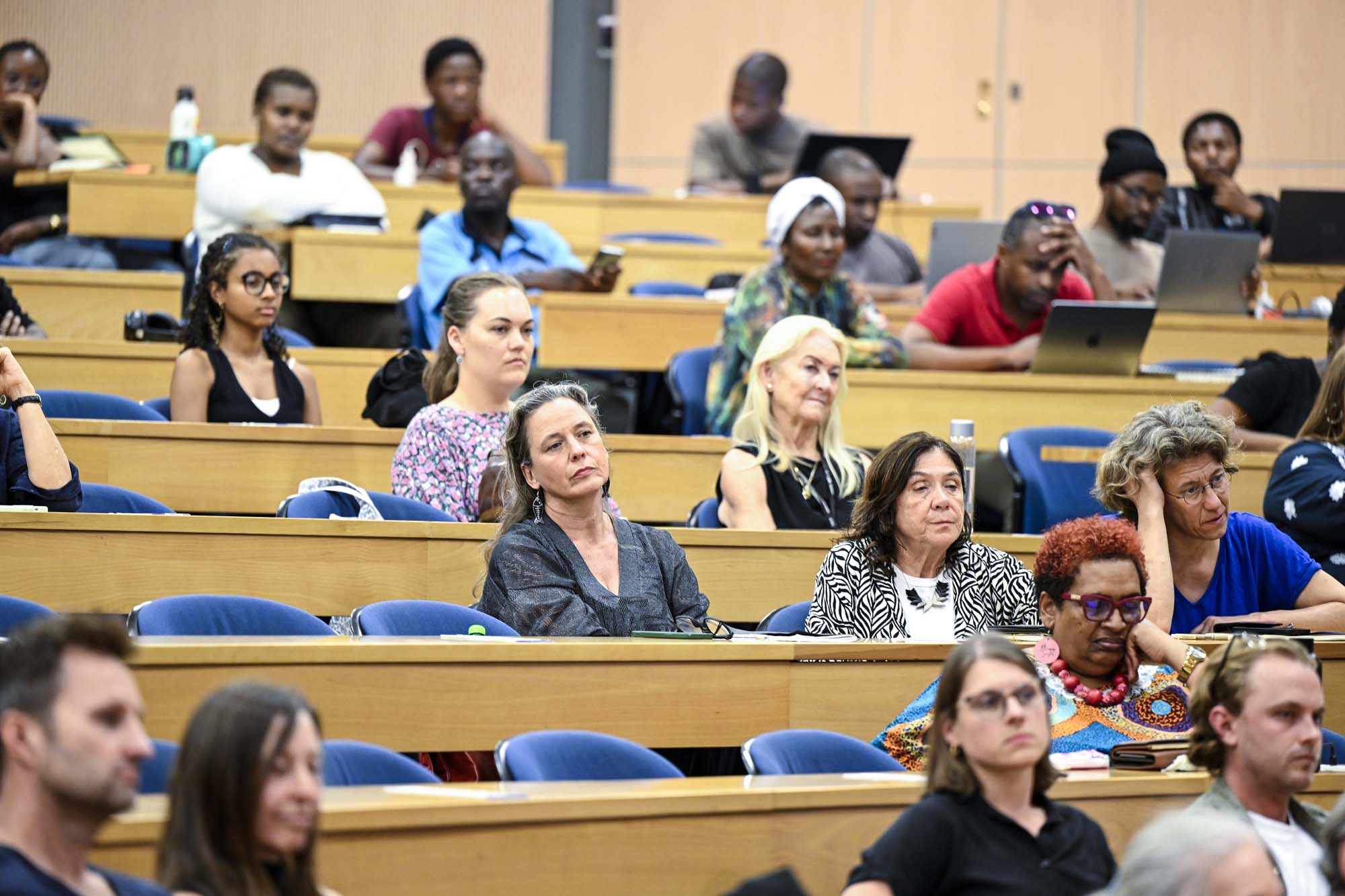
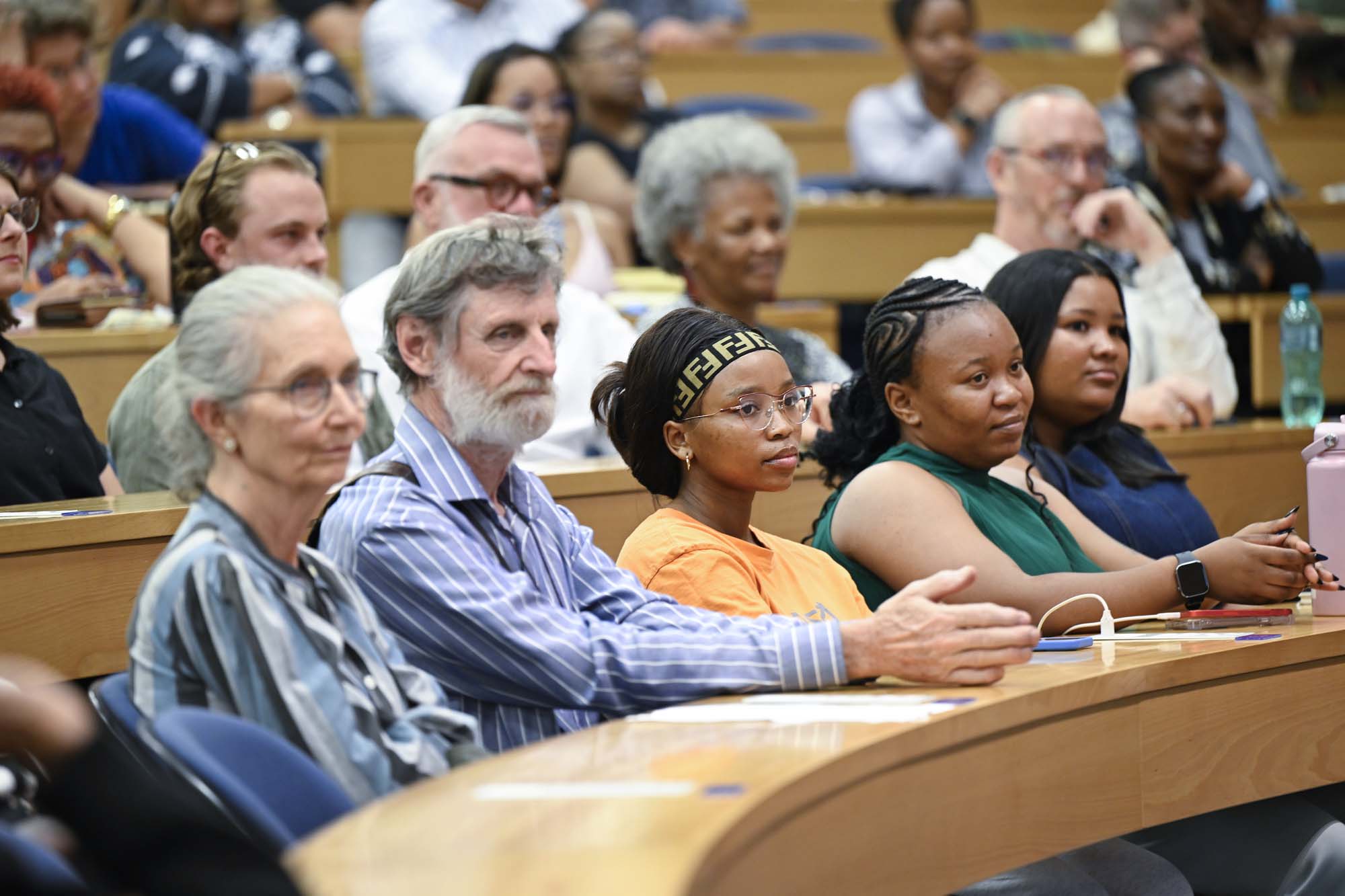
Professor Elena Moore of the Department of Sociology at the University of Cape Town delivered her inaugural lecture on 4 March, titled: “Who Cares? The Directions of State–Family Relationships in Changing Times”. The lecture drew together more than two decades of research into how families and societies organise, experience, and govern care.
Professor Moore’s scholarship responds to the question of who bears responsibility for caring for the young, the old, the ill, and the vulnerable – and why. Her answer, built through years of fieldwork across Ireland, South Africa, Botswana, Namibia, and Malawi, is that care is never merely a private choice or a moral instinct. It is a social relation, shaped by law, policy, labour markets, history, and deeply entrenched inequalities of race, class, and gender.
From Dublin courtrooms to the Gauteng High Court
Moore traced the arc of her career to a master’s seminar at Trinity College Dublin, where a close reading of Ireland’s 1937 Constitution, with its explicit framing of a woman’s place in the home, set her on a lifelong inquiry into how states shape intimate life. Curious whether constitutional principles actually translated into legal practice, she examined hundreds of Irish divorce judgments. Unsurprisingly, she found that women’s domestic contributions were consistently undervalued.
“If you don’t understand customary practices and customary law … that is where we should all be starting.”
That early finding launched years of research on separation and divorce in Ireland, where Moore studied how law and policy do not merely reflect social change. Restrictive divorce requirements, often intensified conflict rather than protecting families, forcing separated couples to remain under the same roof for years before legal dissolution was possible.
Moore’s move to South Africa brought an entirely new set of intellectual challenges. South African families could not be understood through the lens of nuclear household models imported from Europe. Families here are fluid and porous: stretched across provinces and cities, constituted by multiple generational obligations, and bound by customary practices as much as by statute.
The politics of customary law and family life
Joining a national study on customary marriage, divorce and succession, she contributed to a growing body of scholarship that traced how legal reforms such as the Recognition of Customary Marriages Act were experienced on the ground. The picture was complex: new laws were sometimes genuinely transformative, sometimes merely adopted as rhetorical devices in domestic negotiations, and sometimes poorly fitted to the realities they were meant to govern.
“We need evidence, and then we need to fight for change; a shift in narrative, in practice or in policy.”
Moore recounted sitting in the Gauteng High Court as an expert witness in a customary marriage dispute. She was cross-examined for four hours by an advocate seeking to invalidate the marriage and thereby avoid dividing assets. During a tea break, the elderly father of one of the parties turned to her and asked: “How did you end up here?” It was, Moore reflected, perhaps the most important question anyone had asked her, and it became the thread running through the evening’s lecture.
She also spoke about the importance of family meetings as sites of power and negotiation. These are spaces where older women, in particular, exercise influence, where gender-based violence gets contested or concealed, and where the intersection of customary and state law plays out in real time. “If you don’t understand customary practices and customary law, that is where we should all be starting,” she told the audience. “It should not be a module in year three of a law degree. It should be fundamental to every undergraduate course.”
Who looks after Granny?
In recent years, Moore’s work has increasingly focused on the care of older persons. She entered this field by asking what sociologists could contribute. The answer, she argued, is a granular understanding of who actually provides elder care, under what conditions, and at what personal cost.
To build an evidence base, Moore assembled a team of 40 researchers working across 19 sites in four countries (South Africa, Botswana, Namibia, and Malawi), conducting fieldwork in 11 languages, funded by a Wellcome Trust award. The project examined how elder care is experienced comparatively across rural and urban sites, and how household-level dynamics interact with broader governance structures, social protection systems, and even climate change.
One of the most concrete policy contributions to emerge from this work concerns the Grant in Aid. This social grant is designed for older persons in regular need of assistance, but largely unknown to those who qualify for it. Moore’s team found that of 100 older persons they worked with in South Africa, only about 15 knew the grant existed, and only two had received it. The reason was that applicants were required to navigate five government institutions for a minimum of 40 hours, at an estimated cost of between R1 000 and R1 500, while already in a state of regular need.
Working with the Western Cape Alliance for Older Persons, Moore and her team brought this evidence to Parliament. As a result of that undertaking, a task team was formed, on which Moore now sits, working with the South African Social Security Agency (SASSA) to streamline the application process. “We need evidence,” she said. “And then we need to fight for change; a shift in narrative, in practice, or in policy.”
Building a community of scholars
Moore highlighted the importance of building scholarly communities. From early Mellon-funded gatherings of postgraduate students to the formation of the Care of Older Persons Network spanning four countries, she described her career as inseparable from the people she has worked alongside.
“We all want good care but we also want just care relations.”
To date, she has supervised 22 honours, 10 master’s, and eight PhD students to completion. She received UCT's Distinguished Teacher Award in 2022 and has served as associated editor of the Political and Families, Relationships and Societies. Moore was also invited by the African Union (AU) to lead the drafting of the AU Plan of Action on the Family in Africa, and has contributed to United Nations processes on ageing and care.
Moore ended her lecture with the question: How should responsibility for care be fairly distributed across families, states, and communities – particularly in societies where profound inequality persists? “We all want good care,” she said. “But we also want just care relations.”
In her closing remarks, Deputy Vice-Chancellor for Transformation, Student Affairs and Social Responsiveness Professor Elelwani Ramugondo said, “You have invited us to reconsider something many of us take for granted. You have shown that care is not confined to the private sphere. It is shaped by law, policy, economics, and history. It reflects power. It reflects inequality. And it reflects the values we choose to uphold as a society.”
 This work is licensed under a Creative Commons Attribution-NoDerivatives 4.0 International License.
Please view the republishing articles page for more information.