

Wamkelekile, Welkom
Cleaning staff help power UCT sustainability research
17 February 2026 | Story Shafiek Mouton. Photo Anele Benya. Read time 8 min.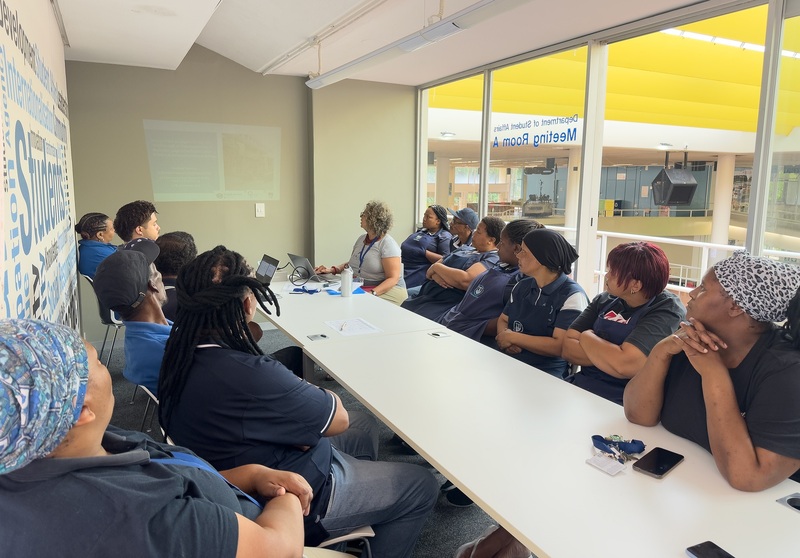
Cleaning staff at the University of Cape Town (UCT) recently joined researchers to share their experiences of electricity use in campus buildings, contributing practical insight to a project examining how energy is used in daily operations.
The engagement, led by Dr Michelle Pressend, a senior researcher in the Department of Chemical Engineering’s Energy Systems Research Group, forms part of the Khusela Ikamva Campus Sustainability Project.
The initiative aims to reduce UCT’s carbon emissions, while promoting sustainable, cost-effective and socially responsible electricity use. It also recognises the importance of frontline staff insight in understanding how energy is used in practice.
Listening beyond the data
The engagement formed part of a broader research project examining electricity usage in the Robert Leslie Building and nearby campus spaces. Rather than focusing solely on technical measurements, the session prioritised dialogue and reflection, creating space for cleaning staff to share their experiences of electricity use in their daily work.
Dr Pressend said the session was designed to complement technical analysis by listening to those who interact with energy systems daily.
“This project highlights the importance of engaging with people, alongside measuring data.”
“This project highlights the importance of engaging with people, alongside measuring data,” she said. “Electricity use is something that people experience every day through their work routines, and those experiences offer valuable insight into how energy is understood and managed in practice.”
By grounding sustainability goals in everyday realities, she added, the project helps make sustainability more tangible and meaningful across the campus community.
“By creating space for discussion, the research brings sustainability closer to people’s lived experiences. It shows that sustainability is not only about systems and reports, but also about daily choices and shared responsibility.”
The session reflected a deliberate shift towards a more people-centred approach to sustainability, recognising that meaningful change depends on inclusive participation across the institution.
Recognising lived experience
Cleaning staff were central to the engagement. Their regular use of energy-intensive equipment such as vacuum cleaners and deep-cleaning machinery, and their familiarity with campus routines, give them unique insight into how electricity is used.
Often among the first to arrive on campus and the last to leave, cleaners observe patterns of energy use that may otherwise go unnoticed.
For many participants, it was their first opportunity to contribute directly to discussions about sustainability at the university.
“Being included in a session such as this makes us feel seen and valued.”
Mildred Sineke, a cleaning supervisor, described the experience as both informative and empowering. “For my staff and me, this research is helpful because we were not aware of it before, but Michelle explained it clearly,” she said. “It gives us a space to talk about electricity use and to raise our views, based on what we experience here at UCT.”
She added that the session increased awareness of energy use both on campus and at home.
“As cleaners, we use a lot of electricity during our work, whether it is vacuuming or deep cleaning. Being included in a session such as this makes us feel seen and valued. We are now more conscious about saving electricity – not only at work but also in our homes.”
Pressend said these perspectives add essential context to sustainability research. “The insights shared by staff who work closely with campus facilities every day add important context to sustainability efforts. Their perspectives help inform approaches that are practical, inclusive and relevant.”
The engagement also strengthened a sense of shared responsibility across the university community. “When people are included in conversations about sustainability, they are more likely to feel ownership over the outcomes,” Pressend said. “That sense of shared responsibility is essential for building a culture of sustainability.”
From research to practice
Clive van Raysen, who has worked as part of UCT’s cleaning staff for more than a decade, said the session provided valuable new awareness. “It was really a good experience for us,” he said. “Through this research, we learned how to save electricity and became more aware of how we use power every day.”
He noted that many members of the cleaning staff have long history with the university, giving them a deep understanding of campus spaces and routines.
“Some of us have been working here for many years. I have been here for about 10 years myself, and some of the cleaning staff have been here even longer. Learning when to switch off and how to save power made a big difference. We often find things like lights, aircons and computers left on long after classes have ended.”
“It’s a brilliant initiative that helps us understand what electricity really means and how to use it better.”
Van Raysen said the impact of the project extends beyond the workplace. “It’s a brilliant initiative that helps us understand what electricity really means and how to use it better. For us as cleaning staff, this session was something positive, and we appreciate that UCT came forward with it.
“It will help not only at work, but also at home, where we can now apply what we have learned.”
Pressend noted that the transfer of knowledge beyond campus was a particularly encouraging outcome of the project. “When people take what they learn into their own lives, it shows that the engagement has real impact,” she said.
By incorporating lived experience into technical research, the project strengthens the link between sustainability science and daily practice.
“This approach supports a more holistic understanding of sustainability. It brings together technical knowledge and human experience in a way that is meaningful and practical,” Pressend concluded.
 This work is licensed under a Creative Commons Attribution-NoDerivatives 4.0 International License.
Please view the republishing articles page for more information.


