
Wamkelekile, Welkom
Innovative programme promotes community-based palliative care
01 December 2025 | Story Niémah Davids. Photos Robin Thuynsma. Read time 5 min.
Caring for your neighbour’s well-being, especially those in palliative care, is at the heart of building compassionate communities. But how do we do it?
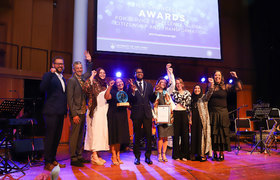
On a sunny spring morning, residents of Manenberg and Heideveld filled a community hall to brainstorm and unpack this question and what it means. The discussion included various role players including residents, social workers, retired healthcare workers and members of the local neighbourhood watch. It formed part the Milestone One for the Compassionate Communities Care Project, led by the University of Cape Town’s (UCT) Chronic Diseases Initiative for Africa (CDIA); the Department of Family, Community and Emergency Care; the Division of Interdisciplinary Palliative Care and Medicine; and the Cancer Research Initiative, in collaboration with Ghent University and Vrije Universiteit Brussels, Belgium.
The five-year programme is funded by VLIR-UOS – a leading funding body focused on global sustainable development that offers scholarships and partnerships between academics from Flanders and partner institutions in Africa, Latin America and Asia. The project responds to the growing need for palliative care in South Africa, with an aim of laying the foundation for developing a multi-sectoral, community-led palliative care programme in Manenberg and Heideveld.
“Palliative care should take a holistic approach and include physical, emotional, mental, spiritual and social well-being.”
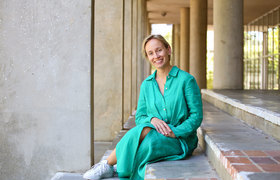
“Palliative care should take a holistic approach and include physical, emotional, mental, spiritual and social well-being to improve the quality of life of patients of all ages with serious health-related suffering, [as well as] their families,” said Dr Sarah Day, senior research officer in the Division of Public Health Medicine in the School of Public Health.
Integrate palliative care into the public health system
Since the 1990s, Dr Day said the World Health Organization has called to integrate palliative care into the public health system using cost-effective and evidence-based strategies to increase accessibility of palliative care services.
As a result, she said, community-based palliative care initiatives, which leverage social networks of care, alongside formal health services, have emerged to address social inequality in communities. And a framework for community-based palliative care is creating compassionate communities.
“[The] Compassionate Communities [project aims] to promote equity with access to palliative care through community engagement and health education. It aims to improve death literacy by normalising death and grieving,” she said.
Community participation
Since March, the research team and the Manenberg and Heideveld Health Forum have had regular meetings to discuss both communities’ palliative care needs. An important part of this process was to bring various stakeholders together to map community assets (resources, people, or places that can improve the quality of life for the community) and build a network to support and strengthen palliative care in both communities.


Since March, the research team and the Manenberg and Heideveld Health Forum have had regular meetings, including a workshop in November, to discuss both communities’ palliative care needs.
The work session, held in November, was interactive and included robust focus group discussions. Day said role players were divided into groups and were presented with different case studies that involved a palliative care case. She said participants were tasked with brainstorming how to assist the patient and their family using community resources.
The goal of these discussions was to:
- build a network of stakeholders at different levels who can work together and strengthen and support palliative care needs within both communities
- identify community assets and resources within both communities to support palliative care
- acquire additional information on palliative care needs and challenges
- learn from communities to develop contextually acceptable palliative care
- empower communities to voice the need for palliative care.
“One of the aims of the workshop was to explore what roles are feasible and acceptable for communities and other stakeholders and what would need to happen to support communities to provide palliative care support,” Day said.
Nurturing communities that care
Assisting a patient in end-of-life care differs vastly from one patient to the other. Through the programme, she said, some community members will be trained to provide psychosocial, spiritual and bereavement support for patients and their families. Others will be trained on health and death literacy, as well as how to provide basic at-home care such as bed washes.
“[We want] to reach patients in underserved, remote communities.”
“[We want] to reach patients in underserved, remote communities, and [in doing so] we hope to improve linkages and collaboration between communities, healthcare workers and other stakeholders,” she said.
Ongoing engagements with the Manenberg and Heideveld communities will take place for the duration of the project, and another stakeholder work session is scheduled for early in 2026 before moving into the planning phase of the project.
 This work is licensed under a Creative Commons Attribution-NoDerivatives 4.0 International License.
Please view the republishing articles page for more information.