
From the DVC’s Desk
Welcoming UCT postgraduates and supervisors
10 March 2026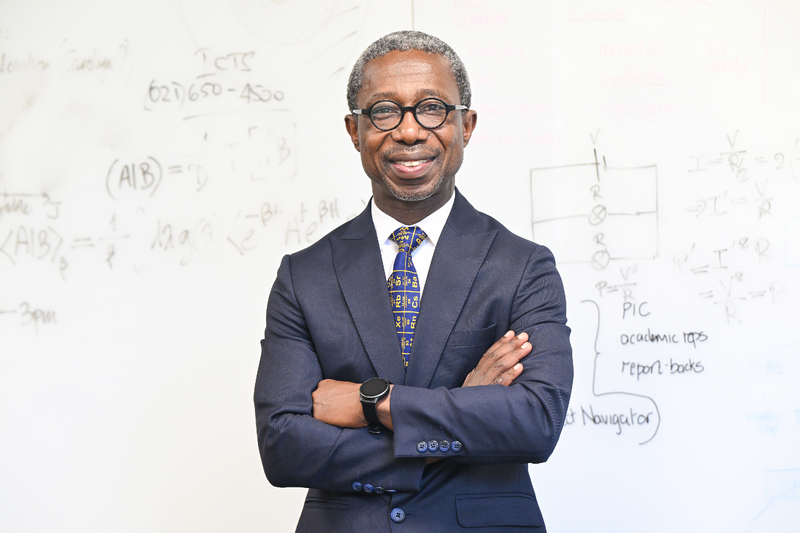
Dear postgraduates and supervisors
I begin my tenure as the new deputy vice-chancellor managing a complex portfolio just as you too begin – or continue – your postgraduate journey with us. I want to acknowledge your ambition, curiosity and resilience which have enabled you to get this far.
Postgraduate study is a journey marked by growth, which inevitably includes moments of uncertainty and feeling “stuck”. You may not experience these moments immediately, and you may not anticipate needing support – yet experience tells us that most postgraduate journeys include periods where alternative perspectives, guidance and additional resources can become essential. Postgraduate study is demanding by design and while making progress is largely up to the individual, we do not expect you to navigate it alone.
I want to introduce you to the comprehensive level of support available to you at the University of Cape Town (UCT). I encourage you to familiarise yourselves with it so that you know what’s available to you to bedrock your successful journey. Facing challenges is going to be a part of the scholarly process, so it’s a good idea to know – from the beginning – how the university positions you to succeed academically, mentally and physically.
Our new Postgraduate Support Ecosystem diagram
Developed to give an overview of all the different academic and support services available to you throughout your studies is our Postgraduate Support Ecosystem diagram which includes a series of digital brochures.
Currently depicting six “Categories of support”, the ecosystem presents 25 different services including support for your wellbeing, writing, data analysis and entrepreneurial ambitions. Each service has a designated team geared towards providing you with the tools, skills, support and resources you need to navigate your degree journeys.
While I want to encourage all of you to make use of these resources when you need help; and to improve your skills and abilities – I am aware that for some people, asking for help is hard for various reasons.
Asking for help can indicate strength
Often the true challenge is not so much whether we are familiar with the existence of a support service, but whether we will allow ourselves to reach for it – particularly in contexts where self-reliance, perseverance and fear of failure are hard-earned survival skills. I encourage you to see seeking support not as a sign of weakness, but as a thoughtful, strategic act of care for your work, your wellbeing and your long-term goals. Just as I lean on the expertise of my colleagues as I navigate this new role.
The importance of getting “stuck” during your degree journeys
Advanced scholarship requires you to grapple with complexity, uncertainty and intellectual discomfort. Progress is often forged precisely in those moments of difficulty and vulnerability. What matters most is not whether you encounter obstacles, but how you respond when you do.
For many of our postgraduate students, the academic demands are compounded by significant financial pressures, professional commitments and family responsibilities. In contexts where funding is limited and the stakes of success are high, the weight of expectation can feel immense from the outset. I acknowledge this reality. I also affirm that perseverance does not mean enduring struggle in isolation. Seeking guidance, drawing on available support, and remaining connected to your academic community are powerful strategies for sustaining momentum and achieving completion.
Leverage your potential and growth opportunities
The workforce is increasingly shaped by generative AI and rapidly evolving technologies. In such an environment, your distinctively human capacities – critical judgement, ethical reasoning, creativity, empathy, grit, collaboration and self-awareness – will become even more valuable. Developing these strengths requires more than disciplinary expertise; it calls for a nuanced understanding of your own psychology, motivations and capabilities. Learning how to be the most thoughtful, adaptive and self-directed version of yourself should be integral to the academic project.
UCT is ready to support your continued growth through its academic development programmes, wellbeing services, leadership initiatives and career-preparation opportunities. Realising this potential, however, depends on your willingness to engage intentionally with the services outlined in the support ecosystem and to see your postgraduate years not only as a period of research, but as a formative stage in becoming the kind of professional and citizen our societies need.
To our community of supervisors
Supervisors play a vital role in helping students navigate their postgraduate journey, not only through academic guidance, but by being able to point students towards appropriate sources of development and support. I urge supervisors to help bring attention to this postgraduate support ecosystem by sharing it with their students.
An important note: The application and registration processes are not the same
Lastly, please remember that you only officially start your degree once you have completed the online registration process. There is an easy-to-follow guide that explains how. Registration is not a once-off activity during your degree. Returning students must re-register at the start of every year.
Processes for postgraduate registration may vary between faculties, so be sure to note the dates and guidelines for your faculty to avoid a penalty fee for late registration. The deadlines and window periods for registration/re-registration for most of the 2026 coursework programmes have already passed. Registration for first-year research-only (e.g. master’s by dissertation or PhD) programmes is still ongoing.
Ours is the leading institution on the continent and I am so pleased that you have decided to pursue your studies here. I wish you the very best for the year ahead.
Sincerely
Professor Thokozani Majozi
Deputy Vice-Chancellor: Research and Internationalisation
Read previous communications:
 This work is licensed under a Creative Commons Attribution-NoDerivatives 4.0 International License.
Please view the republishing articles page for more information.