
Wamkelekile, Welkom
Professor Dan Stein (1962–2025)
12 December 2025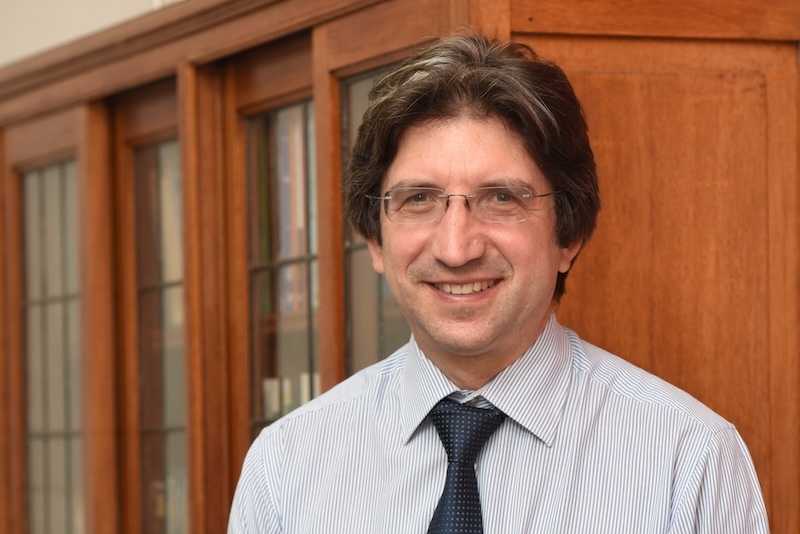
17 September 1962–6 December 2025
The University of Cape Town (UCT) community and peers are deeply saddened by the passing of Professor Dan Stein, an internationally acclaimed psychiatrist, neuroscientist and one of South Africa’s most distinguished scholars. He was born on 17 September 1962 and passed on 6 December 2025 after a short illness. He was 63.
Professor Stein’s contributions to psychiatry, mental health and neuroscience have left an indelible mark on the global scientific community. Highly respected for both his intellectual rigour and his humane approach to mental health, he dedicated his career to advancing understanding, improving care and reducing stigma around mental illness in South Africa and across the world.
Having started his journey as a member of staff of the university 20 years ago, he held various roles throughout his tenure. At the time of his passing, Professor Stein served as professor and chair of the Department of Psychiatry and Mental Health. He held a South African Medical Research Council (SAMRC) unit on Anxiety & Stress Disorders; and was later awarded a new SAMRC unit on Risk & Resilience in Mental Disorders of which he was the director. He was also the scientific director of the cross-disciplinary and integrative UCT Neuroscience Institute. In recognition of his standing as a global leader, Stein was an elected Fellow of UCT, Member of the Academy of Science of South Africa, and Fellow of the Royal Society of South Africa, the European College of Neuropsychopharmacology, the American Psychiatric Association, the World Academy of Sciences and the African Academy of Sciences.
A life of scholarship and service
A graduate of UCT’s medical school, Stein went on to earn doctorates in Clinical Neuroscience and Philosophy from Stellenbosch University. He completed a prestigious postdoctoral fellowship in psychopharmacology at Columbia University in New York, an experience that helped shape his lifelong commitment to integrating neuroscience, clinical practice and philosophy in the study of mental disorders.
His research focused on the psychobiology and treatment of anxiety-related conditions – particularly obsessive-compulsive disorder, post-traumatic stress disorder and social anxiety disorder. With a remarkable ability to bridge basic science, clinical research , epidemiology and public mental health, he championed a biopsychosocial model of mental illness that influenced teaching, research and clinical practice globally.
A global scientific force
Ranked among the most cited researchers on the African continent and in Psychiatry globally, Stein produced over 1 600 peer-reviewed publications and more than 25 scholarly volumes. At the time of his passing, Stein’s body of published work had garnered over 328 000 citations with an h-index exceeding 220.
Simply put, his work shaped international guidelines, informed major global mental health initiatives and influenced generations of clinicians, scientists, policymakers and the individuals who benefited from the work he spearheaded and supported.
He was consistently recognised as one of the most renowned and influential researchers not just at the university or nationally, but globally. He regularly appeared on the Clarivate Highly Cited Researchers List, contributing profoundly to UCT’s high standing in research.
Honours and recognition
Throughout his career, Professor Stein received numerous national and international accolades and awards, reflecting the depth, breadth and significance of his scholarship. These included:
- Lifetime Achievement Award, World Federation of Societies of Biological Psychiatry
- Max Hamilton Memorial Award, International College of Neuropsychopharmacology
- John F. Herschel Medal, Royal Society of South Africa
- SAMRC Platinum Award for lifetime scientific achievement and outstanding contributions to health research
- National Research Foundation (NRF) A-rating, repeatedly renewed for sustained global impact
His leadership was instrumental in strengthening Africa’s neuroscience ecosystem. He was the founder and director of the multi-disciplinary collaborative hub of psychiatric neuroscience research, UCT’s Brain-Behaviour Initiative. He also helped lay the foundation for what would become the Neuroscience Institute, established in 2015 as the first of its kind on the continent.
Mentorship, leadership and institutional impact
Stein was a generous and deeply engaged mentor who nurtured dozens of emerging scientists, many of whom now hold senior academic and clinical positions globally. He led Africa’s first nationally representative mental health survey, advanced neuroimaging and genetic research in the country and guided major interdisciplinary projects that expanded the continent’s presence in global mental health research.
Across UCT, he was widely admired for his humility, collegiality and service. He contributed to clinical training in Psychiatry, advanced the university’s neuroscience strategy and played a central role in integrating research excellence with social responsiveness within the Faculty of Health Sciences.
A multidimensional thinker
A recipient of the vice-chancellor’s annual prize in recognition of outstanding research that has demonstrable impact on society, Stein advocated for moving from “bench to bedside to bundu” (‘bundu’ referring to communities) as a critical aspiration for medical and psychiatric research as he became increasingly interested in integrating neuroscience and public mental health.
His contribution to the academic project was immeasurable with his intellectual interests extending well beyond traditional disciplinary boundaries. Recently he published the book, Problems of Living: Perspectives from Philosophy, Psychiatry, and Cognitive-Affective Science, which reflects his lifelong belief that understanding human suffering requires insight from both the sciences and the humanities. His ability to engage philosophical, ethical and scientific questions made him a rare and compelling voice in global mental health, and the academy, more broadly.
A profound loss
He leaves behind a remarkable legacy of scholarship, leadership and humanity. He elevated UCT and South African science on the global stage, built institutions that will serve future generations and dedicated his life to improving the lives of people living with mental illness.
Survived by his wife, Professor Heather Zar; children Gabriella, Josh and Sarah; and grandson, Rafa – he will be deeply missed by his family, colleagues, students, collaborators and all those whose lives he touched.
The university extends its heartfelt condolences to the Stein family, and to all who are mourning this tremendous loss.
His funeral was held on Sunday, 7 December 2025, in Pinelands, Cape Town.
 This work is licensed under a Creative Commons Attribution-NoDerivatives 4.0 International License.
Please view the republishing articles page for more information.