
Wamkelekile, Welkom
AI helps tailor TB and malaria drugs for African patients
05 December 2025 | Story Lisa Templeton. Photo Lerato Maduna. Read time 6 min.
A groundbreaking collaboration between the University of Cape Town’s Holistic Drug Discovery and Development Centre (H3D) and artificial intelligence (AI) partners Ersilia Open Source Initiative has produced a novel computational pipeline designed to tailor malaria and tuberculosis (TB) treatment to African genetic diversity. The work, published in Nature Communications, marks a significant step towards safer, more effective African-centric drug dosing.
Africa is the most genetically diverse continent on Earth, yet this diversity is rarely accounted for in global drug discovery and development. Genetic variation can strongly influence how individuals metabolise medicines, affecting safety, efficacy and the risk of resistance. But because most drug discovery has taken place outside Africa, relevant pharmacogenetic (mathematical modelling) data remains scarce.
In response, the H3D-Ersilia team developed a new computational approach combining machine learning, AI and pharmacometrics. The pipeline hypothesises on which genes, and which African genetic variants, influence the metabolism of malaria and TB drugs. This opens the door to dose adjustments tailored to genetically diverse populations.
Tackling genetic diversity
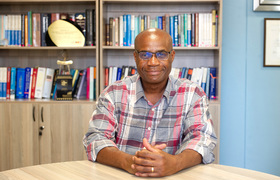
“This variability in drug response due to variable genetic differences is poorly characterised in African populations, with few tools available to predict its impact,” said Professor Kelly Chibale, founder and director of H3D. “This must be urgently addressed to safeguard against adverse events, poor treatment outcomes and the emergence of resistance.”
“This must be urgently addressed to safeguard against … poor treatment outcomes.”
Chibale, a professor of organic chemistry and the holder of the Neville Isdell Chair in African-centric Drug Discovery and Development, emphasised the personal significance of the research. “It is vital for me, as an African, to contribute solutions to health challenges facing my people, and to improve treatment outcomes in people of African descent.”
Published under the title “Artificial Intelligence coupled to pharmacometrics modelling to tailor malaria and tuberculosis treatment in Africa”, the study harnesses statistical and mathematical modelling to examine the relationship between a drug, its user and the disease being treated.
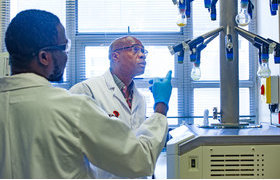
H3D provided the modelling expertise to assess how African genetic variants may alter drug exposure levels. This allows for predictions of optimal doses to ensure efficacy and safety for different populations.
“This is significant in that UCT is taking the lead in addressing health challenges unique to Africa through cutting-edge, world-class research, with local relevance,” Chibale noted.
Locally-relevant research
Ersilia, a Barcelona-based non-profit focused on open-source drug discovery for neglected diseases in the Global South, supplied the AI and machine learning capabilities. Their team trained models to predict interactions between genes and malaria/TB drugs, by virtually screening genes harbouring African variants.
“In this work we showed how a computational approach could aid the adjustment of dosing regimens for malaria and TB drugs in Africa,” said Chibale.
“These dynamics have major implications for malaria and TB.”
Mutations in genes that encode drug metabolising enzymes can significantly alter how quickly or slowly people process medications. Slow metabolisers risk toxicity because drugs accumulate in the body, while fast metabolisers may experience treatment failure or drug resistance due to subtherapeutic levels.
These dynamics have major implications for malaria and TB, two diseases responsible for high morbidity and mortality across the continent.
“We piloted with malaria and TB because of their huge burden in Africa,” said Chibale. “As a proof-of-concept, we had to begin with one or two diseases before expanding to others.”
The same methodology can now be applied across a wide range of drugs and conditions.
Improving predictive accuracy
The next phase will draw on new data sources to enhance predictive accuracy. One immediate project involves studying African-specific genetic variants using human liver microsomes derived from donors of African ancestry. This is a critical resource currently missing from pharmaceutical research and development, which typically relies on samples from European populations.
By incubating commonly used African medicines with these microsomes, the team will assess metabolic rates, including fast, medium or slow, and feed these data into models to predict optimal doses.
“Science is not just for curiosity,” Chibale reflected. “It is for addressing societal challenges.”
The paper’s co-authors were Dr Gemma Turon, co-founder and executive director, Ersilia; Dr Mwila Mulubwa, H3D; Dr Mathew Njoroge, H3D; Dr Anna Montaner, Ersilia; and Dr Miquel Duran-Frigola, co-founder and scientific and technology cirector, Ersilia.
 This work is licensed under a Creative Commons Attribution-NoDerivatives 4.0 International License.
Please view the republishing articles page for more information.