
Wamkelekile, Welkom
Celebrating half a decade of developing leaders in global surgery
26 March 2026 | Story Niémah Davids. Photos Lerato Maduna. Read time 7 min.
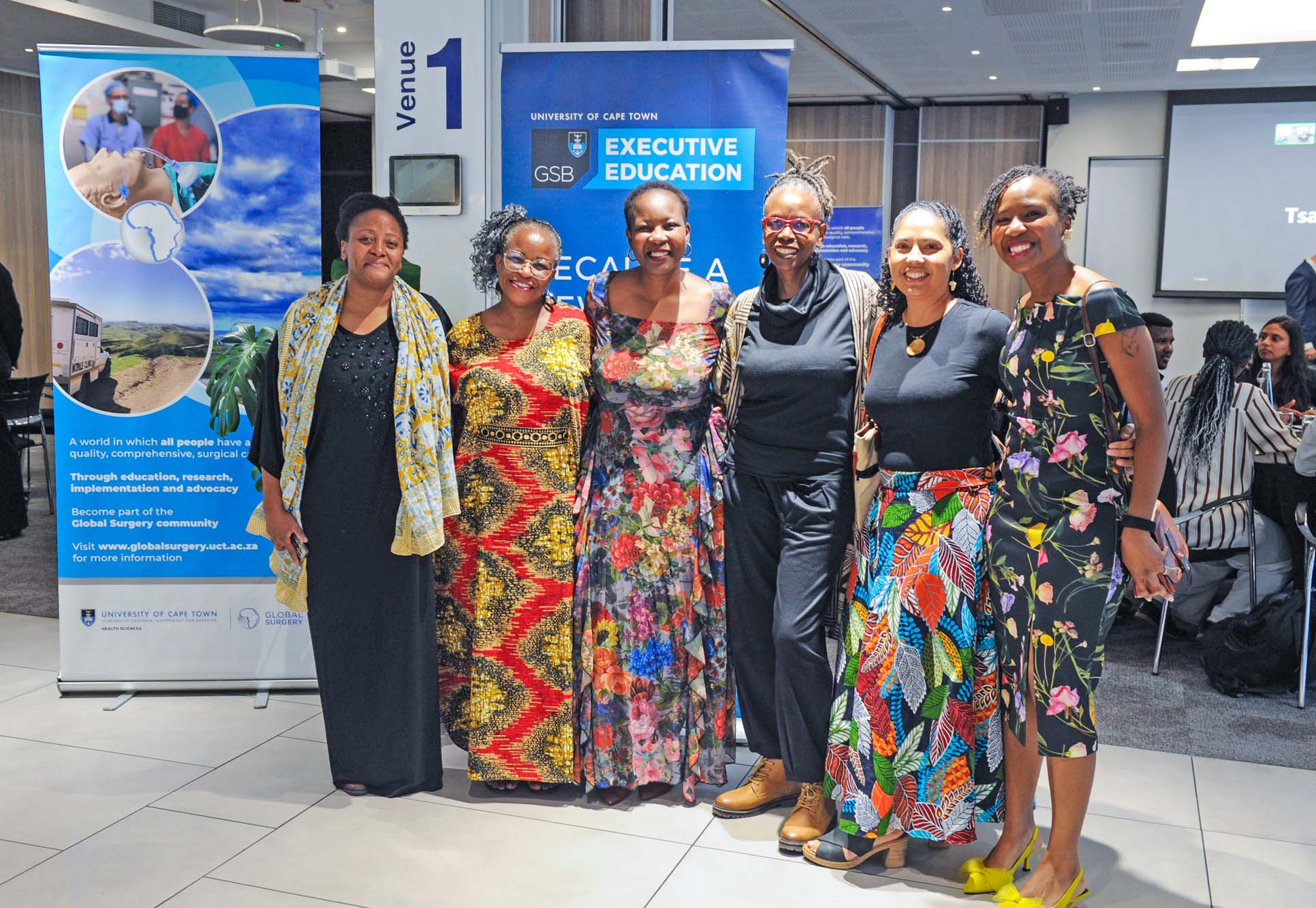
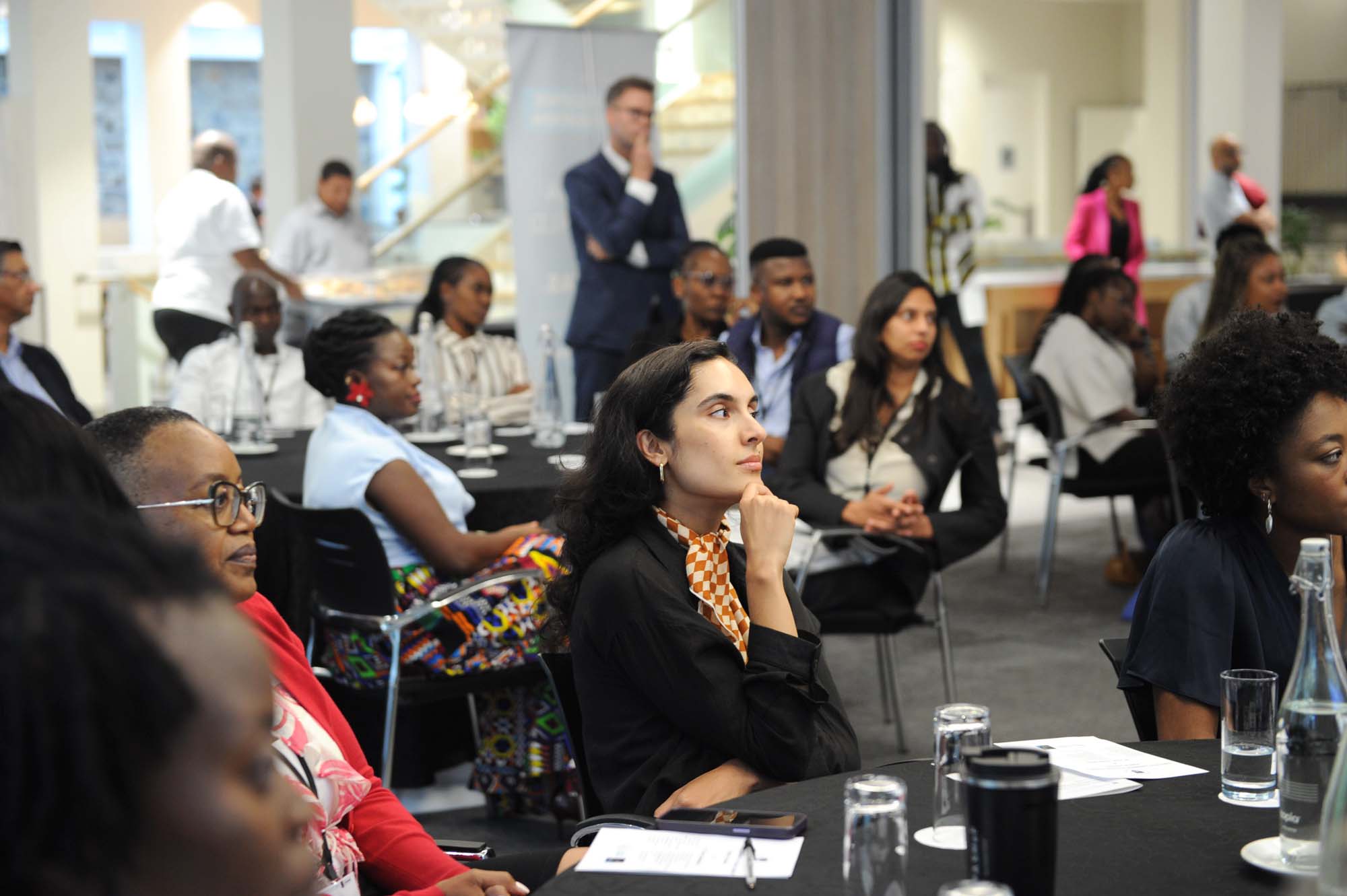
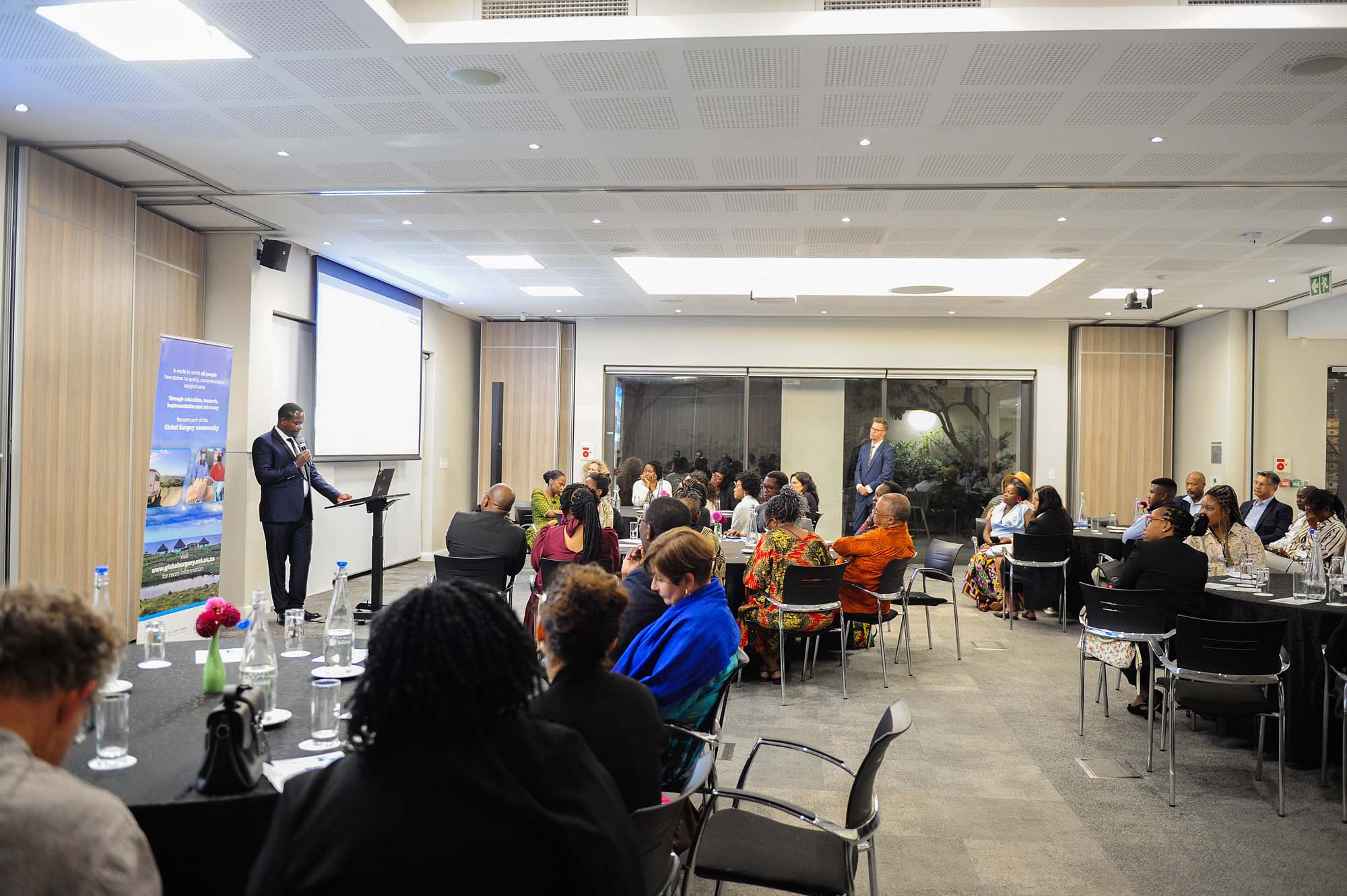
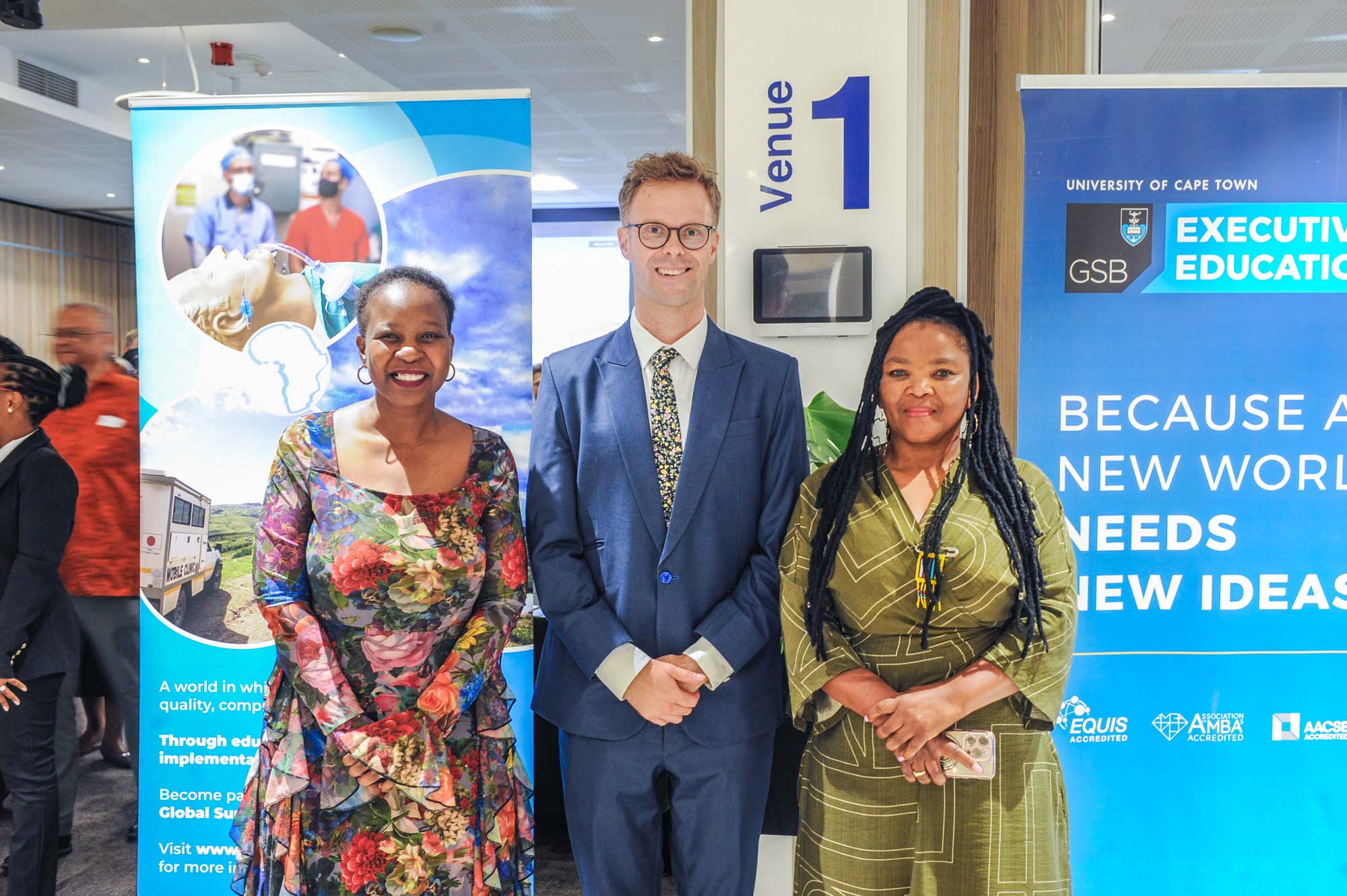
United under a common theme – to improve surgical outcomes, make surgery accessible for vulnerable populations, and develop a pipeline of global surgery leaders in Africa – delegates in healthcare from across the continent convened for the fifth annual Executive Leadership in Global Surgery Patron’s Dinner at the University of Cape Town Graduate School of Business (UCT GSB), on Monday, 23 March.
The event also welcomed new delegates to the programme – a collaboration between the UCT GSB and the Global Surgery Division in the Faculty of Health Sciences. The programme ensures leaders in healthcare in both the public and private sectors are equipped with the skills and expertise they need to become catalysts for change in their field. Delegates in attendance included UCT Vice-Chancellor Professor Mosa Moshabela; and the patron of the programme, Professor Nomafrench Mbombo. Dr Abdullah Saleh, a paediatric general surgeon at the University of Alberta in Canada, delivered the keynote address.
Celebrating the fifth cohort
Reflecting on half a decade of its existence, Professor Salome Maswime, the head of Global Surgery at UCT and the brain behind the programme, said when they first started dreaming and imagining the course seven years ago, they wanted to teach surgical leadership at the UCT GSB.
The idea, Professor Maswime said, was to develop a “little MBA in surgery” programme – a crash course that enabled delegates to receive a certificate after six months. At the time, she said, the idea seemed ambitious, and sometimes impossible to find pedagogical reasoning and logic.

“But here we are, five years later with some of the most outstanding surgical leaders on the continent, bringing us to 104 leadership fellows from 25 countries,” Maswime said. “When we look back, some of our alumni have gone back to their countries to become surgical representatives for their ministries of health. Some have been promoted to heads of department and associate professors in different universities, and some are leading global surgery initiatives all over the continent and the world.”
Evaluating the impact
In 2025, she said, course organisers conducted a study among past participants, with the aim of evaluating the impact of the programme.
A whopping 83% of alumni considered the programme to be transformative, and more than 40% felt that they gained new skills in advocacy and diplomacy. She said skills in quality improvement and surgical health system strengthening were said to be among the skills that most alumni surveyed preferred. Further, the study found that their personal leadership growth was interpreted by improved confidence.
“We found that the course served as an accelerator for career progression for mid-career surgical professionals, and for improving surgical system strengthening in Africa. One of our greatest successes has been to develop a pipeline of global surgery leaders on the African continent,” she said.
Changing things up
While she recognised the programme’s fifth milestone and its achievements to date, Professor Mbombo said there’s still work to be done, and one question needs to be answered now: Where to from here? Now is the time to change things up, Mobombo added.
“We can’t be doing the same thing without necessarily changing some parts of it. We understand that [the programme] sits on the tree of research, education and action,” she said. “[But] the main part is action and advocacy.”
In particular, she said, current global public health insecurities should make everyone reflect on how to do things differently.
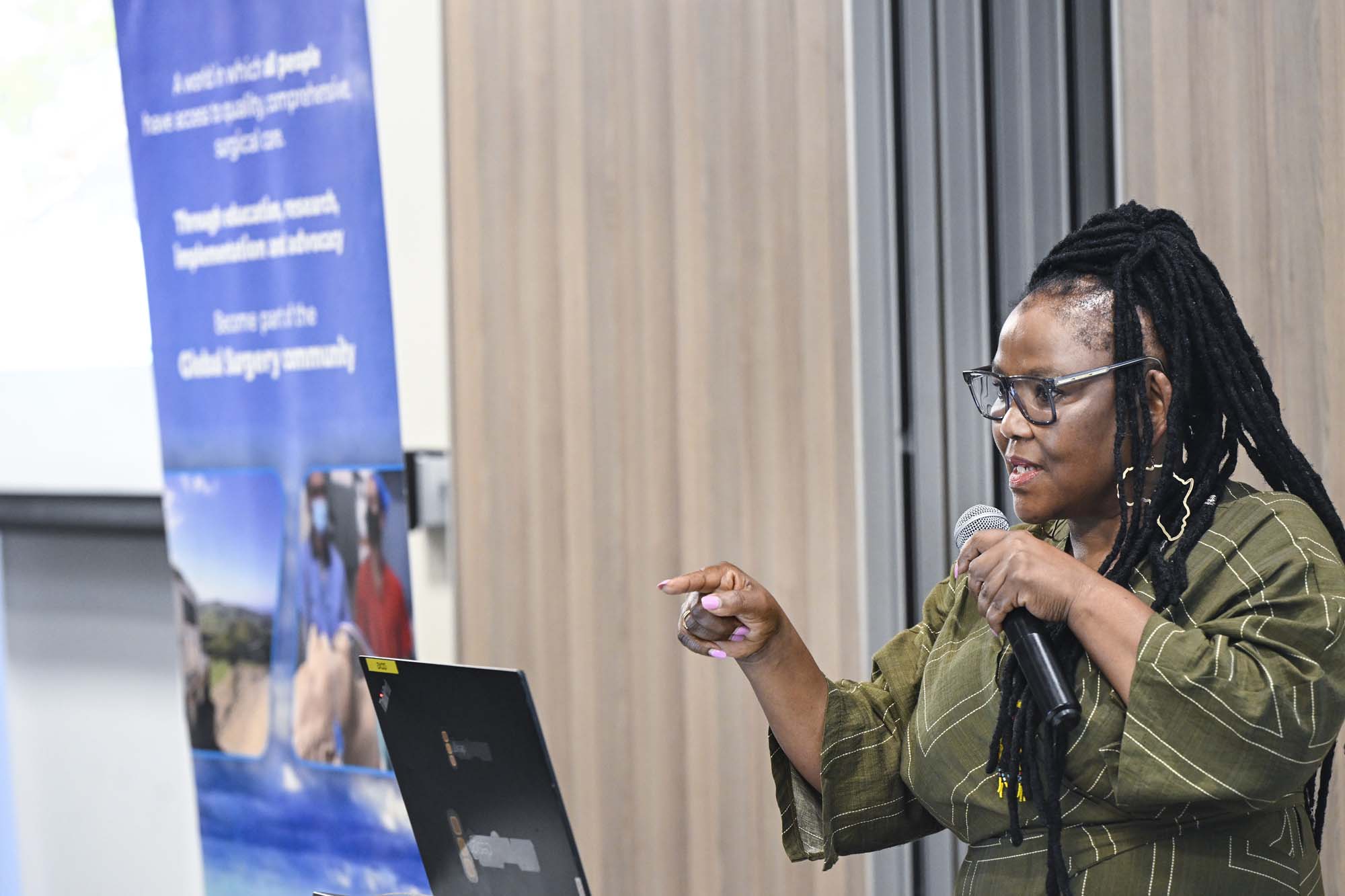
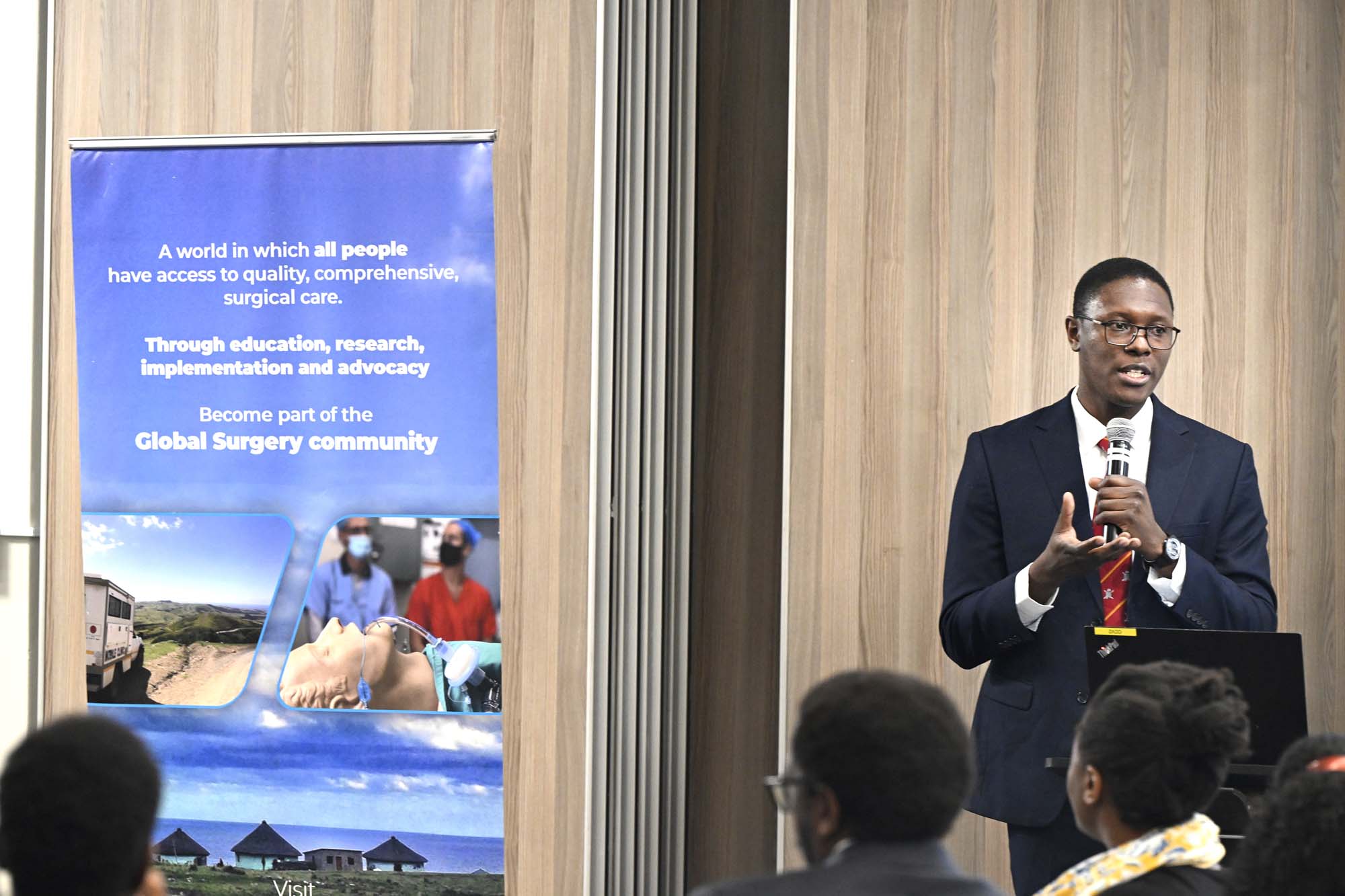
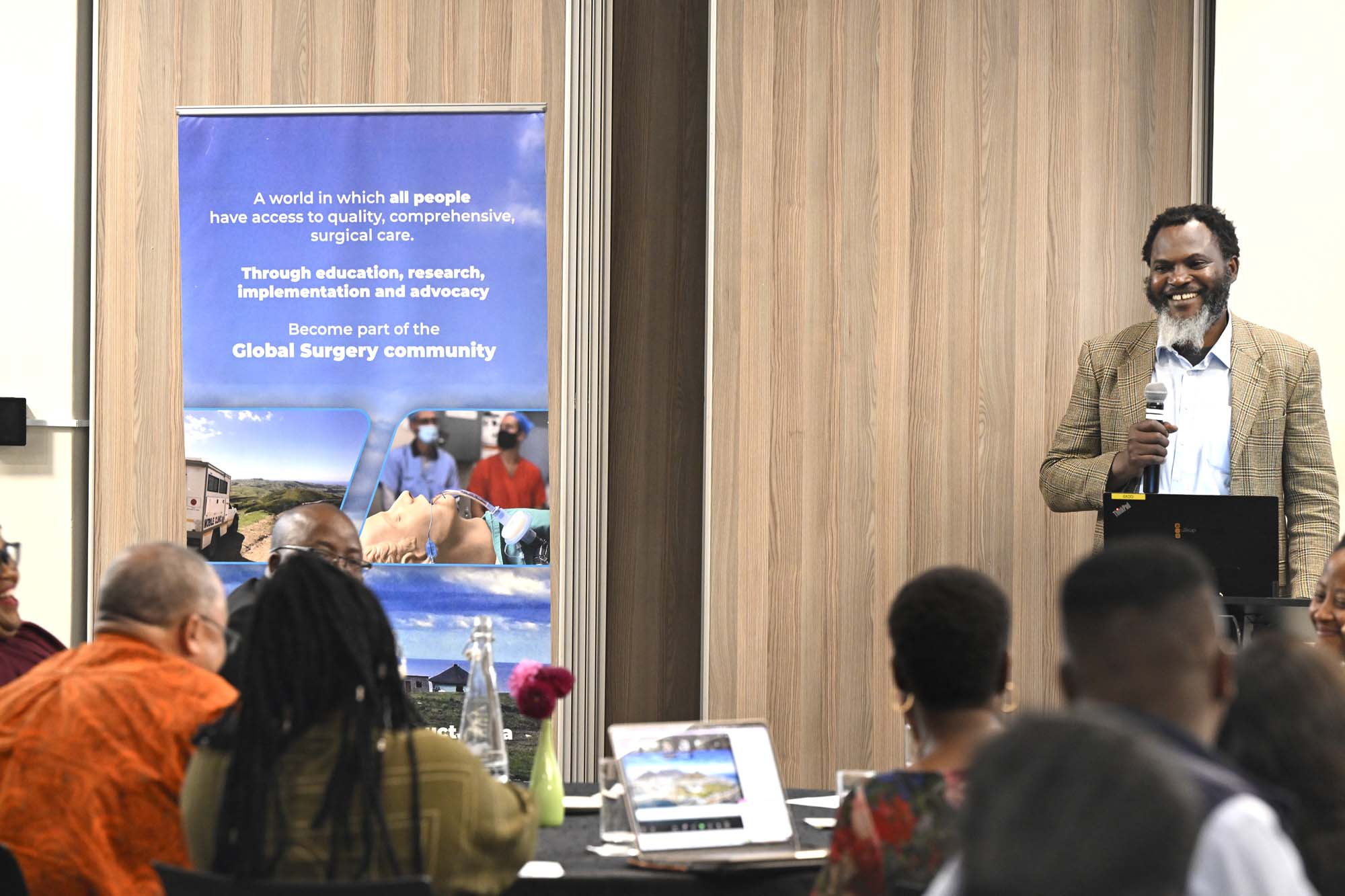
“For me, it’s about positioning. How do we position ourselves in regard to being responsive [to] those global health insecurities happening outside,” she said. “We talk about surgical [care] access. We have developed these national surgical plans and we’re doing the tracking. [But] where is the action, most specifically now in the context of global insecurities. We need to reposition.”
The only one of its kind
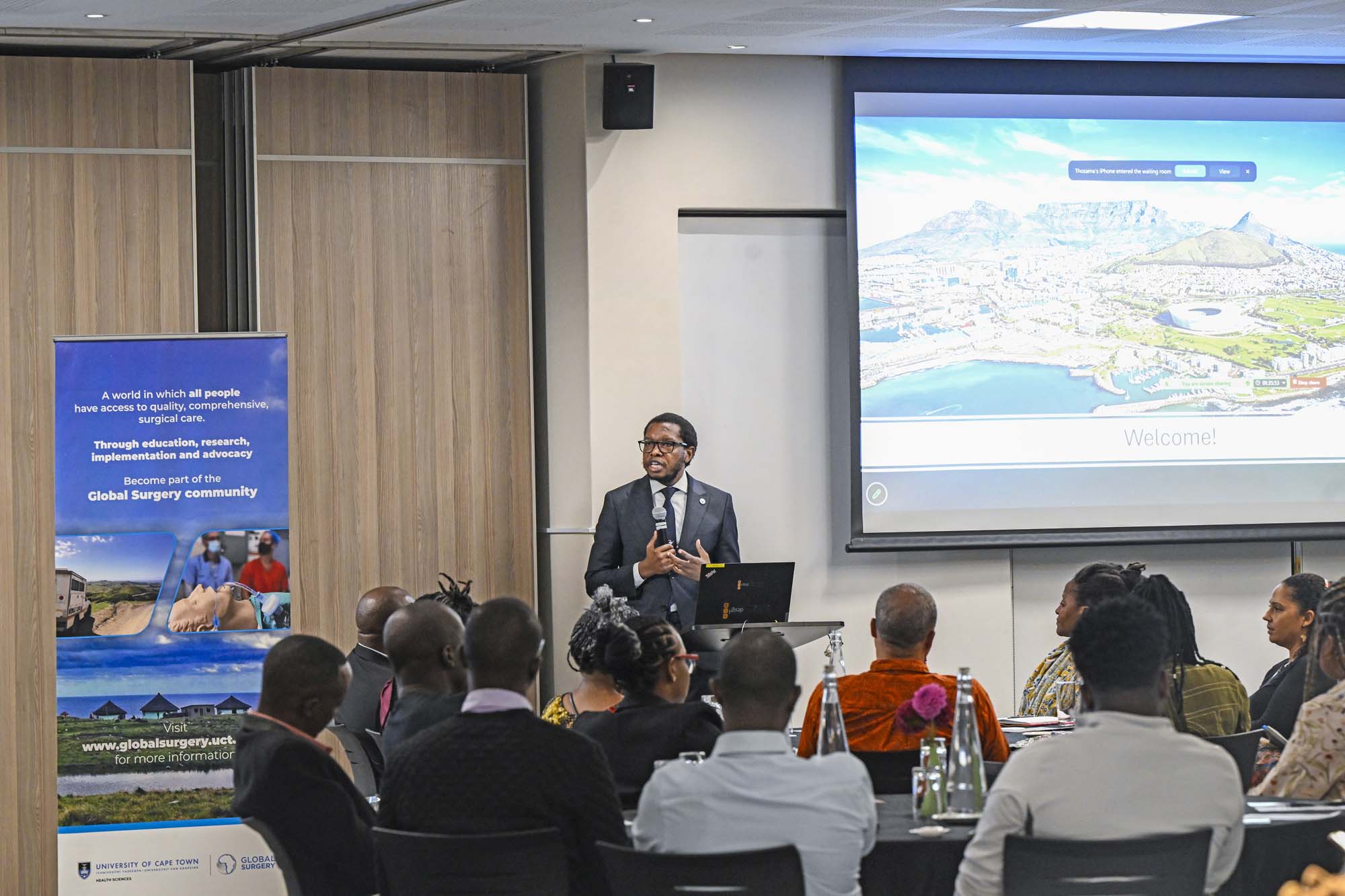
At the podium, Professor Moshabela reminded the audience that the programme remains the only one of its kind on the continent and in the world, and joins delegates in health, policy and government to achieve a shared aim: improved surgical outcomes for vulnerable populations.
“It’s remarkable that that interdisciplinarity seems to be working,” he said.
And despite the challenges, Moshabela said, the fifth anniversary presents an opportune moment to reflect on the programme’s achievements, and to look ahead and remain committed to ensuring its continued success.
“And I think it was really foresight that said: in order for us to overcome [challenges], let’s develop leadership that can help us navigate all the complexities [while] knowing that we may not be able to solve all the problems or have all the resources that we need,” Moshabela said.
“The leadership pipeline that has emerged out of this programme truly represents Africa’s future and we are very pleased to be part of it and to be part of that journey.”
A partner in the journey
And the leadership pipeline the programme nurtures will now extend into North America, as plans to establish the course in Canada gains momentum.

“There is only this leadership in global surgery programme in the world. We know because we are trying to set another one up in Canada. When we first started to look at this concept, trying to build this programme, [we didn’t know] that there was this amazing, innovative idea here. We realised we didn’t want to set up a different programme – we wanted to be an extension, and a partner in this journey,” Dr Saleh told the audience.
The programme will launch at the University of Alberta in September and Saleh said the goal is to offer part of the course there and the rest in Cape Town. And by doing so, he said participants will learn how to navigate “the craziness” of more than one university, the structures of credentialing and governance.
“If she knows and knows that she knows, then follow her.”
As he concluded, Saleh said while working to set up the course in Canada and benchmarking with UCT, he was reminded by an adapted quote his dad often used:
“If he doesn’t know and doesn’t know that he doesn’t know, then teach him. If she knows but doesn’t know that she knows, then encourage her. If he doesn’t know but thinks he knows, avoid him. But if she knows and knows that she knows, then follow her,” he said.
Others who contributed reflections included Dr Relebohile Ncha, the chief director of hospitals and tertiary health services at the National Department of Health; Dr Michael Mwachiro, the education, scientific and research committee chairperson at the College of Surgeons East, Central and Southern Africa; Professor Emmanuel Makasa, the chairperson of the regional SADC Technical Experts Working Group of Surgical Healthcare; Dr Khumo Jere of the Urogynaecology Unit at the University of Stellenbosch; Professor Lionel Green-Thompson, the dean of UCT’s Faculty of Health Sciences; and Professor Lydia Cairncross, the head of UCT’s Department of Surgery.
 This work is licensed under a Creative Commons Attribution-NoDerivatives 4.0 International License.
Please view the republishing articles page for more information.