

Wamkelekile, Welkom
‘Take interest in development of law’
24 March 2026 | Story Kamva Somdyala. Read time 3 min.
Minister of Small Business Development Stella Ndabeni has encouraged students to take part in processes of legislation drafting when there are opportunities to do so.
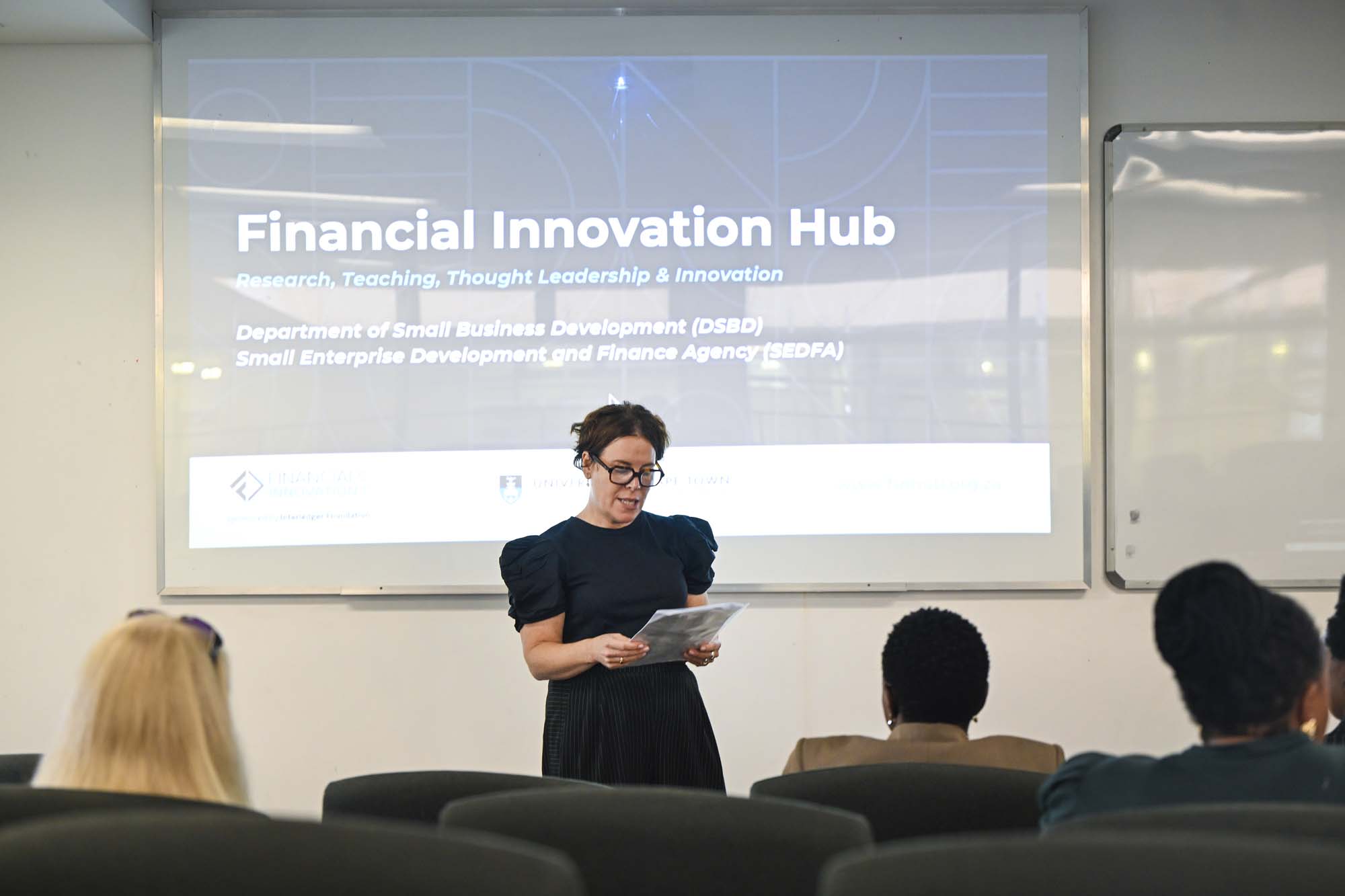
Ndabeni was speaking during a walkabout at the University of Cape Town’s (UCT) Financial Innovation Hub (FinHub). “This is where some academic institutions and entrepreneurs don’t succeed because they don’t take interest in the development of the law that affects them. Those who take interest drive their own interests and emerging sectors lag,” she remarked.
“The result is that we continue to regulate legislation and development for traditional businesses, while the work of a financial hub does not get attention. You are shy to engage in policy development.”
UCT’s FinHub operates at the intersection of research, education, community building, and innovation. It brings together the greatest minds on the African continent to lead in the research and innovation of financial technologies.
“We are still met with a global skills shortage.”
“Make it your business to be curious about legislation that governs your space. In doing that, you empower us to develop legislation which society needs. Innovation and the regulatory environment need to work together.”
As part of the visit, the minister also had a conversation with Vice-Chancellor Professor Mosa Moshabela, where they discussed UCT’s entrepreneurship initiatives and ways to partner to strengthen skills, innovation, and support for emerging businesses. It comes at a time when innovation and entrepreneurship are forming part of UCT’s strategy going forward.
The minister was welcomed by Faculty of Commerce dean, Professor Suki Goodman. “Innovation is fast becoming institutionalised in our strategy; our thinking about who we are, and who we are thinking of being. The hub is a key vehicle on delivering on this ambition. The survival of an institution like ours depends on us staying relevant.”
Education, interdisciplinary learning
Dr Allan Davids, the academic director at the FinHub, took the minister through the impressive catalogue they have built over the years. “What we’re trying to do is produce a generation of entrepreneurs and small business owners who will unlock a lot of the positive benefits to be had in our country,” Dr Davids said.
“African fintechs – between 2015 through to 2025 – have seen a doubling of revenue. We’re talking in the region of US$250 billion. Despite this, we are still met with a global skills shortage. Revenue is growing but the supply of talent into the space is not translating. How do we overcome the shortage? Education and the development of interdisciplinary learning. Our mission is to innovate and lead research and teaching in the field of financial technology as guided by our four pillars of research, teaching, thought leadership and innovation.”

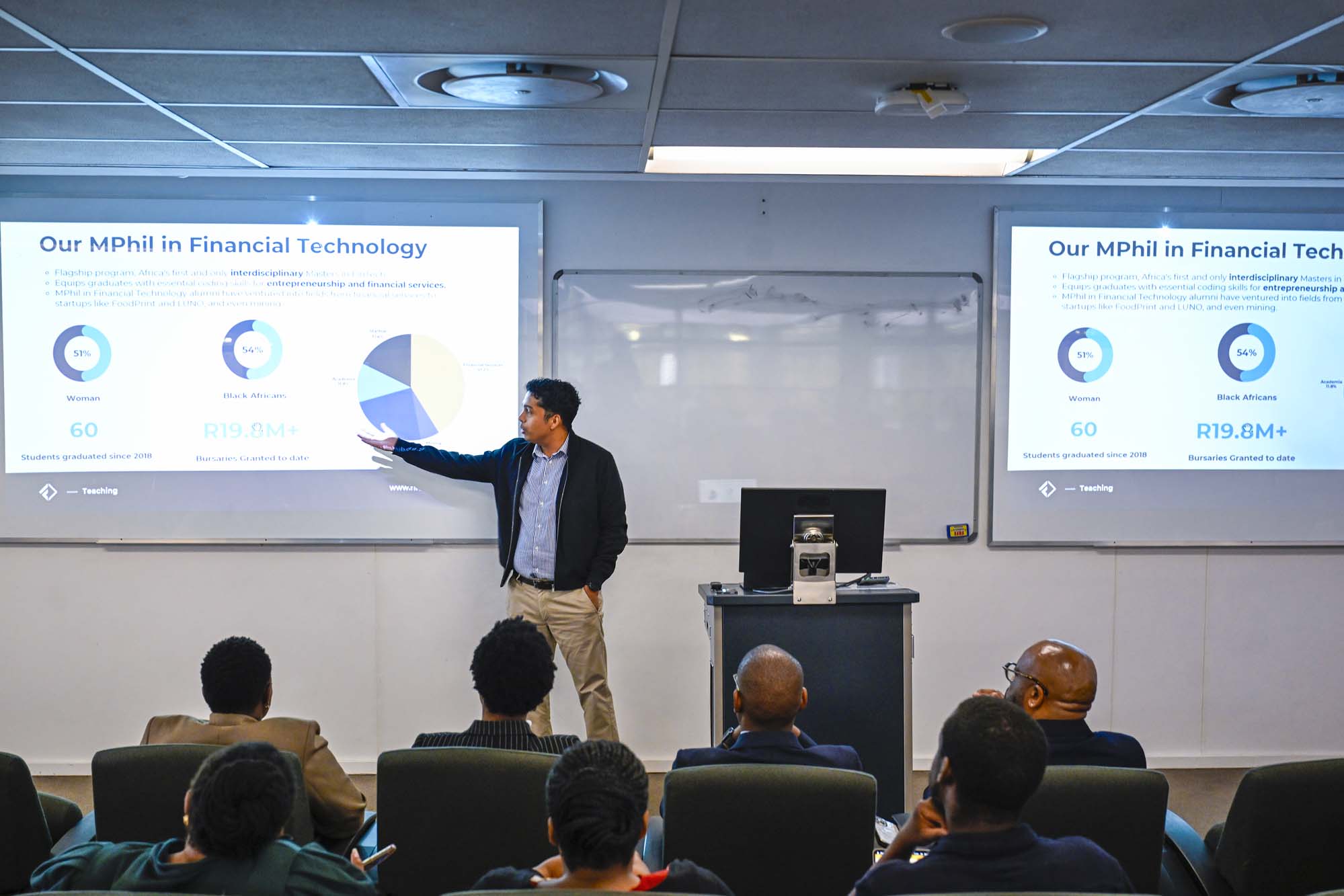
He added: “We are proud of our fundraising record. Over the last five years, we have raised around R74 million, and what’s amazing is that R20 million of that has gone straight to students in the form of bursaries.
“Two things we are proud of is the transformative aspect of our programme. Just over half of the students we have had on the programme have been women and more than half are black African.”
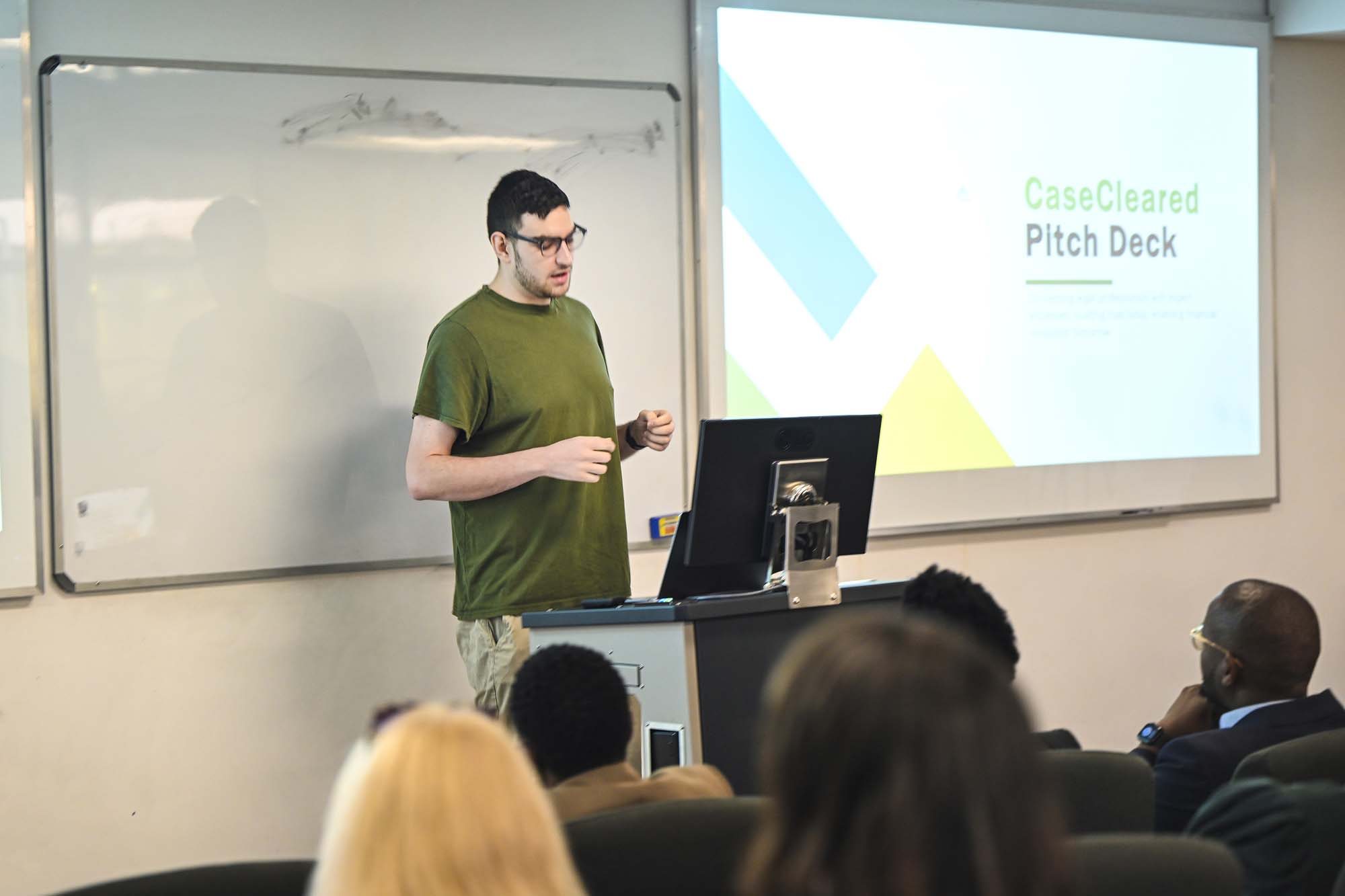
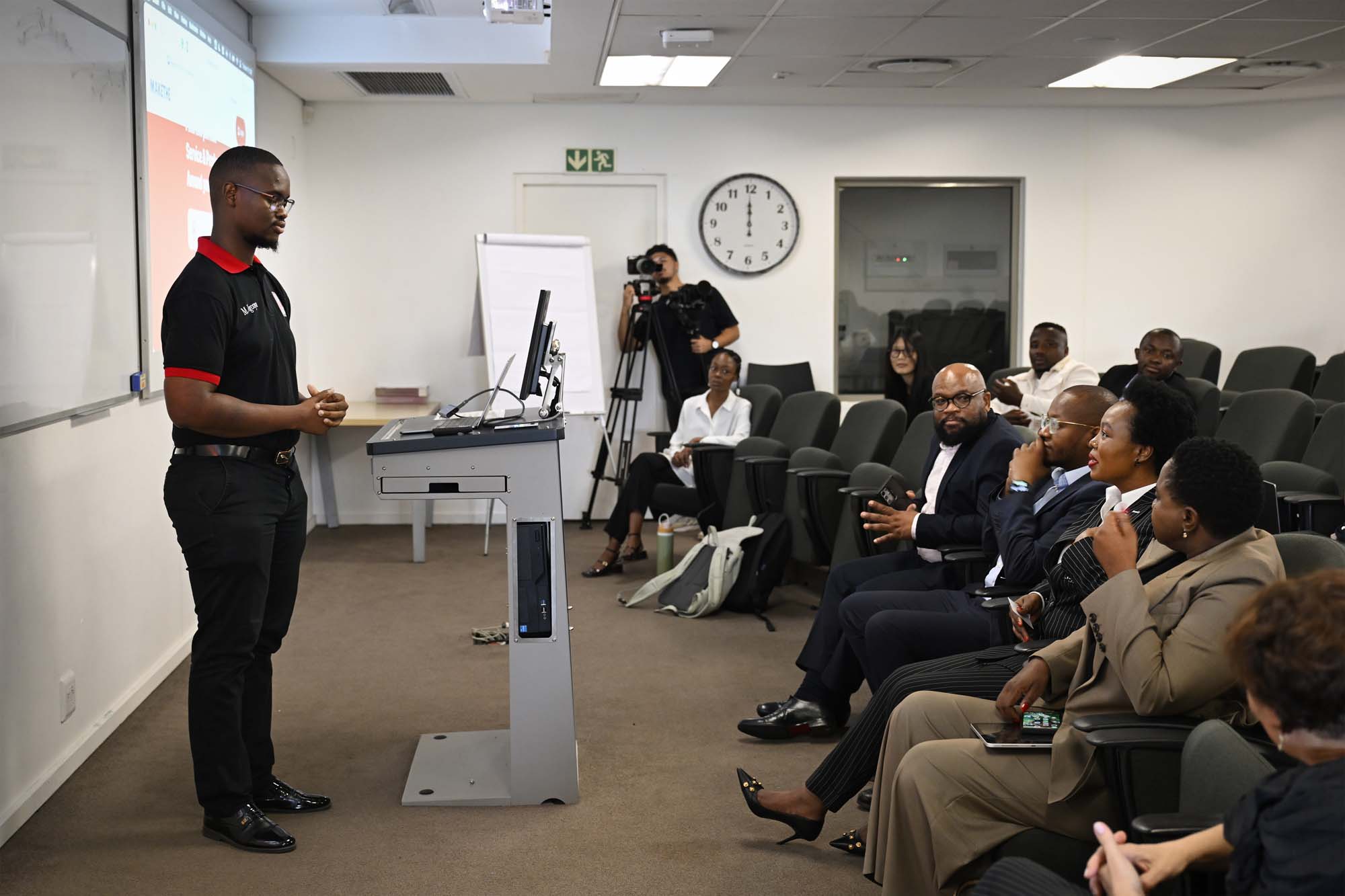
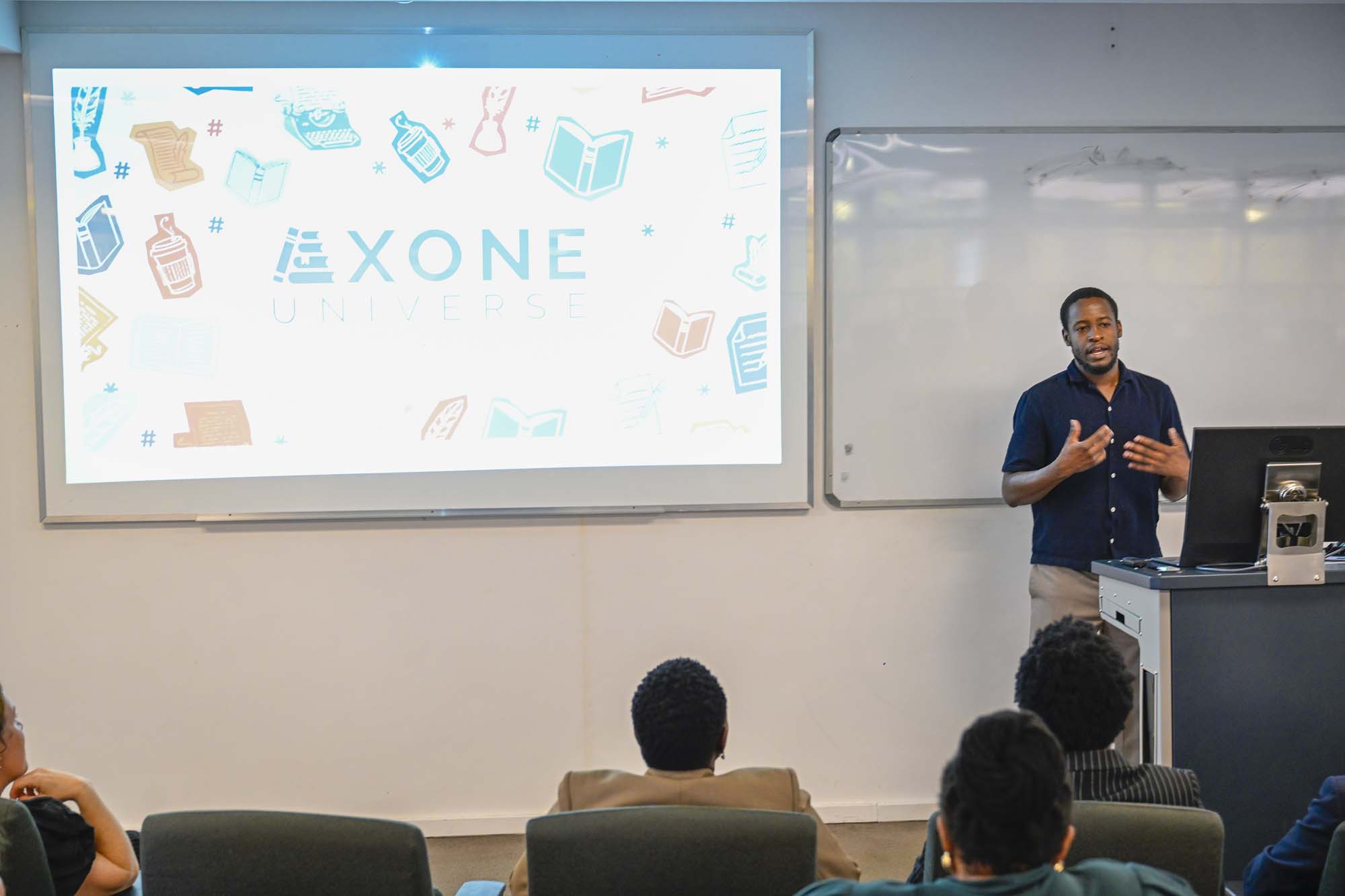
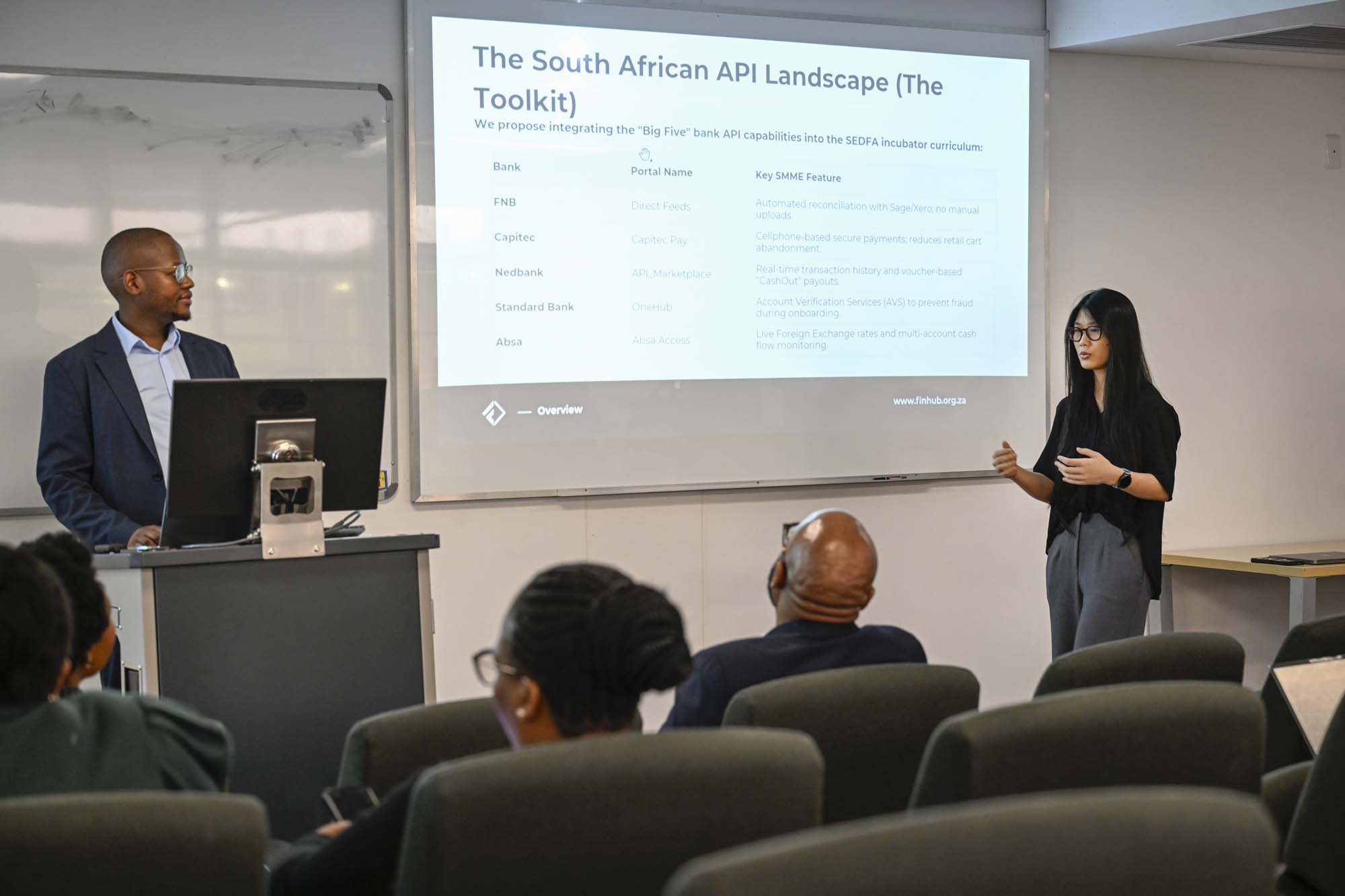
During the presentations, students exhibited their work, including a digital marketplace for student entrepreneurs who struggle to grow their businesses and reach new customers, and a service that supports e-hailing drivers with fuel advances to stabilise cash flow. The FinHub team also used the opportunity to pitch their own proposal to the department, in partnership with the Small Enterprise Development and Finance Agency.
 This work is licensed under a Creative Commons Attribution-NoDerivatives 4.0 International License.
Please view the republishing articles page for more information.