

From the DVC’s Desk
Phase 1 of the UCT Timetabling Revision Project
25 March 2026 | DVC Prof Brandon Collier-Reed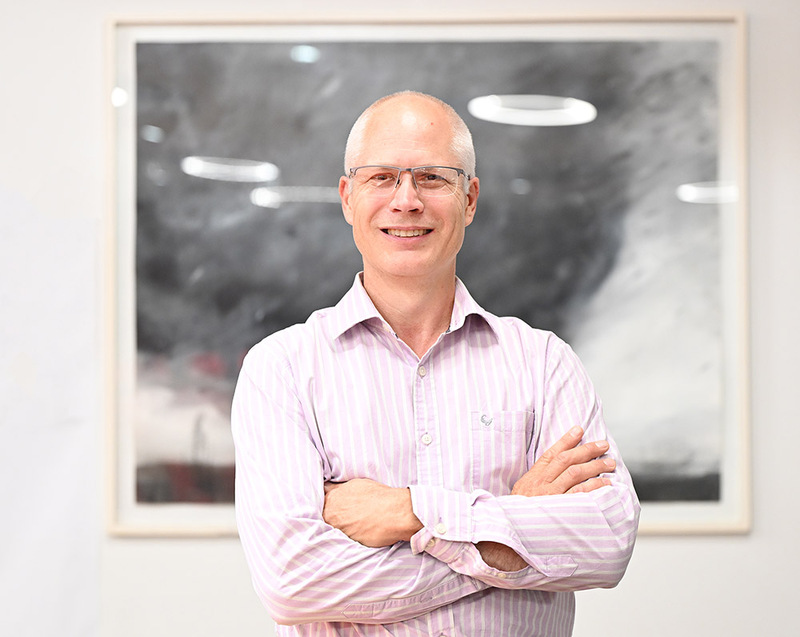
Dear colleagues
It has been recognised for some years that timetabling across the University of Cape Town (UCT) is working neither efficiently nor effectively. This inhibits the ability of our academic staff to teach and creates additional barriers to learning for our students.
Timetabling at UCT is a major exercise. Over the last 30 years, the number of UCT students has more than doubled (to slightly more than 30 600 in 2025). Over the same period, the capacity of the centrally bookable venues that are used for the bulk of our academic activities has increased by only 44%. In 2025, there were more than 160 000 course registrations for approximately 15 000 academic activities (lectures, tutorials, labs, etc).
The timetable for each year is produced by making incremental changes to the version for the previous year. It is not feasible in the current system to do more than that.
Consequently, we are not using the venues we have efficiently and effectively. A number of students find themselves in venues that are sometimes over capacity or not well-suited to the academic activity scheduled in them. Competition for venues creates friction between courses, departments and faculties. It is difficult to accommodate innovative pedagogies (like requests for double or triple periods) and to respond quickly to issues (like venues that exceed capacity).
The office of the Deputy Vice-Chancellor for Teaching and Learning has been working since 2022 with the Teaching and Examinations Timetable Subcommittee of Senate (TET-SC) to address this challenge.
In 2024, a comprehensive report on UCT’s current timetabling processes was prepared by Escentral, a consultancy with expertise in space management and timetabling in the higher education sector. The report highlighted a large number of challenges with UCT’s existing timetabling system. To address these, the report recommended that we implement a centralised timetabling service supported by advanced scheduling software and constraint-based timetabling processes. This recommendation was supported by both TET-SC and my office.
The new timetabling system will be implemented in two phases. Phase 1, which we are just starting and which we plan to conclude by the end of 2026, includes the following:
- Policy and Governance Design: The aim is to establish fair, transparent and consistent policies to support a timetabling system at UCT that is agile, data-driven and that supports our academic project.
- Data Quality Review and Standards Definition: Key to the above will be ensuring that the data that underlies the timetabling process is robust and supports the new processes. We will assess the readiness of our timetable data and defining standards for future operations.
- Service Resource Model: Another critical component of this phase will be identifying the roles, responsibilities and competencies needed to run the new centralised timetabling service.
- Software Procurement: We will review available software solutions with the aim of selecting the best fit for our current and future timetabling needs. We hope to pilot the selected software in 2027.
The new system will mean cultural and operational changes in how we do timetabling at UCT. As project execution has just started, the project team does not yet know the impact on staff. What we can confirm is:
- No decisions affecting staff will be made without thorough consultation.
- The intention of the project is to improve institutional efficiency and support academic success, and not to drive cost-cutting or job losses.
- Staff expertise and institutional knowledge are valued, and the project aims to design a future service model that supports staff, and does not sideline them.
As we go forward, there will be extensive consultation – through workshops and focus groups – with academic as well as professional, administrative and support service staff, and with students. We must ensure that the system we implement is grounded by, and responsive to, the needs and concerns of the students and staff it will serve.
Sincerely
Professor Brandon Collier-Reed
Deputy Vice-Chancellor: Teaching and Learning
Read previous communications:
 This work is licensed under a Creative Commons Attribution-NoDerivatives 4.0 International License.
Please view the republishing articles page for more information.