
From the Vice-Chancellor
Upcoming UCT inaugural lectures: March and April 2026
11 March 2026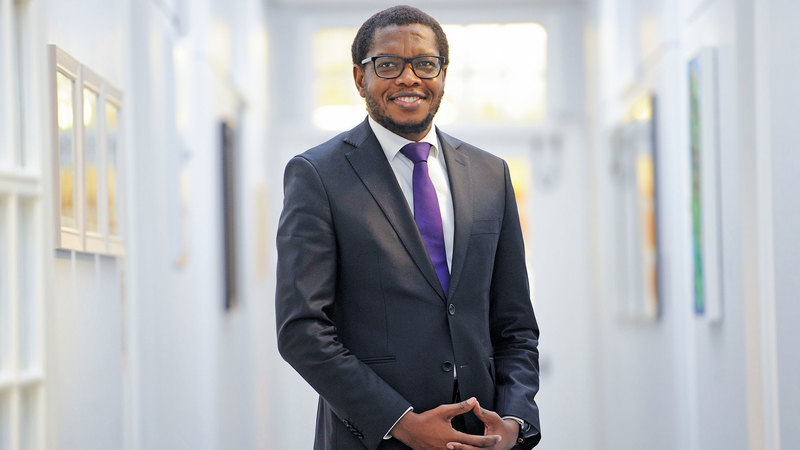
Dear colleagues and students
One of the most meaningful traditions in the life of a university is the inaugural lecture. It marks the formal installation of a professor and offers an opportunity for the academic to reflect publicly on their field of scholarship, their intellectual journey and the contribution their work makes to society.
As the French moralist and essayist Joseph Joubert once observed, “The aim of argument, or of discussion, should not be victory, but progress”. Inaugural lectures embody this spirit. They create space for rigorous debate, thoughtful reflection and the advancement of knowledge through dialogue across disciplines and perspectives.
I am pleased to invite you to the next three inaugural lectures at the University of Cape Town (UCT) to be hosted during March and April 2026. These will be presented by Professor Johann Hattingh (Faculty of Law), Professor Lionel Green-Thompson (Faculty of Health Sciences) and Professor Adam Mendelsohn (Faculty of Humanities).
These lectures will showcase the work of distinguished colleagues whose research, teaching and public engagement continue to shape their disciplines and our university community.
Professor Johann Hattingh (Faculty of Law)
Professor Johan Hattingh will deliver his inaugural lecture, “An Integrated Framework for Legal Reasoning in South Africa’s Law of Taxation: The International and Comparative Dimensions”, on Tuesday, 24 March 2026 at 18:00 SAST at Kramer Moot Court, Level 5, Kramer Law Building, middle campus.
In this lecture, Professor Hattingh will examine the international and comparative tax law dimensions of the integrated framework for statutory and treaty interpretation shaped by the landmark judgment Natal Joint Municipal Pension Fund v Endumeni Municipality (2012). This decision has played a significant role in advancing a unitary approach to legal reasoning in South African law, particularly in disputes over the interpretation of tax legislation and treaties.
Drawing on his scholarship, Professor Hattingh will explore how this text-based approach has reinvigorated theoretically grounded interpretation in tax law, while also identifying doctrinal gaps and practical limitations that require further attention. His lecture will consider three features of this method: the retrieval of legislative meaning through historically grounded reasoning, engagement with the purpose of legislation and treaties, and the constraints of the approach when responding to evolving social and technological conditions.
Professor Hattingh will conclude by reflecting on the limitations of current interpretive approaches and the need for further theoretical development, including the concept of technology-neutral law design as a guiding principle for future reform of international and South African tax law.
Professor Hattingh is a scholar of international tax law and the history of taxation. He is a professor of Commercial Law at UCT’s Faculty of Law and an Advocate of the High Court of South Africa. He has served as president of the International Fiscal Association of South Africa since 2025. His research has been widely published and cited by courts internationally, including the Supreme Court of Canada and the Swiss Federal Supreme Court.
He has acted as a senior international tax consultant for the United Nations Economic Commission for Africa and has contributed to tax initiatives under the New Partnership for Africa’s Development on behalf of the African Union. He is widely consulted by both public and private sector organisations across Africa.
Professor Lionel Green-Thompson (Faculty of Health Sciences)
Professor Lionel Green-Thompson will present his inaugural lecture, “From a Village to the Globe: Reflections on a Journey in Social Accountability”, on Tuesday, 7 April 2026 at 18:00 SAST at the New Learning Centre Lecture Theatre, Anatomy Building, Health Sciences Campus.
This lecture explores the concept of social accountability in health professions education. Social accountability refers to the obligation of health education institutions to orient their teaching, research and service towards the priority health needs of the communities they serve. It represents both an ethical stance and a practical framework for equity, relevance and responsiveness in healthcare education.
Professor Green-Thompson will explore how communities ground this accountability in the African philosophy of ubuntu, recognising that professional identity formation takes place within networks of trust, dignity and shared responsibility. The lecture will trace how these ideas have informed institutional and national reforms, including developments in workplace-based assessment, accreditation frameworks and broader debates on the future of health professions education in South Africa.
Through a storytelling approach, the lecture will reflect on a journey from local community experience to global platforms, highlighting how lessons drawn from South Africa’s complex context can shape international conversations on socially accountable education.
Professor Lionel Green-Thompson is the dean of the Faculty of Health Sciences at UCT. He previously held leadership roles at Sefako Makgatho Health Sciences University and the University of the Witwatersrand.
He has played a leading role in national and international conversations on health professions education. He has chaired the South African Committee of Medical Deans and currently serves as vice secretary general of Towards Unity for Health. In 2025 he was elected the inaugural president of the Consortium of Medical Schools in Africa. His research interests include clinical competency assessment, professional identity formation, transformative education and social accountability.
Professor Adam Mendelsohn (Faculty of Humanities)
Professor Adam Mendelsohn will deliver his inaugural lecture, “Where to for the Jews?”, on Wednesday, 29 April 2026 at 18:00 SAST at Neville Alexander Building, Auditorium LT1, lower campus.
Historians often hesitate to predict the future. Yet moments of profound change invite reflection on what lies ahead. Drawing on decades of data collected by the Kaplan Centre for Jewish Studies, Professor Mendelsohn will examine demographic, religious and political developments shaping Jewish life in South Africa today.
The lecture will place contemporary developments in historical perspective, exploring patterns of migration, identity and prejudice to assess how Jewish communities have evolved and where they may be heading. By situating the present within a longer historical trajectory, Professor Mendelsohn will reflect on the future of Jewish life in South Africa.
Professor Mendelsohn is the director of the Kaplan Centre for Jewish Studies at UCT. His research focuses on comparative Jewish history, particularly the historical experiences of Jews in South Africa and the United States. He has written extensively on Jewish migration, identity and economic mobility in the English-speaking world. His work has also informed exhibitions he co-curated at institutions including the New York Historical Society, Princeton University Art Museum and the Center for Jewish History in New York.
His intellectual trajectory was shaped by a course he took fortuitously as an honours student while on a UCT exchange programme at the University of Wisconsin. Arriving in wintry Madison shortly before the start of the academic year, only two classes still had space: a course on the history of Japanese fascism and another comparing the trajectory (and interconnections) of Jews and African Americans in the United States. The latter initiated an abiding interest in comparison between the historical experience of Jews in South Africa and the United States, and in particular, on how Jews have navigated issues of race in both societies.
Since 2016, he has worked on a large-scale commissioned project focused on the Jewish experience during the American Civil War. This resulted in a monograph published in 2022 and another due for publication in 2027.
I encourage staff, students and members of the broader UCT community to attend these lectures and support our colleagues as they share their scholarship and reflections.
Sincerely
Professor Mosa Moshabela
Vice-Chancellor
Read previous communications:
 This work is licensed under a Creative Commons Attribution-NoDerivatives 4.0 International License.
Please view the republishing articles page for more information.