
Wamkelekile, Welkom
UCT prof joins call to strengthen Africa-led research, development
28 January 2026 | Story Thami Nkwanyane. Photos Unsplash. Read time 4 min.
In the context of rapidly shifting global funding, the University of Cape Town’s (UCT) Professor Jo-Ann Passmore has joined 14 Calestous Juma Science Leadership Fellows from across Africa to co-author a research paper that highlights practical, Africa-led actions to strengthen health research and development (R&D) ecosystems.
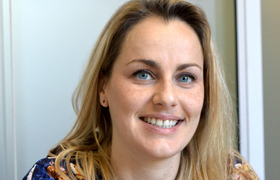
Professor Passmore is the head of the Mucosal Immunology Group, based in the Division of Medical Virology in UCT’s Department of Pathology, and the principal medical scientist at the National Health Laboratory Services.
The paper, titled “Six ways to empower African research and development for health” was recently published in Nature Health – a peer-reviewed online journal that publishes original research in all areas of health. The paper moves beyond a problem description to propose concrete, delivery-focused solutions across six priority areas, including product development, financing, human capital, health data systems, supply chains and research culture.
“Strengthening pathways that translate African research into locally produced health innovations is critical for impact,” she said.
Scientific leaders unite
Amid massive disruptions in global health funding that threaten access to healthcare across the continent, scientific leaders from Cameroon, Ghana, Kenya, Mali, Nigeria, South Africa, Uganda and Zimbabwe have joined forces to advance practical Africa-led solutions to strengthen R&D for health.
While national and regional policies have sought to address long-standing barriers within Africa’s R&D’s ecosystem, many challenges remain, particularly at an operational level. The paper argues: “The challenges we face as Africans in the current rapidly changing international funding environment underscore the importance of engaging in relevant actions to collectively shape a bright future for African R&D.”
“Strengthening pathways that translate African research into locally produced health innovations is critical for impact.”
According to Professor Nikki Tiffin, the paper’s lead author and the deputy director of the South African National Bioinformatics Institute at the University of the Western Cape, many of the barriers facing health researchers were complex; many were operational and solvable through context-specific interventions aligned to local needs and realities.
Action across six priority areas
To decrease systemic barriers to R&D in Africa, the fellows call for urgent action across six priority areas:
- product development – build a sustainable, private-sector-led R&D ecosystem that accelerates innovation and commercialisation through collaboration, policy and capital
- financial ecosystem – create a diversified and sustainable R&D financing ecosystem with domestic, public, private and philanthropic investment
- human capital – develop a robust, diverse R&D workforce supported by clear career pathways and expanded access to science, technology, engineering and maths (STEM) education
- health data ecosystems – establish strong health data infrastructure and digital enabling environments, alongside support for digital skills development
- supply chain logistics – foster efficient and resilient R&D supply chains that ensure timely access to quality inputs and support local production
- research culture, equity and excellence – promote an inclusive research culture grounded in mentorship, collaboration, ethical practice and excellence.
The fellows’ call aligns with a growing movement across the scientific community demanding delivery-focused, locally grounded reform.
“This is not a wish list. It is an invitation to act together, using approaches that are already within reach. Africa’s health challenges are urgent. But so are the solutions,” concluded Professor Tom Kariuki, the chief executive of the Science for Africa Foundation, which supports the fellowship’s communications.
 This work is licensed under a Creative Commons Attribution-NoDerivatives 4.0 International License.
Please view the republishing articles page for more information.