
Wamkelekile, Welkom
UCT’s Zarina Patel inducted into the Academy of Science of South Africa
08 December 2025 | Story Hishamodien Hoosain. Photo Supplied. Read time 3 min.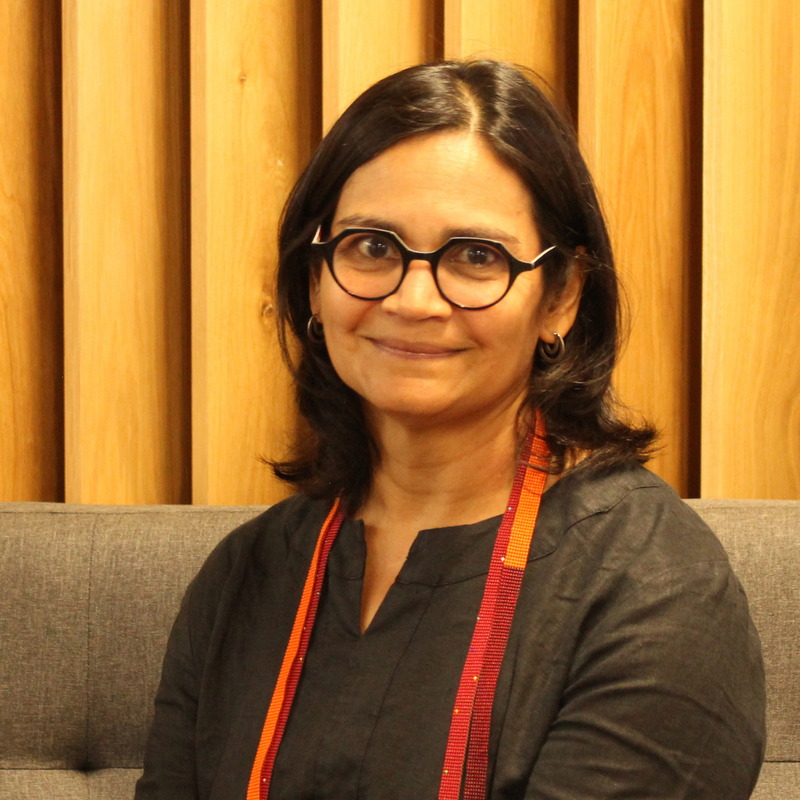
Associate Professor Zarina Patel, a leading scholar in urban sustainability and environmental governance at the University of Cape Town (UCT), has been elected to the Academy of Science of South Africa (ASSAf). She joins 45 of the country’s most distinguished researchers in the 2025 intake, with UCT contributing 20% of this year’s cohort.
Associate Professor Patel’s induction recognises her significant scholarly contributions and commitment to using research to strengthen society. Reflecting on the milestone, she said, “The academy has historically been a challenging space for scholars like me, who cross divides between science and social science, and who work at the interface of science and policy. Being inducted into ASSAf is an acknowledgement of the need to deploy science in conjunction with other ways of knowing in service of society.”
She added: “I am excited by the alignment between my approach to scholarship and the academy’s commitment to reconfiguring systems and structures that currently limit solutions, policy responses, and intellectual capacity development.”
A scholar of urban change and social justice
Patel’s academic career spans more than three decades, reflecting her dedication to understanding how cities – particularly in the Global South – can transition toward more just, inclusive, and sustainable futures. Trained in both the sciences and the social sciences, she specialises in human geography, urban studies, and environmental governance, with a distinctive focus on African cities.
Her work is characterised by southern urban theorisation that generates knowledge rooted in African contexts rather than relying on dominant Global North frameworks. It is defined by transdisciplinary research leadership that fosters meaningful partnerships among academics, policy makers, practitioners, and communities. Additionally, her sustained engagement at the science–policy interface, through long-term city–university collaborations, has significantly influenced both local and global policy.
“Urban Africa presents complex challenges.”
Expanding on the context shaping her research, Patel said: “It is widely accepted that planetary well-being is closely tied to urban processes. Urban Africa presents complex challenges. These include delayed demographic transitions, overlaps between formal and informal delivery systems, weak governance, and high levels of inequality and unemployment, among others. These challenges, however, also create opportunities for innovation, technology leapfrogging, and context-relevant solutions.”
Evidence-based research, she emphasised, remains essential. “My research and that of my postgraduate students has contributed to systems knowledge and evidence to inform policy areas such as climate change, energy, housing, waste, transport and risk. Understanding how these systems work is especially important in contexts where data is scarce or inconsistent. However, while knowledge and evidence are necessary, they are not sufficient on their own. The ‘how’ of engaging in partnerships to diversify knowledge, and recognising the value of different expertise, is a cornerstone of my methodological approach.”
Advancing knowledge through collaboration
ASSAf membership recognises both research excellence and scholarly contributions that strengthen society. Patel exemplifies these ideals through her training of over 100 early-career African researchers in transdisciplinary methods, her leadership of multi-country collaborations, and her central role in pioneering city–university partnerships in Cape Town and Durban.
She also contributes to editorial boards, scientific committees and international councils focused on sustainable development and urban futures. Her scholarly output is substantial, with over 1 660 citations and an H-index of 20. Many of her publications such as her widely cited 2025 article on African universities and urban transitions are co-authored with practitioners, underscoring her commitment to bridging research and real-world impact.
“In each of these roles, I work to shift long-standing power dynamics in global knowledge production.”
Patel’s academic citizenship is equally influential. She serves as president of the Society of South African Geographers; chair of the South African Commission of the International Geographers Union; and trustee of the Urban Studies Foundation, where she leads the Urban Urgencies grant scheme. She has also contributed to global platforms such as the World Economic Forum’s Global Futures Council on Cities and Urbanisation.
“In each of these roles, I work to shift long-standing power dynamics in global knowledge production,” she said. “This includes creating space for African scholarship, amplifying early-career researchers, and advocating for academic systems that value diverse forms of expertise.”
A well-deserved honour
Election to ASSAf is one of the highest accolades a South African scholar can receive. Members are nominated and elected by their peers through a rigorous and competitive process that recognises exceptional scientific achievement and meaningful societal contribution.
Patel’s induction affirms her status as a leading voice in reimagining how science can address the interlinked crises of the 21st century, such as climate change, inequality, urban vulnerability, and ecological decline.
“My ambition as a member of ASSAf is to harness opportunities for leveraging the systems changes needed to break down the barriers that serve to undervalue southern science by finding opportunities to support, amplify and disseminate scholarship from and for Africa and the Global South,” she concluded.
 This work is licensed under a Creative Commons Attribution-NoDerivatives 4.0 International License.
Please view the republishing articles page for more information.