
Wamkelekile, Welkom
UCT researchers map real impact of GenAI in teaching, learning
02 December 2025 | Story Kamva Somdyala. Photos Katherine Rainers. Read time 3 min.
Researchers from the University of Cape Town’s (UCT) Centre for Innovation in Learning and Teaching (CILT) have shared early insights from their emerging research into how staff and students develop the literacies needed to use generative AI (GenAI) ethically, critically and constructively in teaching, learning and assessment.
The project responds to a growing number of requests across the university community for guidance, clarity and support in navigating the rapid rise of GenAI tools. It also builds on key themes within the UCT Framework for Artificial Intelligence in Education, particularly around responsible, context-appropriate practice.
Guidance, clarity and support
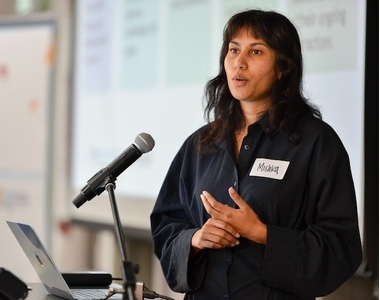
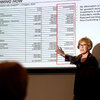
Mishka Reddy, a senior project coordinator and online learning designer at CILT, said the team’s work aims to understand what support is most needed: “There have been a lot of requests from staff on how to navigate challenges that have emerged from GenAI. There has also been a call to provide appropriate AI literacies for staff and students.”
“There have been a lot of requests … on how to navigate challenges that have emerged from GenAI.”
To shape their analysis, the researchers drew on sociomateriality as both a theoretical lens and an analytical tool. This approach sees AI practices not as fixed skills, but as relational, emergent and continually reconfigured through interactions between people, technologies, expectations and contexts.
Reddy explained that concepts like entanglements, elements, assemblages and agency help highlight what shapes the everyday use of GenAI in the university space.
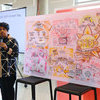
Entanglements speak to the relationships between sociomaterial elements. Assemblages represent people, objects, discourses and technologies whose relations produce particular effects. Agency, in this instance, is understood as not residing in the tools alone, but emerging from the interactions between them.
One case study was explored by a Faculty of Science writing course aimed at strengthening discipline-specific academic writing. “These include AI output inaccuracies, students’ disciplinary knowledge, lecturers’ disciplinary knowledge, academic integrity expectations, AI declaration requirements and teaching materials,” Reddy said.
Competing pressures
The Faculty of Commerce case study, meanwhile, revealed a different set of dynamics. Learning design consultant Lara Karassellos described a tension between how AI is used in industry – where comfort with AI tools is increasingly expected – and the academic environment, where concerns about integrity and assessment standards remain high.
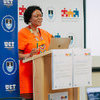
“These are competing pressures for staff who try and prepare students for the reality of the industry but also facing academic integrity concerns from professional bodies,” she said. Many staff also described a lack of clarity and guidance around how assessment should adapt in the age of AI.

The Commerce assemblage included the department, lecturers, students, professional bodies, CILT resources, GenAI tools and the broader industry expectations that shape student preparation.
Karassellos emphasised that the research is still at a formative stage, but early findings already show that disciplinary context strongly shapes AI use and AI literacy needs.
“One single, common AI position is not sufficient, and we feel we need to work with staff to understand what they are grappling with, and to tailor our offerings to that,” she said.
 This work is licensed under a Creative Commons Attribution-NoDerivatives 4.0 International License.
Please view the republishing articles page for more information.



Centre for Higher Education Development
In the news









































































































.jpg)