
Wamkelekile, Welkom
Warden leads campus-wide push against GBV
20 February 2026 | Story Myolisi Gophe. Photo Je’nine May. Voice Cwenga Koyana. Read time 7 min.
When house committees gathered for training earlier this year, a familiar concern resurfaced: while the University of Cape Town (UCT) has established processes for responding to gender-based violence (GBV), more needs to be done to help students change their mindsets. This will help prevent harm before it happens – especially in residences, where students from vastly different backgrounds live side by side.
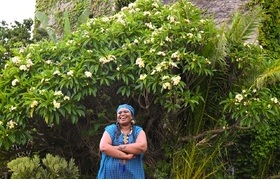
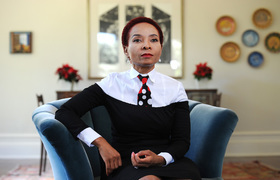
That call for prevention is one that Associate Professor Rethabile Possa has been answering for nearly a decade.
A warden, GBV activist and member of UCT’s GBV tribunal for the past eight years, Associate Professor Possa has become a leading voice in residence-based education on consent, accountability and healthy relationships. What began as a local initiative in 2016 has grown into a campus-wide campaign, with multiple residences inviting her to address students during orientation and throughout the academic year.
“We are dealing with so many GBV matters,” she said. “Not because students intentionally involve themselves in these matters, but because of a lack of knowledge, especially from the backgrounds they are coming from.”
Unlearning harmful norms
Possa has observed that many students arrive at university shaped by deeply entrenched cultural norms about gender and power. Some young men, she explained, grow up witnessing violence in their homes and internalise harmful ideas about masculinity and sexual entitlement. Some young women are socialised to remain silent, even when uncomfortable or violated.
“You find that they think they are innocent because this is what they grew up seeing,” she said. “They’ve seen their fathers beat their mothers, and they think this is normal.”
“Boys were so shocked. Many of them realised, ‘I thought I had to pursue. I thought that was me showing love.’”
Recognising this, Possa began hosting structured conversations in residences. Early initiatives included “Men’s Cave”, where senior male students were invited to engage openly about courting, sexual behaviour and respect, and “Sisterhood”, which focused on empowering young women to understand their rights and speak up. She also facilitated sessions with LGBTQIA+ students to ensure that conversations around consent and dignity were inclusive.
Central to all her engagements is one core message: consent is an ongoing process.
“It doesn’t stop when somebody agrees to engage in sexual intercourse,” she explained. “It starts from foreplay and continues even after. Even if the girl changes her mind, they should know.”
Many male students, she said, are initially surprised. “Boys were so shocked. Many of them realised, ‘I thought I had to pursue. I thought that was me showing love.’”
Possa encourages students to normalise communication – before, during and after intimacy. “Normalise communicating. Have those healthy conversations. There is no culture of talking after sex to say, ‘How was it?’”
A residence-driven call for prevention
Her work gained renewed momentum this year after a residence training session attended by house committee members. Among them was Mubarak Abubakari, head student of Carinus Residence for 2026.
Abubakari said Possa’s presentation, which outlined UCT’s disciplinary structures and included a member of the tribunal’s legal team, was thorough and eye-opening. But it also prompted him to raise a concern.
“I acknowledged that UCT’s system for prosecution and punishment is extremely robust – as it should be,” he said. “But the clear issue I saw was that the preventive measures were not on the same level.”

With students arriving from “extremely diverse backgrounds” and carrying different understandings of gender relations, he believes residences carry a heightened responsibility to intervene early. He also questioned the timing and format of some existing GBV engagements, arguing that meaningful discussions often happen after key social integration events have already taken place.
When Carinus began planning its orientation programme, inviting Possa to address the entire residence – not only first-years – was a priority. The aim, Abubakari said, was to confront complacency and create a shared understanding of boundaries and accountability.
“She is lively, bold, and unafraid to openly discuss sexual topics that society tends to silence,” he said. “Even senior members of the house were listening and engaged.”
Feedback from first-year students highlighted lessons around consent within relationships and the invalidity of consent when someone is under the influence of alcohol or drugs – issues that frequently arise in residence settings.
Beyond awareness to action
While first-year students remain a key focus during orientation, Possa is clear that the work must involve the entire residence communities. “It’s not only first years – it’s actually the entire house,” she said. “First-year students become victims of returning students because they are naïve. So, we educate both.”
Over the years, her impact has extended beyond awareness-raising. Increasingly, students – both women and men – approach her privately to disclose experiences of abuse, some dating back to childhood.
“Sometimes, survivors do not even want to open cases. They just want someone to talk to,” she said. She then refers them to professional support services, recognising the long-term mental health consequences of trauma.
Her experience on the student tribunal has also revealed complex patterns of harm. Some perpetrators, she noted, have themselves experienced abuse. “We find that he was molested as a young boy. That anger is the one that’s making him take it out on girls,” she said.

For Possa, this underscores the urgency of sustained, proactive education. “We need to be proactive. We shouldn’t wait until there are protests,” she said. “If we are proactive, we are minimising such events.”
This year alone, she has addressed students at Fuller Hall, Upper Campus residence, Carinus, University House, Tugwell, Kopano and Forest Hill, with more invitations pending – a sign, she believes, that residences increasingly recognise GBV as a shared responsibility rather than a peripheral issue. Loki Manise, the director of Student Housing, and Charmaine January, manager of Residence Life, supported the initiative and ensured that a social worker was present at the events.
She argued that prevention should extend beyond students to staff and institutional culture more broadly, alongside strengthened survivor support and collaboration with structures such as UCT’s Office for Inclusivity & Change.
One student recently asked her how to take these lessons back home – to siblings, schools and communities where conversations about sex and consent remain taboo. For Possa, that question signalled something powerful.
“This is bigger than us,” she said. “But we can start somewhere.”
 This work is licensed under a Creative Commons Attribution-NoDerivatives 4.0 International License.
Please view the republishing articles page for more information.




Related