
Wamkelekile, Welkom
A legacy of data, justice and community
18 December 2025 | Story Lyndon Julius. Photo Nasief Manie. Read time 8 min.
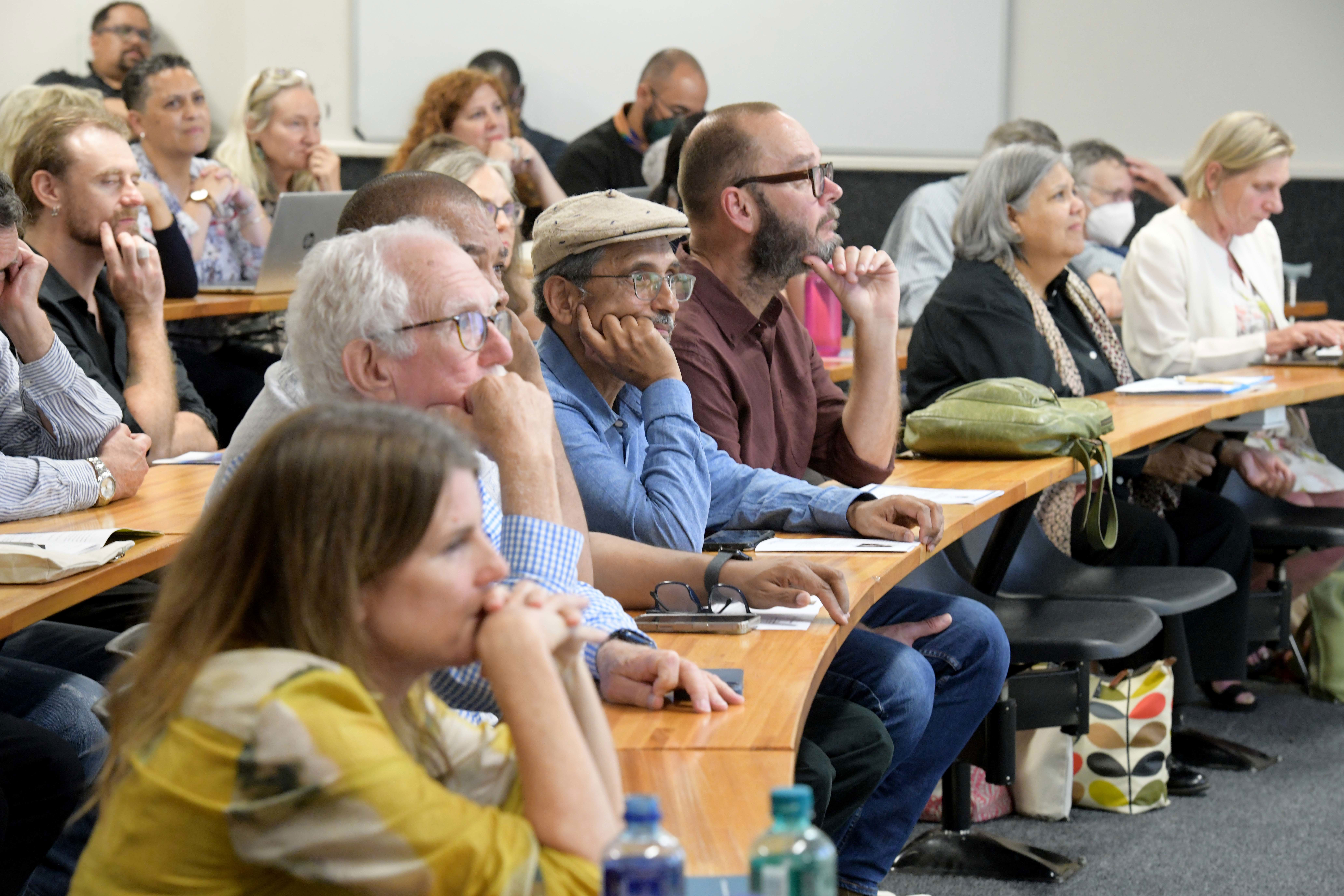
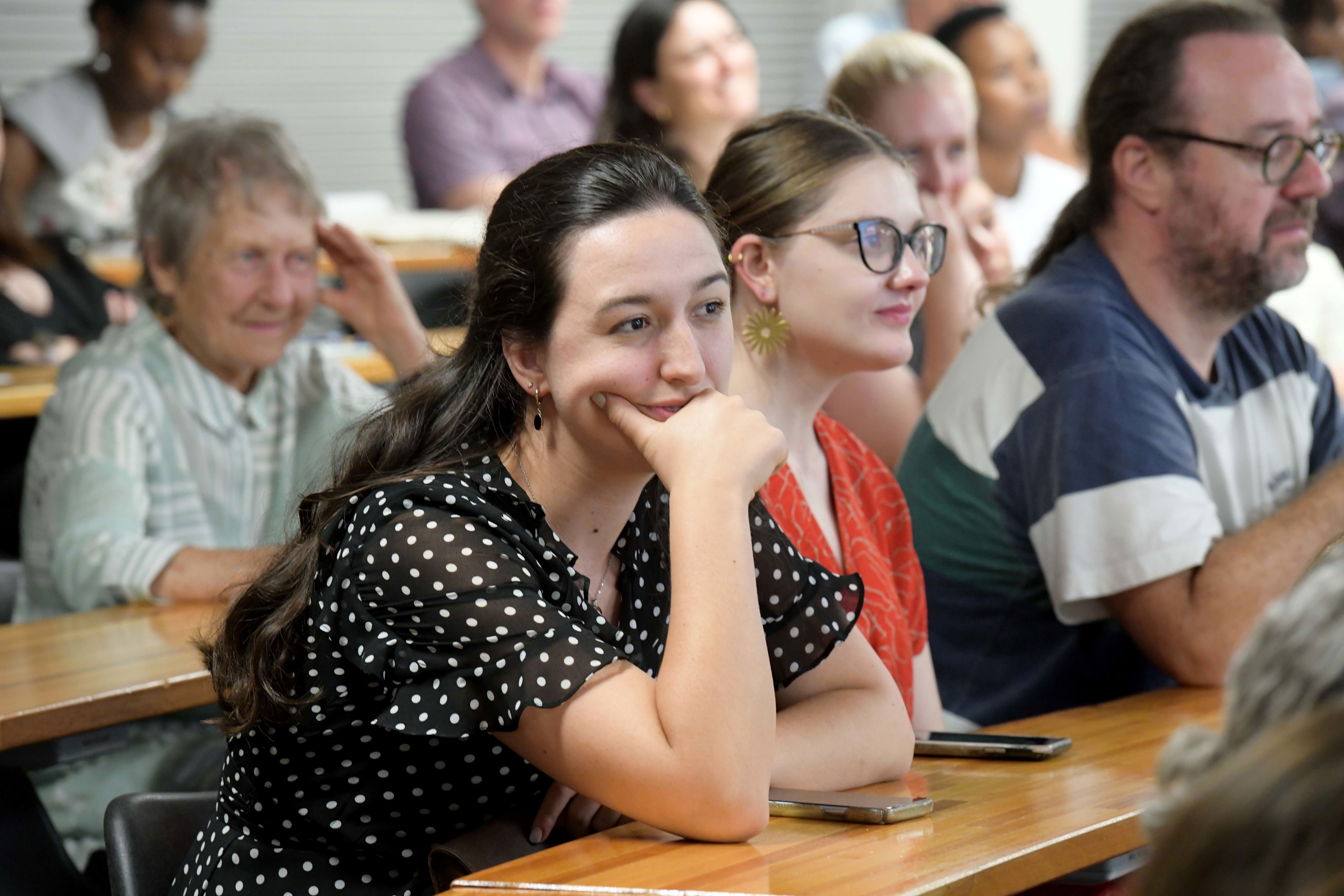
Fifty years after the Southern African Labour Research Unit (SALDRU) at the University of Cape Town (UCT) first opened its doors, colleagues, alumni and students gathered to celebrate an institution built on rigorous inquiry and social justice. As part of the commemorations, the third Francis Wilson Memorial Lecture offered an opportunity for collective remembrance, with Professor Murray Leibbrandt honouring the scholar whose work and mentorship helped shape South Africa’s modern inequality research agenda.
In his lecture, Professor Leibbrandt, the former director of SALDRU, traced the life of Emeritus Professor Wilson as both tribute and testimony: a scholar who used data to confront injustice and built a community of inquiry that continues to define the unit’s ethos today.
The event, which also coincided with Leibbrandt’s own retirement, invited the audience to reflect on Wilson as an intellectual provocateur, institution builder and mentor whose generosity shaped generations of social scientists.
Targeted by apartheid spies
Leibbrandt opened with an anecdote that captured the disruptive power of Wilson’s early scholarship: an apartheid-era surveillance report condemning SALDRU as “the most influential non-aligned institution in the RSA”. The spy described Wilson as “intelligent, sophisticated, well-informed, powerful and shrewd”, an extraordinary assessment of a researcher whose empirical work unsettled the apartheid state by exposing the economic engine of its labour regime.
“[Wilson was described as] intelligent, sophisticated, well-informed, powerful and shrewd.”
This anecdote positioned Wilson’s scholarship firmly in the political terrain of its time. His research was not merely academic: it illuminated, with precision and courage, the systems of power that structured inequality.
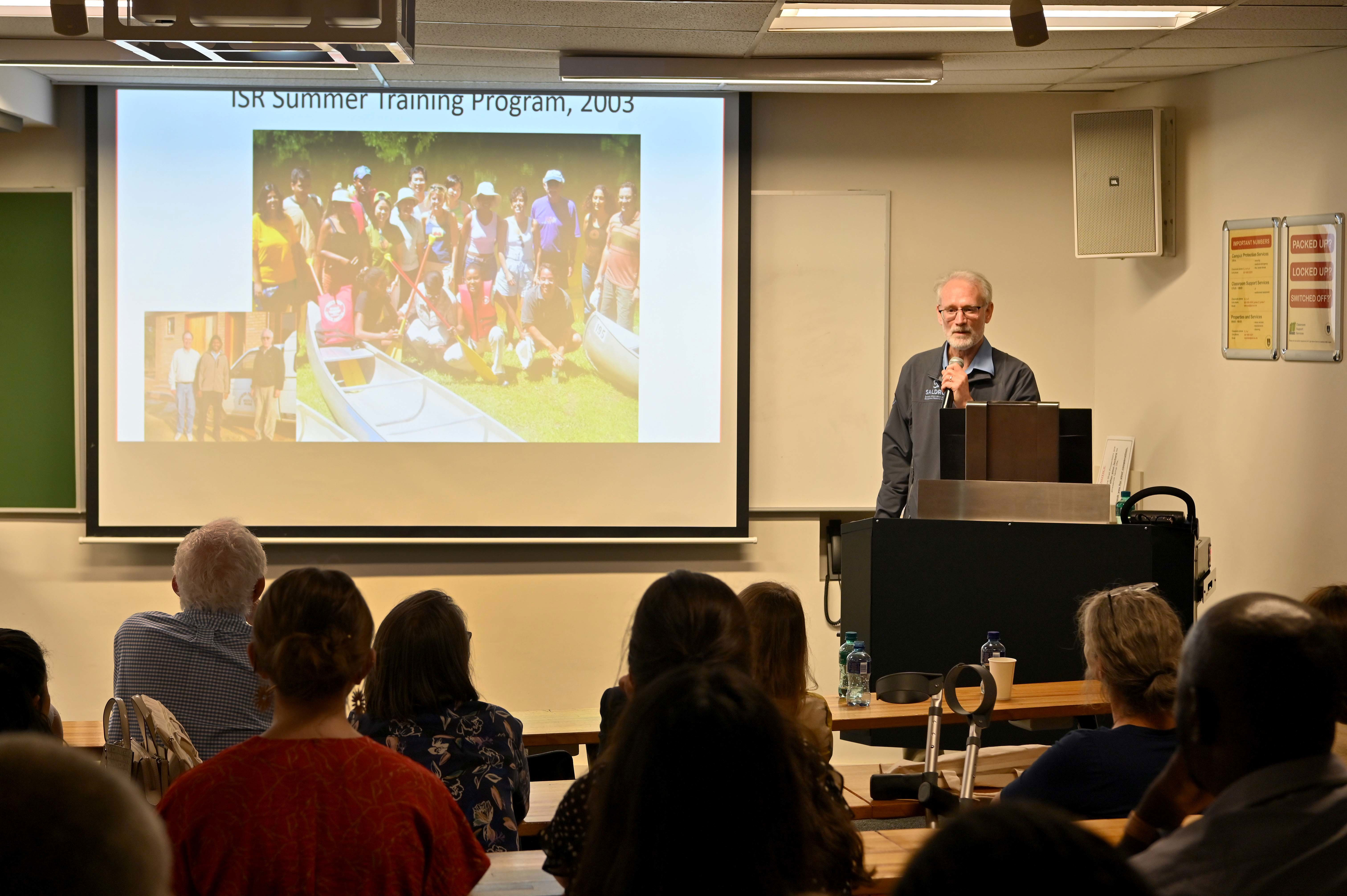
Leibbrandt then brought Wilson vividly to life through a photograph: Wilson standing beside his beloved Mini, laughing, mid-discussion, surrounded by colleagues like David Featherman and David Lam. The car has become part of SALDRU folklore – modest, tireless and always on the move, ferrying students, surveyors and collaborators across the country.
“Look at Francis,” Leibbrandt said. “He’s so happy, he’s convening something.” It was a portrait of Wilson’s magnetic ability to gather people for a shared purpose.
Hard heads, soft hearts
The lecture returned often to the ethos Wilson imprinted on SALDRU. The anniversary theme, “Hearts on Fire, Heads on Ice”, echoed a principle he modelled: analytical clarity anchored in human empathy.
“SALDRU was repeatedly targeted for surveillance and harassment … yet Francis persisted.”
Wilson’s seminal works – on migrant labour, the destruction of rural livelihoods and gold mining wages – remain foundational. His most famous graph showing black mineworkers’ real wages stagnating for six decades while white salaries surged, illustrated his ability to combine statistical rigour with moral urgency.
Wilson’s works travelled far beyond the university – into community organisations, political movements, churches and underground networks. He exposed inhumane mining hostel living conditions, documented the collapse of rural livelihoods, and made visible the hidden structures of apartheid’s labour system.
“SALDRU was repeatedly targeted for surveillance and harassment,” Leibbrandt recalled. “Yet Francis persisted, driving across the country in his Mini to gather data that would withstand scrutiny and speak truth.”
Building institutions, building people
Wilson’s legacy is as institutional as it is intellectual. He founded SALDRU in 1975, co-founded DataFirst, and helped launch the Project for Statistics on Living Standards and Development (PSLSD) – South Africa’s first nationally representative living standards survey.
But his greatest imprint, Leibbrandt suggested, lies in mentorship. Generations of students, many now leaders in academia, government and civil society, attribute their careers to Wilson’s ability to see their potential before they saw it themselves.
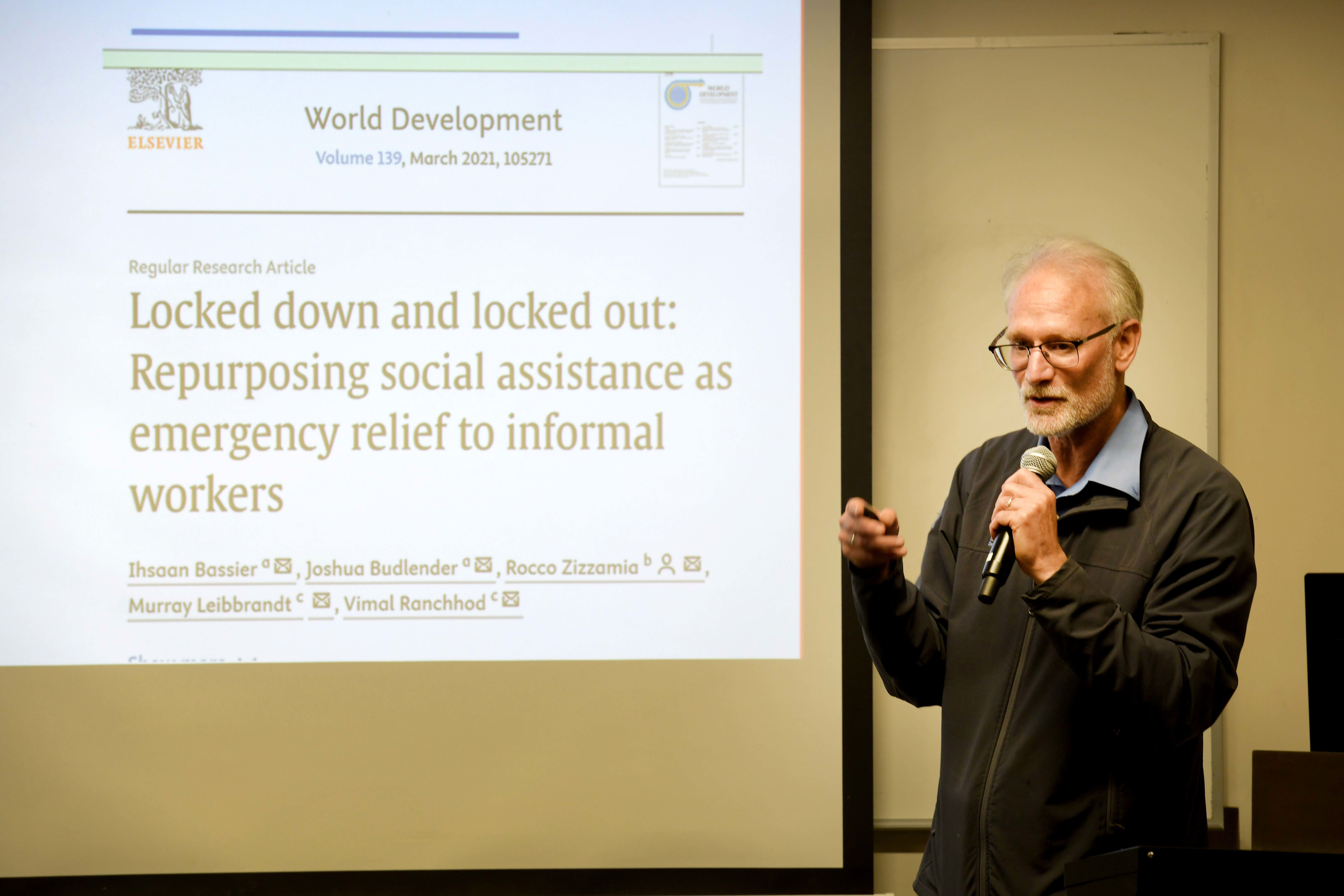

Leibbrandt traced how Wilson’s influence persists in contemporary research: from the National Income Dynamics Study (NIDS) and rapid COVID-19-era household surveys, to public tools that help South Africans understand their position in the income distribution.
These efforts continue Wilson’s project of revealing the long-run scars of apartheid classifications, the realities of poverty traps, the limits of mobility, and the structural factors that shape household outcomes.
Life in data
Some of the lecture’s most vivid moments came from stories of fieldwork: traversing mountains to reach respondents in the Eastern Cape, conducting surveys under political suspicion, and assembling multinational teams committed to the public good.
“You come to an event like this, and you get rekindled, motivated to go forward.”
Leibbrandt paused to honour the late Professor Martin Wittenberg, whose leadership at DataFirst helped entrench open, accessible datasets as a national public asset.
In closing, Leibbrandt spoke of renewal. SALDRU’s 50th anniversary, he said, rekindled a sense of shared purpose – a reminder that Wilson’s legacy remains alive in the institutions he built, in the scholars who expand his work, and in the enduring moral commitments that guide SALDRU’s mission.
“Us oldies are not done yet,” he added with a smile. “You come to an event like this, and you get rekindled, motivated to go forward.”
 This work is licensed under a Creative Commons Attribution-NoDerivatives 4.0 International License.
Please view the republishing articles page for more information.