
Wamkelekile, Welkom
A humanising lens on transformation at UCT
17 December 2025 | Story Lyndon Julius. Photo Lerato Maduna. Read time 7 min.
The University of Cape Town’s (UCT) Office for Inclusivity & Change (OIC) hosted the launch of Transformation: A Humanising Praxis, a special issue of the Transformation in Higher Education journal – a significant milestone in advancing UCT’s Vision 2030 pledge to “unleash human potential for a fair and just society”.
Anchored in UCT’s strategic pillars of excellence, transformation and sustainability, the event created space for staff and students to reflect critically, and courageously, on how to build a human-centred academy.
Professor Elelwani Ramugondo, the deputy vice-chancellor (DVC) for Transformation, Student Affairs and Social Responsiveness, who led the initiative, described the gathering as a reminder that meaningful transformation “requires ongoing reflection, relational engagement, and scholarship that is lived and felt, not merely theorised”.
Opening the event, Quinton Apollis, the co-editor of the collection, emphasised that transformation must extend beyond compliance frameworks into everyday practice.
Multidimensional approach
“Transformation is lived and enacted in practice – not only in policies or statements,” he said. “Humanising transformation is relational, epistemic, pedagogical, embodied and culturally grounded.”
“Transformation is lived and enacted in practice, not only in policies or statements.”
Apollis outlined how the eight articles in the special issue illuminate transformation across four interconnected dimensions: embodied and relational; epistemic and curricular; pedagogical; and institutional.
Across these contributions, he noted, the authors centre dignity, inclusion, care and recognition.
The discussion, facilitated by Dr Frank Kronenberg, invited contributors to reflect on their motivations and lived experiences informing their scholarship.
Dr Neziswa Titi, the author of A Pedagogy of Authenticity, spoke about cultivating humanising classrooms.
“It is about allowing people to be who they are … the student arriving at this place with their history, with their experiences, with their forms of thinking, with their emotions,” she said.
“A pedagogy that challenges says: come as you are, in the body that you are in, with the histories that you have."
Disability inclusion
Representing the article “Disabled Inclusion as a Humanising and Healing Praxis”, Sumaya Gabriels, Dureyah Abrahams and Professor Theresa Lorenzo highlighted disability inclusion as inseparable from humanising transformation.
“The power sits with us – in our attitudes and in our actions,” Gabriels said. “If we engage with care, concern and kindness, then the system will change; policies will change; attitudes will change.”
“If we engage with care, concern and kindness, then the system will change.”
Professor Lorenzo reflected on how far higher education has come, and how much remains to be transformed.
“When I started here in 1996, disability did not even feature on an admission or registration form. We were challenged, years later, when a rural student with only a matric was admitted through our Recognition of Prior Learning strategy and later we were told she should not have been admitted, according to DHET policy.”
That was when it became clear that a change in policy was needed, she said.
Dr Sharon Munyaka, the co-author of Transforming Professional Associations: An Identity Perspective, discussed transformation within industrial and organisational psychology.
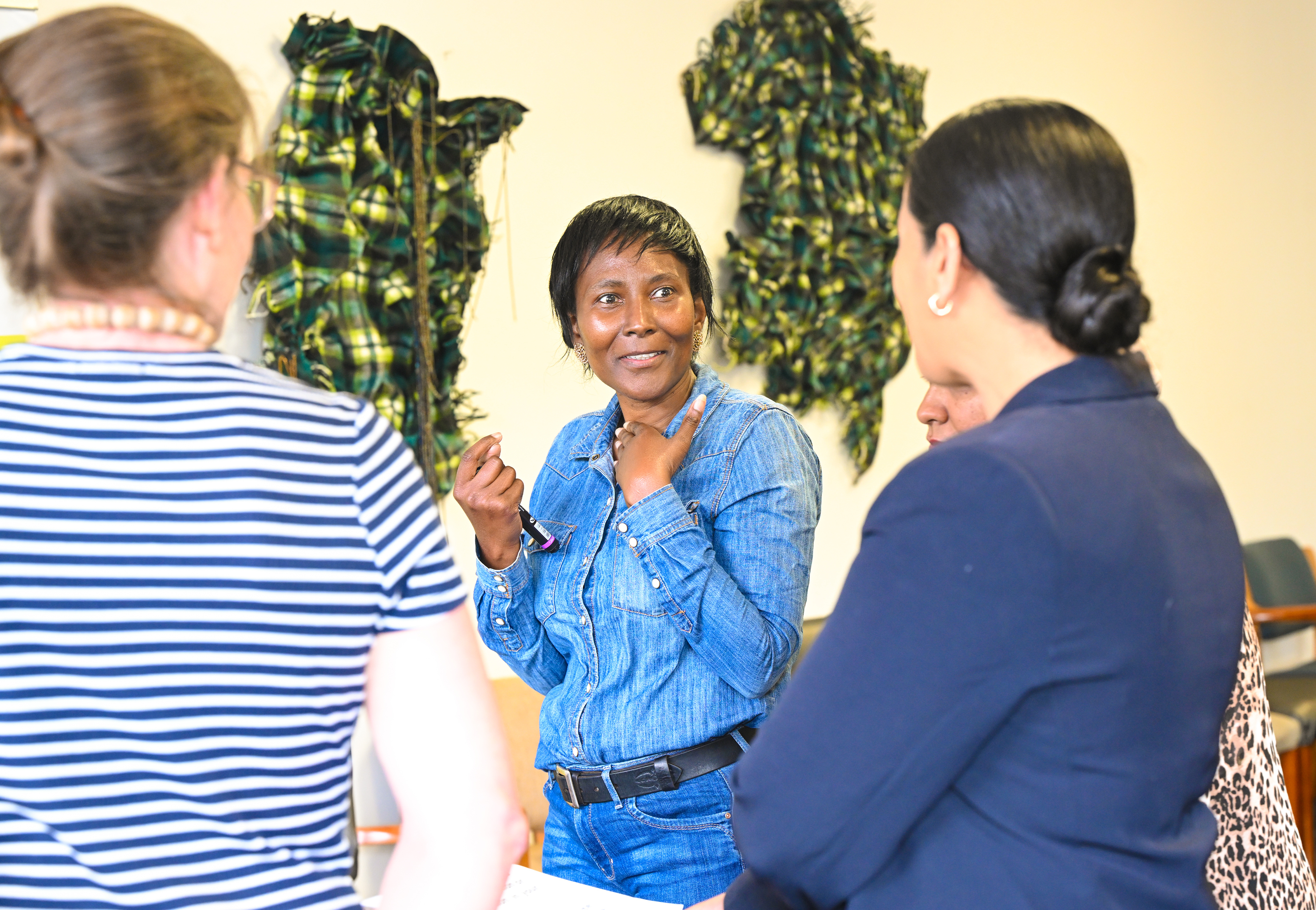
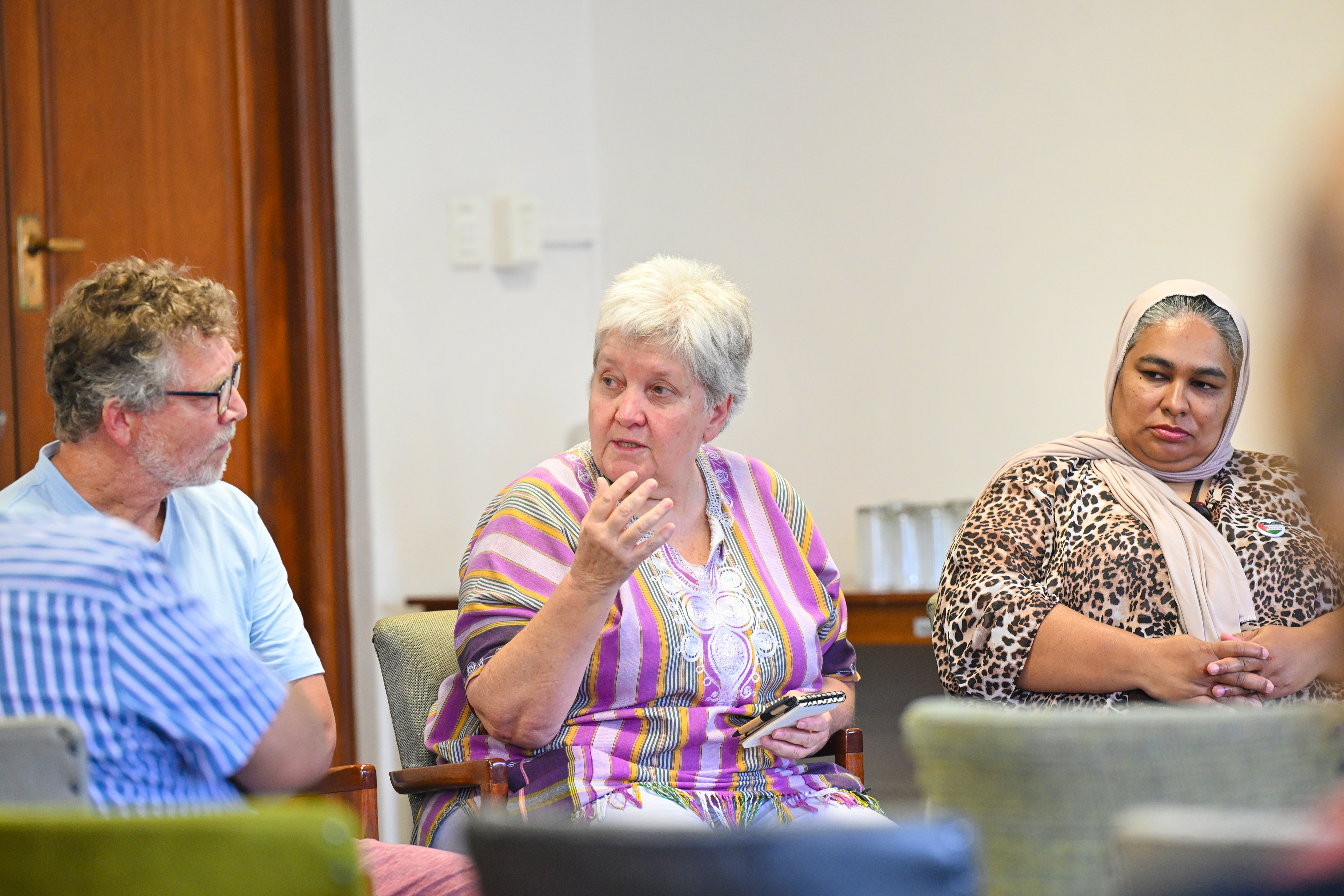
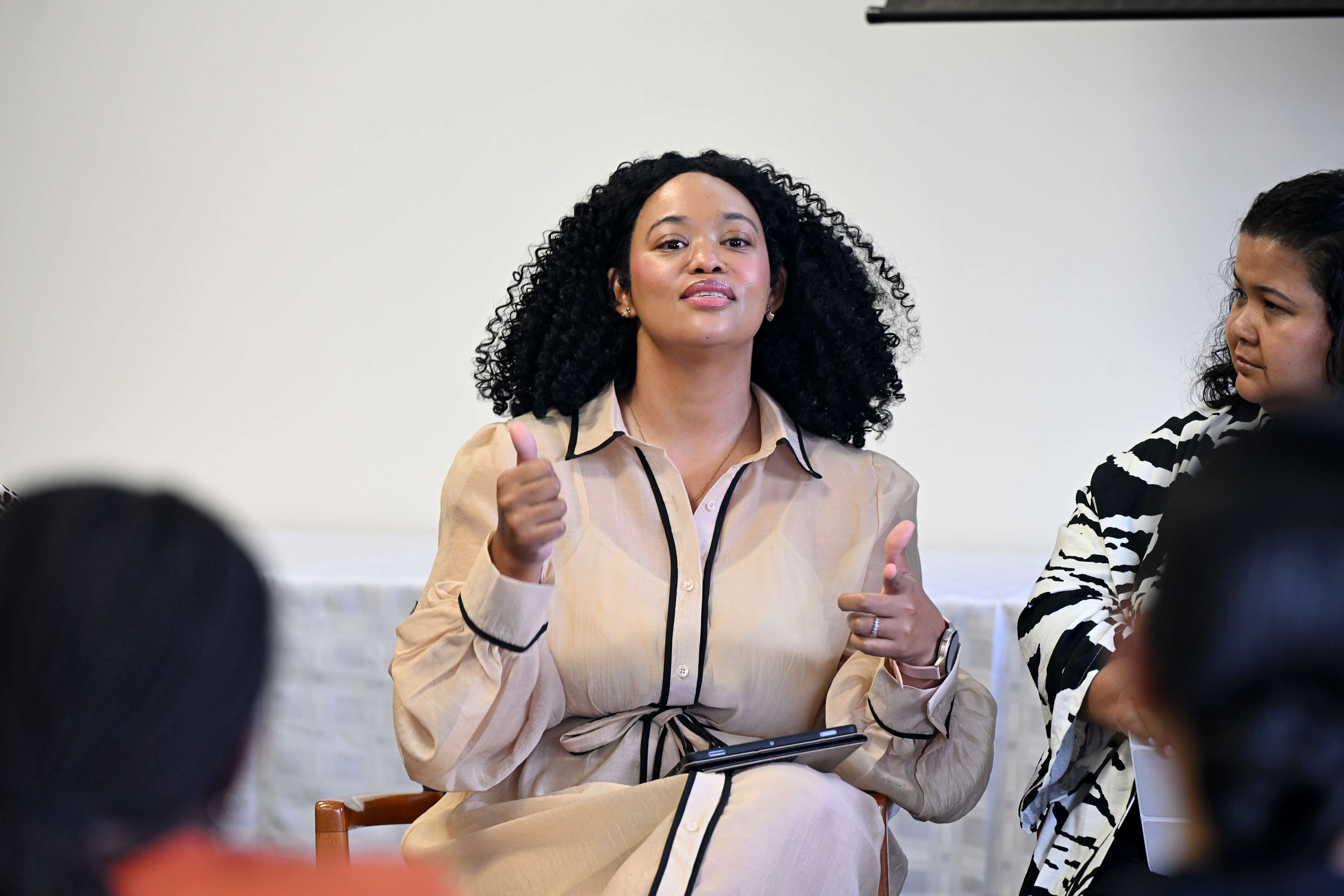
“Transformation has been a conversation since 2009, yet the traction is minimal,” she said. “During COVID-19, many black IOP graduates found themselves unemployable because they couldn’t access internships. What are we doing if people reach the end of the line and still cannot enter the profession?”
Her co-author, Professor Anne Crafford, added that professional norms often reflect Western standards that marginalise black students, whose forms of capital are not recognised.
Apollis also questioned how academic culture often prioritises performance over humanisation.
“In academia, we have a tendency to show how clever we are … but how do we nurture minds and bodies instead?” he asked. “Have we created enough room in our frameworks and approaches for people to find meaningful expression of their knowledge(s)?”
Learning and unlearning
Closing the event, Ramugondo reminded attendees that transformation in higher education is an ongoing process of learning and unlearning.
“We learn, and we keep learning,” she said. “Scholarship must advance transformation in ways that are lived, felt and experienced. That is when it becomes meaningful.”
She commended the contributors for their courage and insight, noting that their work reaches beyond UCT, and speaks to the broader higher education sector.
Dr Sianne Alves, OIC director, expressed gratitude for the collaborative effort behind the special issue, acknowledging both the authors and the “silent partners” – families and communities – who supported them through the writing process.
 This work is licensed under a Creative Commons Attribution-NoDerivatives 4.0 International License.
Please view the republishing articles page for more information.