
Wamkelekile, Welkom
Twenty-five years with SATVI: reflections from Ms Ashley Veldsman
07 April 2026 | Story Rebecca Crowie and Linda Rhoda. Photo Rebecca Crowie. Read time 7 min.
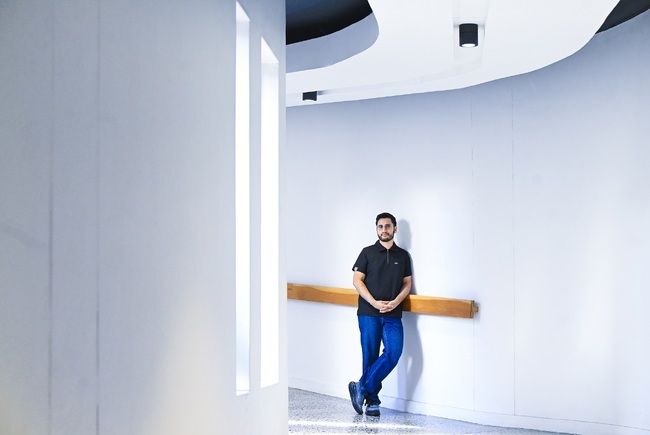
After 25 years with the South African Tuberculosis Vaccine Initiative (SATVI) at the University of Cape Town (UCT), senior regulatory specialist Ms Ashley “Ash” Veldsman is preparing to retire at age 65. Having been part of SATVI since its founding in 2000, her career reflects a deep commitment to public health, clinical research integrity and the communities involved in vaccine trials.
A career shaped by purpose
Born and raised in Cape Town, Veldsman originally hoped to study drama at UCT. When she did not meet the admission requirements, her mother — herself a nurse — offered advice that would shape the course of her life: nursing would always provide a foundation, while other ambitions could follow later.
Taking that guidance to heart, Veldsman began nursing and midwifery training at Somerset Hospital in 1979. Her early adult years unfolded against the backdrop of apartheid-era political turmoil, including the Soweto uprising and the death of Steve Biko — events that left a lasting impression on her understanding of injustice and social responsibility.
Discovering a path in research
After qualifying as a nurse and midwife in 1982, Veldsman worked in several areas of nursing, initially in hospital settings. She particularly enjoyed preventative work — work that could stop illness before it began.
An opportunity arose in 1997 when a colleague asked whether she would consider working with Professor Gregory Hussey at UCT on a vaccine study involving the Bacillus Calmette-Guérin (BCG) vaccine. What began as a two-year contract soon became a defining turning point.
The project, a Haemophilus influenzae type b (Hib) infant vaccine study conducted at Silvertown Clinic in Cape Town, introduced her to the world of clinical research. Part of her role was demonstrating a new injection technique to nurses involved in the study.
During this time, she also completed a Bachelor of Science in Nursing through UCT.
After a brief break in service, Veldsman returned to take up a permanent position as an internal quality assurance officer — a role that ignited her long-term passion for vaccine research and development.
Why TB vaccine research matters
For Veldsman, working at SATVI brought together her interest in prevention and her commitment to improving public health.
TB remains a major health challenge, particularly in South Africa. While the BCG vaccine has been used for more than a century and offers strong protection for young children, its effectiveness in adults is inconsistent. For people who are immunocompromised, including those living with HIV, it can also present serious risks.
In a country where HIV and TB are closely linked and where TB remains widespread, the need for a safer and more effective vaccine is urgent.
“It’s about reducing the burden of disease,” she explains. “A better vaccine could make an enormous difference.”
Safeguarding research participants
Over the years, Veldsman’s role has evolved significantly. With the arrival of Professor Willem Hanekom at SATVI in 2005, the organisation began strengthening its regulatory systems in line with international best practice.
A dedicated regulatory department was established, with Veldsman leading the effort.
Today, as senior regulatory specialist, she oversees compliance with national regulatory authorities and university ethics requirements. Her work focuses on ensuring that clinical trials meet strict standards designed to protect participants’ safety, rights and dignity.
Any adverse event experienced by a trial participant — no matter how minor — must be reported and assessed.
“It might be something small like a rash or bump,” she says. “Even if it turns out to be unrelated to the vaccine, it still has to be reported, and the participant must receive appropriate care.”
A key part of her work involves ensuring informed consent. Participants must fully understand what a clinical trial involves, and consent forms must be written in clear, accessible language appropriate for the communities where the studies take place.
Meticulous documentation is another cornerstone of the role. Trial records and consent forms must be securely stored and available for inspection, as research sites can be audited at any time by regulatory bodies.
Navigating challenges in research
Like many research initiatives, SATVI relies heavily on external funding. And over the years, Veldsman has seen a reduction in external funding and its impact on SATVI.
For her, the reduction in National Institutes of Health (an arm of the American Department of Health and Human Services) research support in 2025 was difficult, as SATVI was forced to halt several studies and reduce staff numbers. But it was also instructive; it highlighted the vulnerability of research programmes that depend on limited funding streams and reinforced the importance of diversifying support.
Another challenge has been geography. SATVI’s primary research site is in Worcester, about 112 kilometres from Cape Town. Regular travel between the two locations has been part of her routine for many years.
Yet despite the distance, the Worcester community remains one of the most rewarding aspects of her work.
“The people there are warm and welcoming,” she says. “That community is at the heart of what SATVI does.”
She also heaps ample praise on the broader SATVI team, singling out the SATVI Executive Committee and her inspiring colleagues — including the many investigators and students with whom she has worked — for the collegial and harmonious environment they have promoted.
She adds that SATVI is a nurturing, supportive workspace that she is proud to be associated with. Her professional growth and continued service to the organisation are testimony to this.
Looking back — and ahead
Reflecting on SATVI’s impact, Veldsman believes the organisation has played an outstanding role in advancing TB vaccine research. Promising vaccine candidates are currently being studied, while laboratory teams continue to deepen understanding of the TB bacterium at the cellular level.
She also takes pride in the initiative’s growing outreach, from engaging school learners to supporting healthcare training.
Looking back on her own journey, Veldsman offers simple advice to younger colleagues, especially professional and support staff working in academic environments.
Early in her career, she says, she sometimes felt intimidated by the many academic qualifications around her. Over time, she realised that every role in research contributes meaningfully to its success.
“You know more than you think you do,” she says. “Never underestimate the value of what you bring.”
 This work is licensed under a Creative Commons Attribution-NoDerivatives 4.0 International License.
Please view the republishing articles page for more information.




Faculty of Health Sciences News