
Wamkelekile, Welkom
‘Knowledge belongs to all of us’
11 December 2025 | Story Paul Lawrence. Photos Jamie Hendricks. Read time 6 min.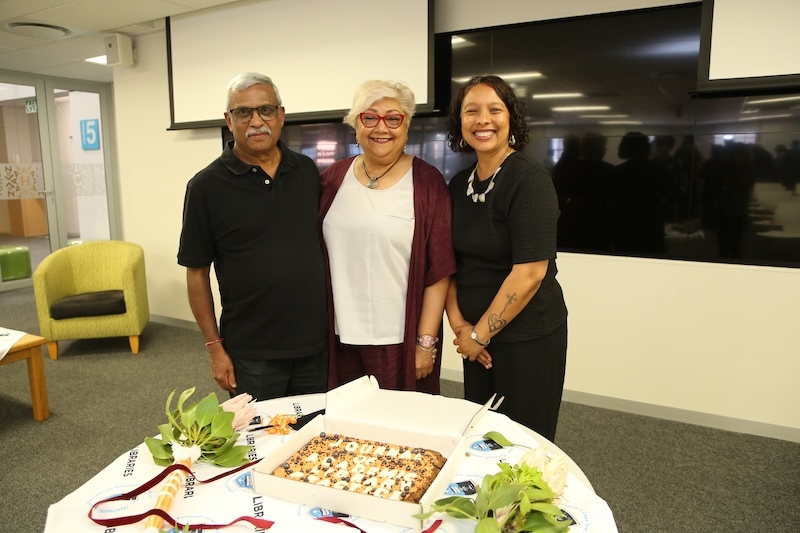
The University of Cape Town (UCT) Libraries marked a significant milestone on 2 December 2025 with the official launch of the Journal of Academic Library Practice (JALP) – South Africa’s first diamond open access journal in the Library and Information Science (LIS) discipline dedicated to the work, experiences, and innovations of practitioners.
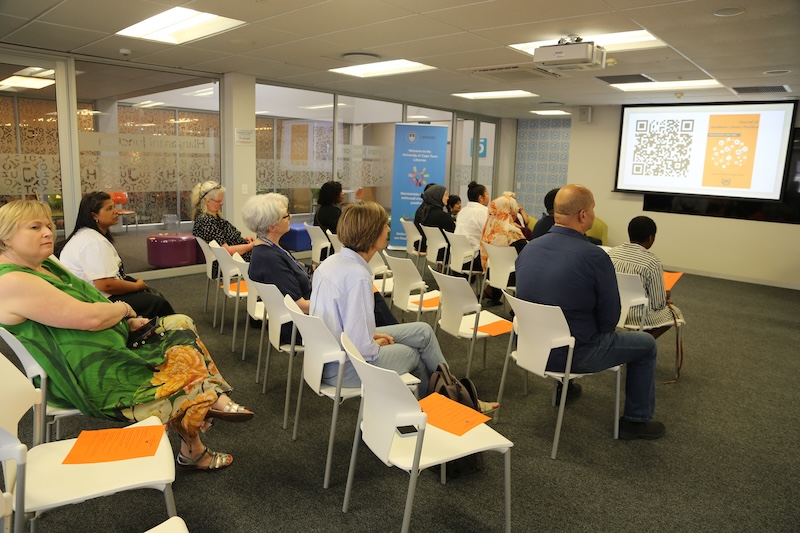
The launch, attended by local and international practitioners and leaders in librarianship, celebrated the arrival of a long-awaited platform that affirms the scholarly value of practice and positions library staff as knowledge producers in their own right.
Opening the event, JALP associate editor, Glynnis Johnson, emphasised the long-standing gap that inspired the journal’s creation: although library practitioners across South Africa and the Global South are driving innovation in their institutions, much of this work has historically gone undocumented or been published in journals whose scope, editorial bias, or cost barriers restricted Global South participation.
“Many innovative service developments are not being captured, shared, or celebrated – locally or globally,” she noted. “JALP is a space intentionally crafted so that every library worker, regardless of role, has the opportunity to document and share their practice.”
Designed for development, equity and mentorship
Editor, Dr Reggie Raju, described JALP as both proudly developmental and academically rigorous. The journal’s vision is to cultivate an inclusive community of library practitioners who strengthen library services and shape the future of the profession through reflective, evidence-based writing.
“This journal nurtures emerging authors while providing a platform for experienced colleagues to mentor, contribute and build collective professional capacity.”
“The researching librarian is an empowered librarian,” he said. “This journal nurtures emerging authors while providing a platform for experienced colleagues to mentor, contribute and build collective professional capacity.”
JALP’s diamond open access model – free to read and free to publish – removes all economic barriers for authors, positioning it as a model of equity and inclusion. Dr Raju explained that, at the heart of JALP, lies a simple vision, namely “to cultivate a vibrant, inclusive community of library practitioners who lead innovation, strengthen library services, and shape the future of librarianship through shared practice and collaborative learning”.
A South African milestone with global resonance
UCT’s deputy vice-chancellor for Teaching and Learning, Professor Brandon Collier-Reed, congratulated the library for establishing a publication that elevates practice-based research and aligns deeply with UCT’s Vision 2030.
“Academic libraries are not only custodians of knowledge, but dynamic spaces of learning, creativity and problem-solving,” he said. “By creating a platform dedicated to the evolving expertise of library professionals, this journal affirms the scholarly value of practice.”
He further noted that the journal fills a significant national gap: South Africa has only four LIS journals, all of which reside in academic departments and none of which operate on the diamond model.
From the United States (US), Dr Lorraine Haricombe, former vice-provost at the University of Texas Libraries, provided an overview of practises and lessons gleaned from US academic libraries, focusing on library-led publishing and open scholarship ecosystems. She noted that there is a wealth of valuable work happening in practice that, when documented and shared, as JALP proposes, represents “a powerful opportunity for practitioners to document work that significantly contributes to the growth of our profession”.
Regional collaboration and future proofing
Dr Shirlene Neerputh, the director of Library Services at the University of the Western Cape, applauded the journal as a benchmark for the sector. She emphasised that collaboration across Western Cape institutions – and eventually nationally – will strengthen the journal and enable shared innovation, knowledge exchange, and sustainable publishing models.
“Knowledge belongs to all of us,” she said. “A collaborative, practice-based journal ensures our stories, challenges, and innovations become part of the scholarly record.”
UCT’s executive director of Libraries, Ujala Satgoor, contextualised the journal within the sector’s most pressing challenges: evolving technologies and the role of artificial intelligence, open access and the need for inclusion and equity, bridging the gap between research and practice, and the ongoing imperative for continued professional development. A practice journal, she argued, directly supports skills development, strengthens service quality, codifies institutional knowledge, and provides an advocacy tool for demonstrating the library’s value and impact.
Celebrating practice as scholarship
Professor Jaya Raju, the deputy dean of Staffing and Transformation in the Faculty of Humanities, underscored the significance of a practitioner-led journal for the LIS discipline. She observed that professionals working “at the coalface” hold rich, practice-based insights that meaningfully advance the field.
“This journal grows a new generation of practice-based researchers,” she said, noting the opportunities for recognition and visibility it affords practitioners as editors, reviewers, and authors.
International advisory board member Professor Clara Chu, the director of Mortenson Center and Mortenson distinguished professor, also reflected on the importance of JALP as a practitioner’s journal. Drawing from her work at the Mortenson Centre for International Library Programs, she commended JALP for foregrounding innovation from the Global South and for creating a dialogue-driven space where knowledge is shared rather than siloed.
Marking the moment
The programme concluded with a demonstration of the journal platform by Dr Lena Nyahodza, who highlighted JALP’s adherence to best practice, transparent policies, and robust editorial structures.
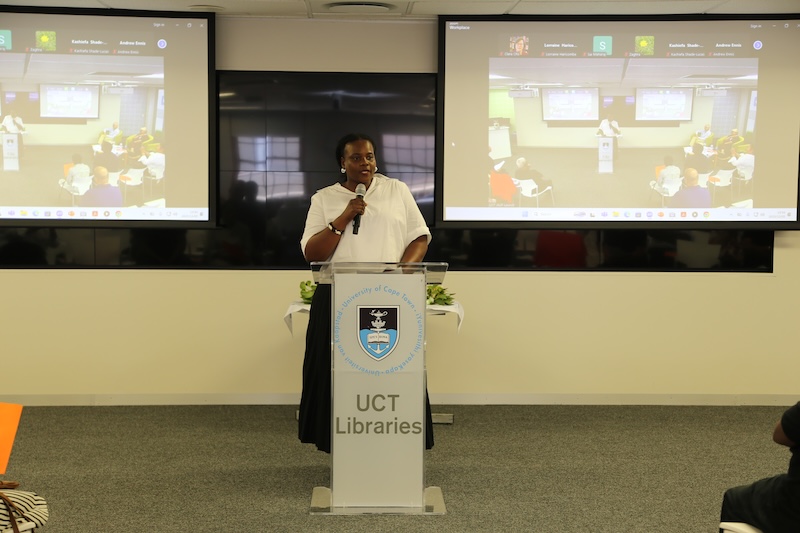
In her vote of thanks, associate editor, Dr Patricia Makwambeni, reaffirmed that the journal exists “for librarians to document, to reflect, to innovate, and to share their practice”.
A celebratory cake – inscribed with JALP – was cut to mark the symbolic birth of the new journal.
 This work is licensed under a Creative Commons Attribution-NoDerivatives 4.0 International License.
Please view the republishing articles page for more information.




Related