

Wamkelekile, Welkom
Vice-Chancellor’s Introduction
08 December 2025 | Professor Mosa Moshabela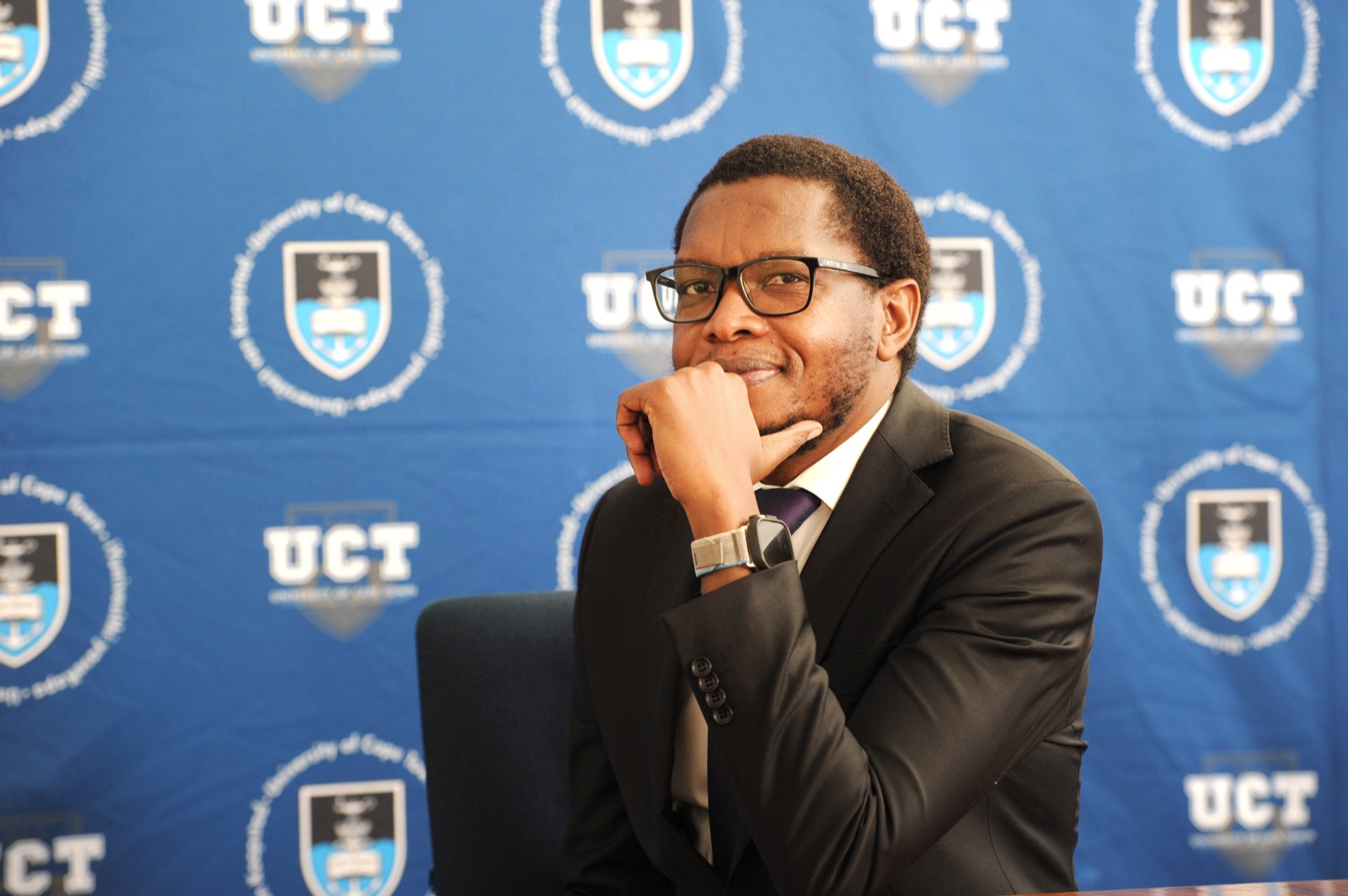
The past year has been a pivotal period of transition for the University of Cape Town (UCT), marked by challenges and changes – but also by resilience, collaboration and a renewed sense of direction. In facing uncertainty together, we reaffirmed what it means to lead with purpose and to steer the institution forward with integrity and vision.
As I stepped into the role of UCT’s 11th vice-chancellor, I did so with deep gratitude to many of my predecessors, including the one who handed over the proverbial baton to me: Emeritus Professor Daya Reddy, who served with unwavering steadiness as VC interim during a complex period. His leadership, along with the guidance of the Council under the stewardship of Mr Norman Arendse, laid the groundwork for a year of emergence and renewal.
It was a year of rebuilding trust, reaffirming our values, and reigniting a shared purpose. We saw the new UCT Council being constituted to serve until 2028, and welcomed new senior leadership appointments across several key portfolios. These transitions signal not just change, but our collective resilience and vision for the future.
This has been a year of emergence, forging ahead in research, education and transformation – despite institutional, national and global challenges.
Among the notable highlights: in 2024 Summer School marked 100 years of lifelong learning at UCT, highlighting our commitment to open, lifelong learning. In research, the launch of the Research Support Transformation project and its online Research Project Navigator has begun to simplify and strengthen the research process for scholars across the university.
UCT Libraries continued the remarkable recovery following the Jagger Library fire of April 2021, reopening the Government Publications reading room and establishing a Conservation Unit, while major digitisation and restoration efforts progressed. These milestones are part of a larger renewal effort that reflects our commitment to memory, heritage and access.
Our researchers also made a powerful global impact. Professor Linda-Gail Bekker’s leadership in trials for the HIV-prevention drug, Lenacapavir, contributed to its recognition as Science magazine’s 2024 Breakthrough of the Year. The new Centre for Translational AMR Research, launched with LifeArc and supported by a R100 million investment, will strengthen Africa’s response to antimicrobial resistance.
UCT rose 10 places in the 2025 QS World University Rankings for Sustainability, confirming our role as Africa’s leading institution in this critical area. This complements the launch of the Sustainable Science Initiative at the Institute of Infectious Disease and Molecular Medicine – Africa’s first academic pursuit of the My Green Lab Certification.
We also celebrated the graduation of approximately 7 000 students, including close to 90 doctoral graduates. Each of these graduations represents more than personal achievement – they signal the power of higher education to advance transformation, uplift communities and shape a better future for our country and continent.
The UCT Graduate School of Business’s (UCT GSB) MBA programme ranked 7th globally and 1st in Africa in the 2024 Better World MBA rankings. Meanwhile, our Women’s Football team qualified for the Hollywoodbets Super League – the top women’s league in South Africa, a proud moment in student sport.
We also approved a new Language Policy to drive multilingualism and inclusion. And through the launch of the VC’s Campus-wide Conversations, we began to rebuild our internal culture – rooted in compassion, listening and community.
In 2024, we chose to meet difficulty with purpose and progress. We raised student support through various initiatives, and engaged with developing technologies and climate change through a principled academic lens.
At a time when the world continues to grapple with geopolitical uncertainty, climate emergencies and persistent inequality, UCT has chosen a different path: dialogue over discord, collaboration over isolation, and purpose over inertia. We stayed firmly on track to meet our 2025 financial sustainability goals and engaged seriously with the ethical and academic challenges posed by artificial intelligence.
Through it all, UCT has shown that emergence is not only about rising: it is about rising with intention. Forging ahead means embracing innovation while never losing sight of our humanity. Navigating difficulty is most powerful when we lead with a collective purpose.
As we turn the page on this chapter, I am filled with optimism. The seeds we have sown in 2024 through dialogue, determination and dignity are already bearing fruit. Let us carry this momentum into the future, together. Together, we are shaping a more resilient, purposeful UCT.
Professor Mosa Moshabela
Vice-Chancellor
 This work is licensed under a Creative Commons Attribution-NoDerivatives 4.0 International License.
Please view the republishing articles page for more information.