
Wamkelekile, Welkom
Research and Internationalisation
08 December 2025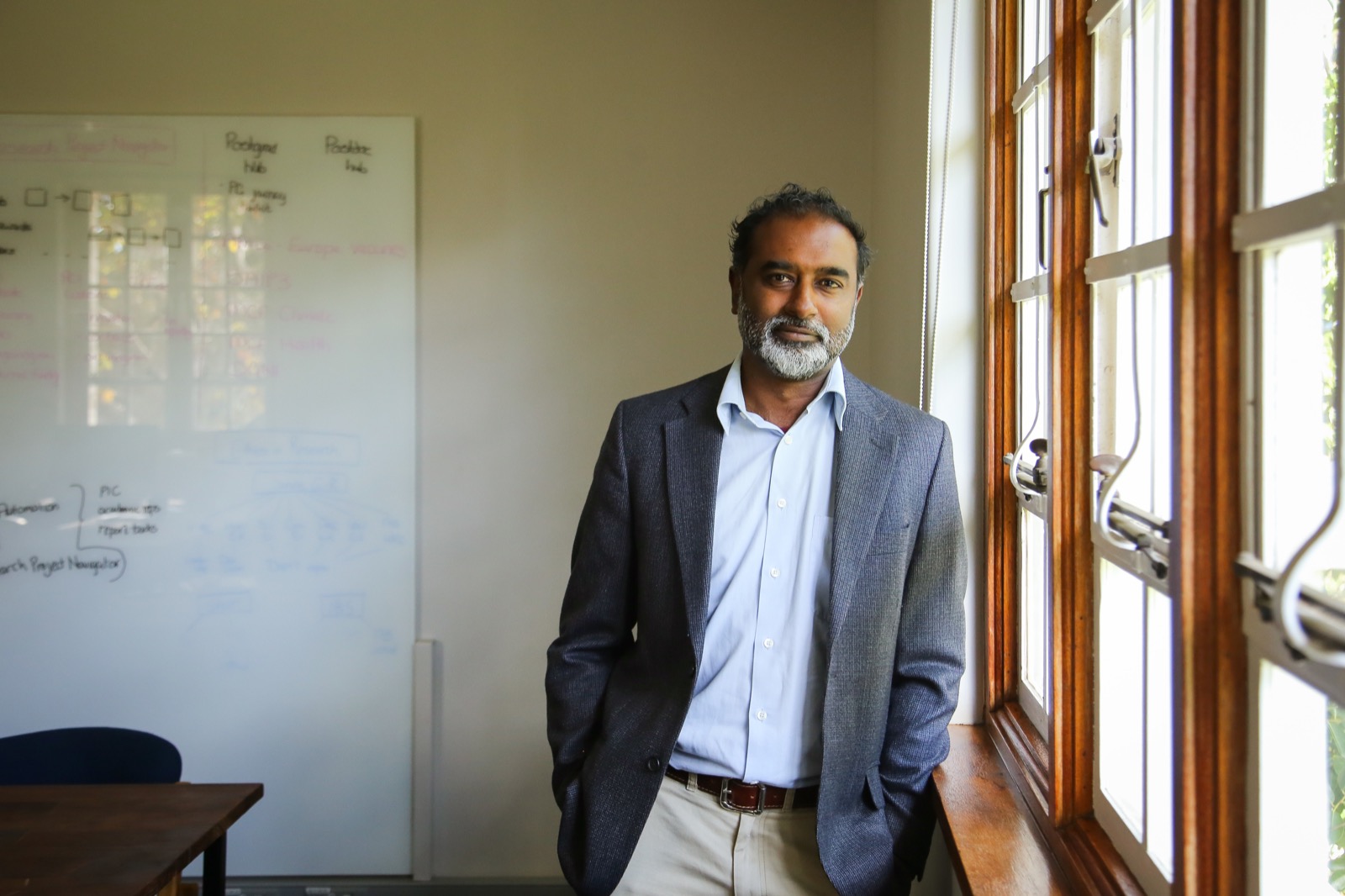
The University of Cape Town’s (UCT) research community continues to rise with resilience, creativity, and purpose amid a complex and often constrained landscape. This year’s highlights reflect not only scholarly excellence but a deep commitment to societal relevance, equity, and global impact.
UCT researchers have demonstrated remarkable agility and leadership in confronting some of the most urgent issues of our era, including climate change and health. Innovation, social transformation, and knowledge justice: our research outputs reflect a university deeply engaged with local realities while making a global contribution.
In the face of tightening national and international research budgets, the Faculty of Health Sciences’ Research Development team has become a lifeline for many scholars, providing critical support to secure international funding. Their work ensures that early-career researchers, in particular, are able to build impactful careers in a highly competitive environment. Their efforts exemplify the quiet but powerful machinery that enables research to thrive under pressure.
This spirit of emergence is also evident in our leading scholars. Four UCT researchers were included in the 2024 Clarivate Highly Cited Researchers list, placing the university in the top 1% globally. Their work – ranging from viral evolution to mental health and physical activity – continues to shape policy, guide practice, and inspire future generations.
In the health sciences, Professor Linda-Gail Bekker and her team made global headlines for their role in trials of Lenacapavir, a breakthrough in HIV prevention. Recognised as Science magazine’s 2024 Breakthrough of the Year, this achievement reflects the power of African-led research to drive innovation and transformation at a global scale.
Our researchers also continue to ask difficult questions and advance social justice. The work of the South African Research Chairs Initiative (SARChI) Chairs – Professors Rajend Mesthrie, Abdulkader Tayob, Lungisile Ntsebeza, and Carolyn Hamilton – provides a deep and nuanced understanding of how language, religion, democracy, and archives shape the South African experience. Their contributions challenge historical silences and open new pathways for inclusive knowledge production.
Innovation remains a hallmark of our institution. The H3D Drug Discovery and Development Centre has been chosen to lead the Grand Challenges African Drug Discovery Accelerator, building African capacity for pharmaceutical research through mentorship, infrastructure, and collaboration. Similarly, UCT’s Inter-university Institute for Data Intensive Astronomy (IDIA) was recognised at the 2024 NSTF-South32 Awards for advancing big data tools in radio astronomy, making high-level science more accessible across the continent.
This year also saw us celebrate groundbreaking work in disability inclusion and mental health. Roxy Davis’ PhD research in surf therapy demonstrated the life-changing impact of alternative health interventions for children with disabilities, while Professor Ameeta Jaga’s “Motherload Project” expanded to include fathers in conversations about care work, challenging norms and fostering empathy in overlooked areas of everyday life.
Environmental and interdisciplinary research took a leap forward with the publication of Contested Karoo, an open-access book that redefines our understanding of the Karoo as a socially, environmentally, and politically charged space. It exemplifies how collaborative, cross-disciplinary research can reshape public dialogue and inform policy.
UCT’s growing influence in global science was further affirmed by the election of four of our scholars to the World Academy of Sciences and Professor Tommie Meyer’s induction into the African Academy of Sciences for his leadership in Artificial Intelligence. These honours underscore UCT’s role in shaping science, innovation, and policy in the Global South.
As we reflect on these achievements, we do so with gratitude for the perseverance of our researchers, the support teams who make their work possible, and our partners across the globe. Together, we are not just weathering the storm – we are charting a new course.
Through shared purpose and unwavering commitment, UCT’s research enterprise continues to lead with integrity, creativity, and care. We emerge – not unscathed – but stronger, wiser, and ever more determined to contribute to a more just, sustainable, and inclusive future.
Sincerely,
Professor Jeff Murugan
Acting Deputy Vice-Chancellor Research and Internationalisation
Researching the human experience
Examining how diverse experiences, cultures and histories have shaped society, these South African Research Chairs Initiative (SARChI) chairs, hosted at the University of Cape Town (UCT), have gained and shared important insights “On being human”. This is one of the five research focal areas devised under UCT’s Vision 2030. These SARChI chairs have been funded for 15 years each by the national Department of Science and Innovation (DSI) and National Research Foundation (NRF) with a view to drive excellence in research and innovation across South African universities. Drawing on South Africa’s many languages and religions, and examining how we govern and document knowledge, they have made researching the human experience their life’s work.
What climate change means for South Africa and its people
A new synthesis report by University of Cape Town (UCT) researchers outlines how climate change could reshape South Africa’s economy, ecosystems and everyday life. Titled “Climate change impacts in South Africa: What climate change means for a country and its people”, the report was compiled by experts from UCT’s Climate System Analysis Group and African Climate & Development Initiative. South Africa’s agricultural sector and rich biodiversity are national assets – but both are under threat from increasing droughts, heatwaves, and floods. These extreme events could damage infrastructure, threaten food and water security, harm tourism, and raise the cost of living, particularly for vulnerable communities. “South Africa is well resourced, but climate and socioeconomic risks could drastically change that,” said Dr Peter Johnston. “Our response – especially from policymakers – will shape the future.”
UCT’s H3D leads Africa’s drug discovery accelerator
The University of Cape Town’s Drug Discovery and Development Centre (H3D) will spearhead the Grand Challenges African Drug Discovery Accelerator (GC ADDA) network – backed by a US$7.2 million investment from LifeArc and the Bill & Melinda Gates Foundation. The initiative will support five African-led drug discovery projects over the next three to five years. It aims to build a virtual, continent-wide network to enhance drug discovery capabilities, attract further investment, and promote collaboration, training, and public engagement. “This is a vital step in expanding Africa’s pharmaceutical innovation, creating jobs, and contributing to the global medicine pipeline,” said Professor Kelly Chibale, H3D founder and director. Since its start in 2011 with just five scientists, H3D has grown into a multidisciplinary team of 75 experts in chemistry, biology, pharmacology, business, and operations.
UCT’s Professor Tommie Meyer elected Fellow of the African Academy of Sciences
Professor Tommie Meyer from the University of Cape Town (UCT) has been elected a Fellow of the African Academy of Sciences (AAS) in recognition of his excellence in Artificial Intelligence (AI). The AAS honours scholars who have made significant contributions to advancing science and innovation in Africa. The AAS focuses on six priority areas: climate change; health and well-being; food security; water and sanitation; sustainable energy; and science, technology, engineering and mathematics (STEM). At UCT, Meyer is the CAIR-UCT Research Chair in AI, a professor of Computer Science, and co-director of the AI Research Unit (AIRU). Nationally, he co-directs the Centre for AI Research (CAIR) and is one of only three South African computer scientists to hold an A-rating from the National Research Foundation (NRF).
Four UCT academics ranked among world’s most-cited researchers
Four University of Cape Town (UCT) scholars have been named to Clarivate’s 2024 Highly Cited Researchers list, placing them among the top 1% of most-cited researchers globally in their fields. Emerita Professor Estelle (Vicki) Lambert, Honorary Professor Crick Lund, Professor Dan Stein, and Associate Professor Darren Martin earned recognition for their influential, widely cited work. Their inclusion affirms UCT’s standing as a leading hub of research excellence in Africa. “Recognition of these outstanding researchers highlights UCT’s role in shaping Africa’s scientific future,” said Professor Jeff Murugan, acting Deputy Vice-Chancellor for Research and Internationalisation. “Their work drives innovation and inspires the next generation of scholars.”
UCT Press launches open access book on the Karoo
The University of Cape Town (UCT) Press has launched Contested Karoo: Interdisciplinary perspectives on change and continuity in South Africa’s drylands, an open access book edited by UCT’s Professor Timm Hoffman and Stellenbosch University’s Professor Cherryl Walker. Challenging the perception of the Karoo as a vast, empty desert, the book brings together sociologists, ecologists, anthropologists, botanists and agricultural researchers to explore the complex realities of this arid region, which spans nearly a third of South Africa. Professor Emma Archer, who helped launch the book, called it “the most robust interdisciplinary approach to research I’ve ever seen,” noting that the Karoo’s challenges – ranging from energy to ecology – cut across academic boundaries.
Top honours for leading radio astronomy big data analysis
The Inter-university Institute for Data Intensive Astronomy (IDIA) has won the Fourth Industrial Revolution (4IR) Special Annual Theme Award at the 2024 NSTF-South32 Awards, South Africa’s premier science, engineering, and technology honours. IDIA was recognised for its pioneering work in big data analysis for radio astronomy. A collaboration between the universities of Cape Town, Western Cape, and Pretoria, IDIA supports data-driven research for major projects like the MeerKAT and the upcoming Square Kilometre Array (SKA) telescopes. Established by Professor Russ Taylor, IDIA equips South African astronomers to manage the vast datasets generated by these cutting-edge instruments. “Breakthroughs in SKA science are achieved by those who can handle the data – and this is where IDIA excels,” said interim director Professor Patrick Woudt at the awards ceremony.
Surf therapy nurtures self-discovery among children with disabilities
“Surfing makes me want to scream; I’m happy!” – This joyful sentiment from a child participant captures the essence of Roxy Davis’ groundbreaking surf therapy programme for children with disabilities. Davis, a University of Cape Town PhD graduand, designed a surf therapy intervention that promotes mental, physical and emotional wellbeing. Initially a master’s project in disability studies, her research was upgraded to a PhD due to its pioneering nature. Her study fills a significant gap in global literature and documents the personal transformation of children with disabilities, including those with spastic cerebral palsy and limb loss, from Cape Town’s under-resourced communities.
Supporting our researchers to compete on the international funding stage
In South Africa’s tight funding environment, University of Cape Town’s Faculty of Health Sciences (FHS) researchers rely heavily on international grants to sustain their work. The Faculty’s Research Development (RD) team plays a crucial role in helping researchers navigate this complex funding landscape. The RD team offers training, proposal development support, and manages UCT’s internal pre-award processes. They interact monthly with up to 120 researchers, assisting with up to 20 new international funding proposals. Dr Rob Huddy, Proposal Development Project Manager, emphasises their mandate: “To support and grow the health sciences research enterprise.”
Innovation, global impact and resilience of UCT’s research community celebrated
A typical day for an academic often involves having many irons in the fire – teaching, research, sitting on committees and heaps of administration – with each day bringing its own unique set of challenges and demands. It was this tightrope walk which took centre stage at the University of Cape Town’s (UCT) annual Research Celebration, held on 4 December 2024, where mid-career researchers engaged about their academic journeys, which exemplify the innovation and resilience that define UCT researchers.
Lenacapavir named 2024 Breakthrough of the Year: A new era in HIV prevention
The fight against HIV has reached a historic milestone with Science magazine naming Lenacapavir its 2024 Breakthrough of the Year. This innovative injectable drug, administered every six months, has demonstrated up to 99.9% efficacy in preventing HIV infections. Lenacapavir’s success represents a revolutionary step in global HIV prevention, particularly for high-risk populations, and brings new hope to millions worldwide. Central to this groundbreaking achievement is Professor Linda-Gail Bekker, a member of the Institute of Infectious Disease and Molecular Medicine (IDM) and world-renowned infectious disease expert. Professor Bekker led one of the pivotal efficacy trials, which focused on adolescent girls and young women in South Africa. These trials, alongside others conducted globally, have established Lenacapavir as a new benchmark in the science of HIV prevention.
The Motherload Project levels up – includes fathers’ voices to effect change
The Motherload Project has levelled up. Its success sprouted a new phase, which will bolster new thinking and innovative ideas on how to lighten the motherload, give prominence to the voices of South African mothers and recognise their extraordinary contribution to their families and society. Phase two will include the perspectives of a valuable figure in the family: the father. Spearheaded by Professor Ameeta Jaga in the University of Cape Town’s (UCT) School of Management Studies, the project is committed to addressing complex social changes through transdisciplinary collaboration between academia, government and civil society.
UCT researchers elected as members of the World Academy of Science
Four University of Cape Town (UCT) researchers have been elected as Fellows of the World Academy of Science (TWAS) – the only South Africans to be recognised by the academy this year. Based in Trieste, Italy, TWAS supports the scientific innovation for sustainable development in the global South through research, education, policy and diplomacy. The election of the four UCT scholars to the 2025 class of Fellows recognises their pioneering contributions to scientific advancement in developing countries. They are Professor Alison Lewis, Dean of the Faculty of Engineering & the Built Environment (EBE),President and CEO of the South African Medical Research Council (SAMRC), Professor Ntobeko Ntusi, Professor Herald Winkler, a distinguished scholar in Policy Research in International Services and Manufacturing (PRISM) at the School of Economics, and Professor Liesl Zühlke a distinguished paediatric cardiologist in the Department of Paediatrics, director of the Children’s Heart Disease Research Unit, and vice-president for extramural research and internal portfolio at the South African Medical Research Council (SAMRC).
 This work is licensed under a Creative Commons Attribution-NoDerivatives 4.0 International License.
Please view the republishing articles page for more information.