
Wamkelekile, Welkom
Alumni and Donors
08 December 2025Fundraising
Globally, 2024 was marked by cautious philanthropic spending amid inflationary pressures, geopolitical instability, and shifting donor priorities. In South Africa, philanthropic giving has shown resilience but is under strain due to a constrained economy and increased demand from humanitarian and development causes. The country’s giving ecosystem is also maturing, with more structured family foundations and corporate social investment arms seeking measurable impact, often favouring education, youth development, and climate resilience – areas where the University of Cape Town (UCT) is particularly well positioned.
In 2024, UCT secured R445.7 million in philanthropic income. While this is a decline from 2023, which reflects the tapering of some major multi-year international grants and fewer mega-gifts, the 2024 figure remains consistent with pre-2023 levels, comparable to 2022 (R484.9 million) and higher than 2021 (R429.4 million).
The university attracted contributions from 1 336 donors in 2024, a slight reduction from 1 652 in 2023. First-time donors made up 34% of this total, reflecting a stable rate compared to recent years and suggesting enduring success in donor acquisition, despite global economic uncertainty.
Donor composition continues to be dominated by foundations and trusts, which contributed 60% of total donations, followed by corporates (23%) and individuals (6%). While individual giving remains modest in rand value, individuals – particularly alumni – make up the bulk of donor numbers, indicating strong grassroots engagement. Alumni alone accounted for nearly half (49%) of all individual donations.
International sources continued to drive the majority of UCT’s philanthropic income, accounting for 63% (R279.5 million) of the total, compared to 37% (R166.2 million) from South African-based donors. This trend highlights the university’s strong global networks and brand appeal. Key geographies included the United States (53% of international income), Europe (29%), and the United Kingdom (14%).
The distribution of donations reflects continued support for UCT’s flagship research and social impact initiatives. The Faculty of Health Sciences (R82.3 million), the Office of the Vice-Chancellor (OVC) (R62.8 million), and the Faculty of Engineering & the Built Environment (R59.6 million) were among the largest beneficiaries.
In May 2024, the Development and Alumni Department (DAD) hosted a special showcase event designed to highlight UCT’s excellence across key research and engagement areas. The event opened UCT’s doors to current and prospective donors, offering a behind-the-scenes look at the work of its scholars and students. Featured presentations included insights from the Children’s Institute, the African Climate and Development Institute, the Future Water Institute, and the Centre for Infectious Disease and Molecular Medicine (IDM), each illustrating the university’s impactful and interdisciplinary contributions to society.
In addition, the DAD hosted two successful Golf Day fundraisers – one at the Country Club Johannesburg and another at Erinvale Golf Course in Cape Town. These annual events, supported by generous sponsors and alumni, raised over R300 000 in 2024 in aid of the 100UP Programme and Disability Services. Beyond their fundraising impact, the golf days continue to serve as important platforms for donor engagement and relationship-building.
Despite the decline from 2023, 2024 was a strong year for UCT philanthropy by historical standards. Sustaining momentum in a tightening global and national donor environment will require continued focus on relationship-based fundraising, international engagement, and diversifying the base of sustainable, unrestricted giving.
Alumni Relations Engagement
In 2024, UCT continued to deepen its relationship with alumni through a series of dynamic and impactful engagements led by the DAD. With a focus on priority segments and global reach, these initiatives were designed to foster meaningful, lifelong connections between UCT and its alumni. From city to city and continent to continent, UCT extended its presence far beyond campus – offering spaces for alumni to reflect, reconnect, and contribute to the university’s continued success.
One of last year’s early highlights was a week-long engagement tour along the Garden Route. Events included alumni lunches in George and Knysna, where UCT graduates gathered to reconnect, share memories, and hear updates about the university’s direction. The tour also coincided with the Knysna Forest Marathon, where UCT engaged alumni and the broader community through branded merchandise and information updates, reconnecting with alumni living in the region.
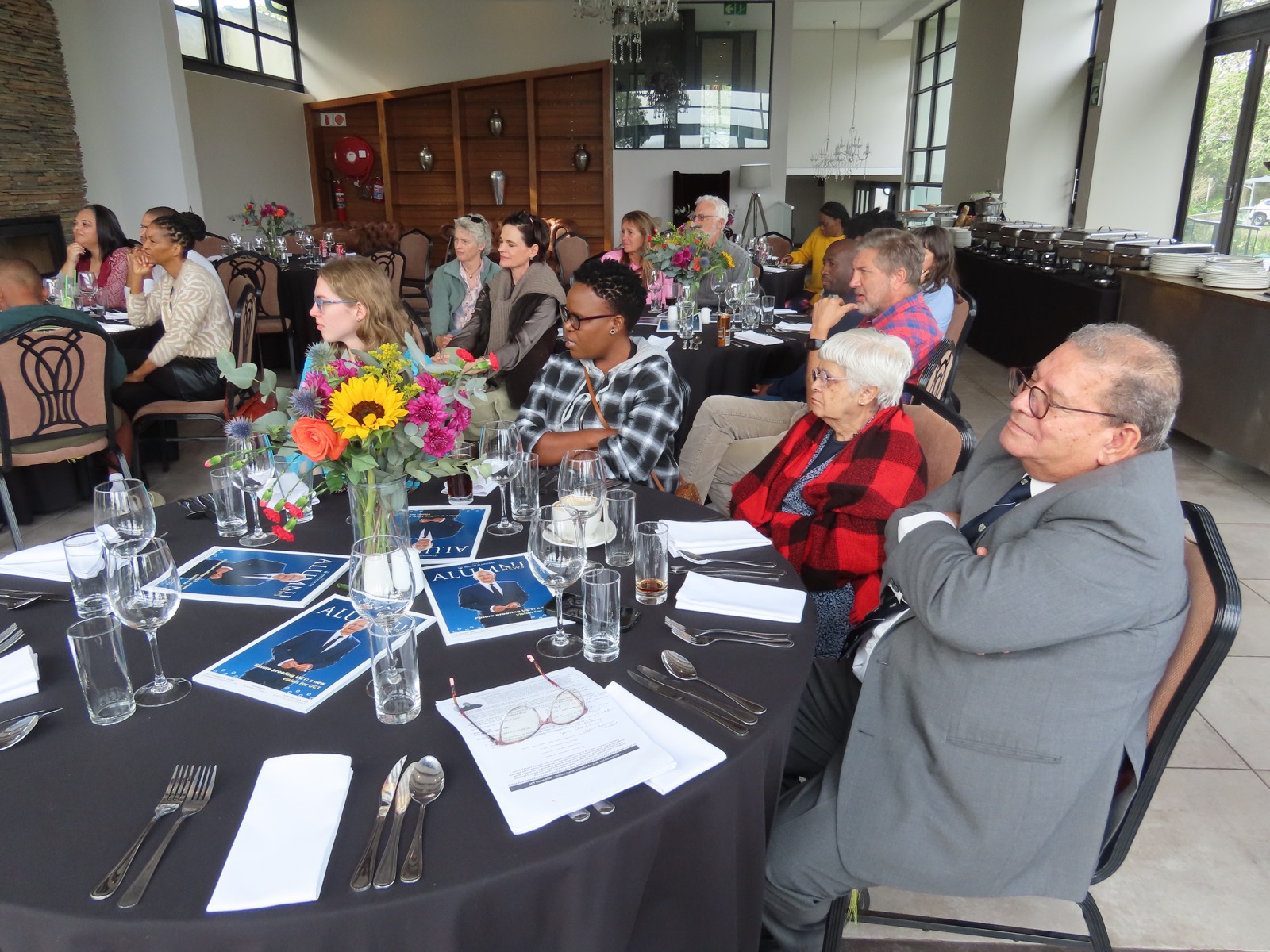
Johannesburg was the stage for a landmark leadership engagement in collaboration with the UCT Black Alumni Association (UCTBAA). UCT hosted a cocktail event at the UCT Graduate School of Business (UCT GSB) in Sandton, featuring UCT alumnus and Eskom CEO, Dan Marokane. Appointed in early 2024, Marokane shared his insights on corporate governance and public service, demonstrating the leadership calibre fostered by UCT.
Celebrating UCT Day
UCT Day was a multi-faceted celebration of shared identity and institutional pride. Designed to cater to a broad spectrum of the UCT community, the event featured a festive outdoor campus activation, a student-led benefit concert, and a book and film festival – each segment curated to appeal to different audiences. Alumni, students, and staff came together to celebrate UCT’s spirit through music, literature, and shared stories. A robust digital campaign, including the popular “Pass the Phone” challenge, extended the reach of UCT Day to alumni across the world.
As part of the broader UCT Day campaign, a phonathon was held to engage alumni directly and raise funds for student support. The phonathon began with training on Saturday, 14 September 2024, and continued until 2 October 2024. Fifteen student callers were recruited, ensuring a minimum of two representatives from each faculty. The campaign concluded successfully, with pledges totalling R502 000, exceeding the UCT Day fundraising goal of R500 000.

In partnership with WomHub, UCT launched The Women in Leadership Series in 2024 creating platforms for women leaders across the UCT alumni community to connect and collaborate. Events were hosted in Johannesburg, Cape Town, and London, and brought together trailblazing alumnae to share insights and support the advancement of women in leadership and entrepreneurship. The series showcased the strength of UCT’s global alumnae network.
Tugwell Hall turns 50
Tugwell Hall, a women’s residence on UCT’s lower campus, celebrated its 50th anniversary in 2024. With support from the university, alumni and students hosted a series of events to honour the residence’s legacy. A scholarship fund was launched, and a celebratory dinner brought together generations of residents. The university also assisted in tracing the family of the residence’s namesake, Anne Tugwell, to pay tribute to the hall’s roots.
As UCT concluded the year, the strength and diversity of its alumni community remain central to its global impact. In 2024, the university celebrated, connected, and reimagined its engagement with graduates from every corner of the globe. The momentum built this year sets the stage for even greater collaborations and contributions in 2025 and beyond.
Centre for Extra-Mural Studies (including the annual Summer School)
The Centre for Extra-Mural Studies (EMS) contributes to UCT’s adult education initiatives through offering certified and non-certified programmes, lectures, and courses throughout the year for alumni, friends of UCT and adult learners from across the world.
The annual Summer School programme, convened and offered by EMS, is the largest public education programme of its kind in Africa. It serves as a showcase for UCT’s excellent research and scholarly work across a vast range of interests, topics and disciplines that includes the humanities, science and medicine.
The 2024 programme marked one hundred years of continuous lifelong learning since the first lectures were offered to the public in 1824, and 75 years since EMS was established. More than 100 lectures, courses, excursions and tours were offered. The Distinguished Alumni lecture was presented by Professor Salome Maswime and focused on the University of the Future project. The programme was livestreamed to venues in Philippi (UCT GSB’s Solution Space), Hout Bay (Dennis Goldberg House of Hope) and Kensington (SHAWCO) as part of the EMS’ social impact work to make Summer School more accessible to resource-poor communities.
The social impact work of EMS, which fulfils the university’s transformation imperative, focuses on learners – many of them in programmes that prepare them for tertiary study such as the 100UP programme, IkamvaYouth and Just Grace. This work takes the form of Saturday Summer Schools that focus on topics that could inspire learners to study in a particular discipline, and that are of general interest. The programme was offered at UCT for the 100UP and Gill Net 100 UP learners and the Just Grace organisation from Langa. Additionally, two Saturday programmes were offered at the Masiphumelele library for IkamvaYouth. The coding course was developed specifically to reach a segment of young people in communities who have passed Grade 12 but who are not enrolled at any tertiary study programmes. The specific goal was to provide training that can form the basis for future training with the goal to finding meaningful work, and where possible to find work without future training. This is a skills-based course with a practical application and not an enrichment course.
The following activities took place during the year:
- An in-conversation session between the vice-chancellor (VC), Professor Mosa Moshabela; and former VC Dr Max Price, focused on Dr Price’s vision, achievements and mistakes and lessons learnt; as well as Professor Moshabela’s vision for his tenure at UCT and how that is informed by the trajectory of higher education in South Africa over the past 10 years.
- The excursions included a walk in Newlands Forest to identify indigenous trees, an astronomy trip to Sutherland, two visits to view rock art in the Cederberg and a geology excursion on Table Mountain.
- Workshops on ADHD and genealogy; courses on self-publishing, memoir writing, heritage law, applied complexity studies and basic copy editing and proofreading.
 This work is licensed under a Creative Commons Attribution-NoDerivatives 4.0 International License.
Please view the republishing articles page for more information.