

Wamkelekile, Welkom
Chief Operating Officer's Report
08 December 2025
The University of Cape Town (UCT), like many higher education institutions in South Africa – and globally – has been forced to navigate the realities of financial austerity. While challenging, it has also provided an opportunity for departments providing business support services to be more innovative, resourceful and efficient.
As acting chief operating officer during 2024, I am proud to share some of the key achievements made possible through the collective efforts of committed teams across Properties and Services (P&S), Human Resources (HR), Information and Communication Technology Services (ICTS) and Environmental Sustainability. My sincere appreciation goes to all colleagues who have contributed with dedication and resilience to supporting teaching, learning and research during this challenging period.
Properties and Services Department
Integrated Development Framework (IDF)
Progress on UCT’s Integrated Development Framework (IDF) continued in 2024, through engagement with the City of Cape Town (CoCT). In August 2024, key aspects of the plan – such as zoning, property boundaries, and development frameworks – were endorsed by city officials. The City recommended that flexibility be maintained in precinct plans using site development plans (SDPs). While a draft Municipal Planning Tribunal (MPT) report was completed, some conditions required refinement. Although approval of the IDF was initially expected by December 2024,was moved to Q2/Q3 of 2025.
Strategic and catalytic projects
The following key projects are at different phases of development:
- Arise Building (new research facility)
- Jagger Library (post-fire rehabilitation)
- Faculty of Engineering & the Built Environment Cluster Programme (fire compliance and infrastructure improvements)
- Faculty of Health Sciences Masterplan (strategic growth and consolidation)
- Nelson Mandela Memorial Centre and School of Public Governance (living memorial and new school)
- Polar Laboratory (feasibility review and funding exploration)
- UCT Fire Response (post-fire restoration)
- Urban Design Framework (strategic master planning)
- Water Sustainability (Green Precinct project implementation)
The University Building & Development Committee (UB&DC), under the chairmanship of Malcolm Campbell, governs all P&S operations. The committee, and its seven sub-committees, held regular meetings during 2024.
Sarah Baartman Hall restoration
In August 2024, UCT’s iconic Sarah Baartman Hall underwent essential restoration led by the upper campus maintenance team. The project included replacing the century-old wooden floors, waterproofing the roof, and upgrading the stage bathrooms, all in line with heritage preservation standards.
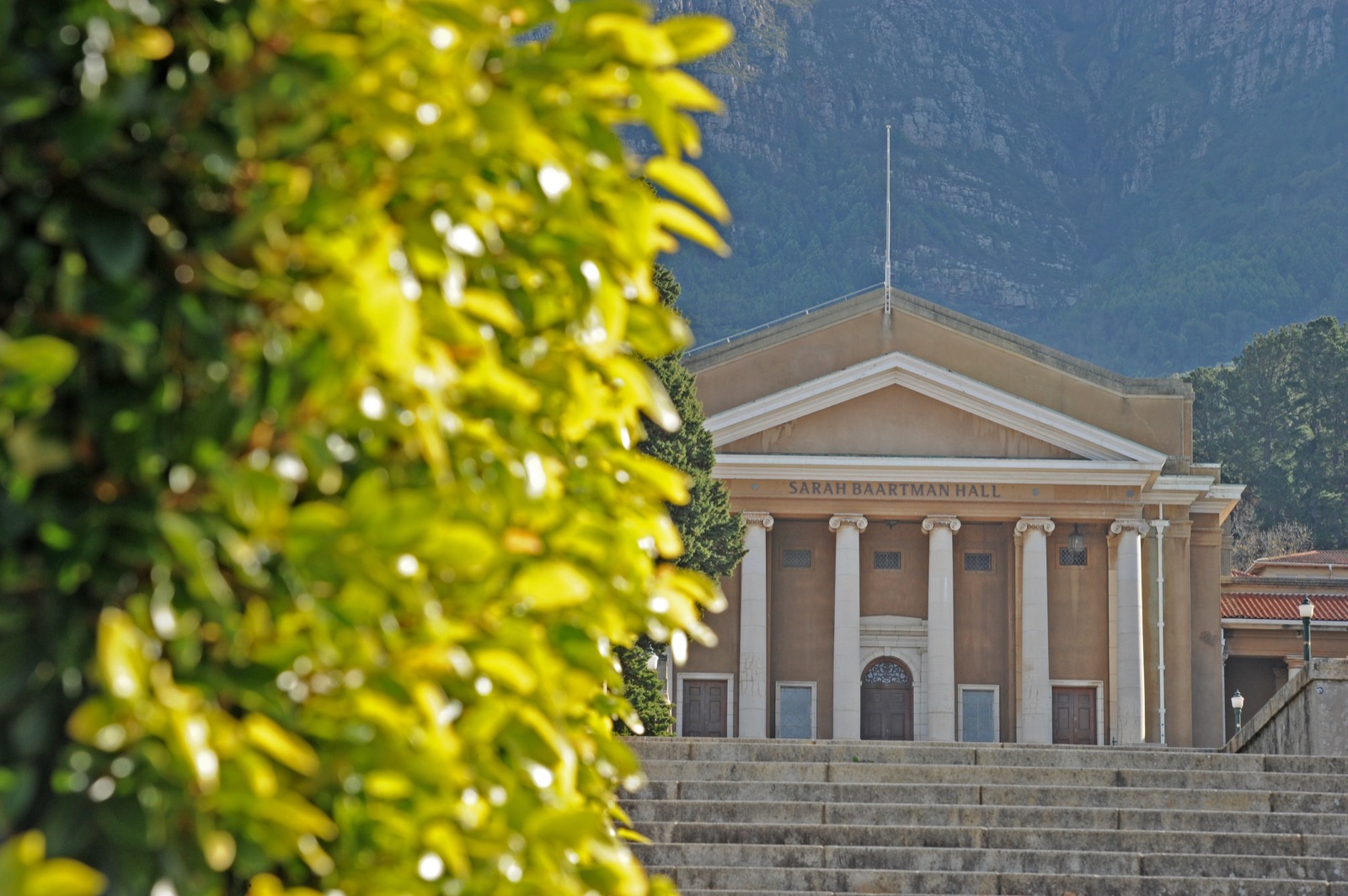
Original floorboards were repurposed into a unique inlaid feature at the entrance, honouring the hall’s legacy. Despite tight deadlines ahead of September graduations, the team worked tirelessly to complete the project, ensuring the hall remained a functional and symbolic space for the UCT community.
Energy management
During 2024, South Africa saw a welcome reprieve from load shedding, with a 76% reduction compared to 2023. However, P&S continued with various significant projects to ensure energy security for the university. These included an upgrade to the Oval Substation, which supplies power to the entire upper campus precinct. Civil works commenced in December, during the vacation period. Progress was also made on procuring a central backup power solution for the health sciences campus, as well as large-scale battery storage systems.
Fire safety
P&S continued its efforts to enhance fire safety compliance through upgrades to fire detection and public address (PA) systems. Upgrades were implemented at, among others, the Kramer building on middle campus, the Educare facility on upper campus, and in the Groote Schuur and Dullah Omar residences.
Facilities management
The phased implementation of Archibus (Integrated Workplace Management System – IWMS) continued, with a focus on improving the user experience of the corrective and preventative maintenance modules. The asset management, leasing and portfolio management modules also went live during 2024. Archibus is used daily by various P&S divisions, including Maintenance and Operations, Estates and Custodial Services, Commercial Development and Campus Planning and Design.
Access control remains a priority, with a new vendor successfully appointed following a request-for-proposal process. Installation of new hardware was due to commence in 2025.
New patrol vehicles for CPS
In November, the lease agreement for Campus Protection Services (CPS) patrol vehicles was renewed, enabling a strategic expansion of the fleet from 10 to 19 vehicles. This upgrade enhances campus safety by increasing CPS visibility and improving response times across all campuses. The expanded fleet strengthens daily security operations and reflects UCT’s continued commitment to creating a secure environment for students, staff, and visitors.
New UCT Shuttle fleet
With the existing UCT Shuttle fleet in service for over seven years, a replacement was necessary to address aging vehicles and improve operational efficiency.
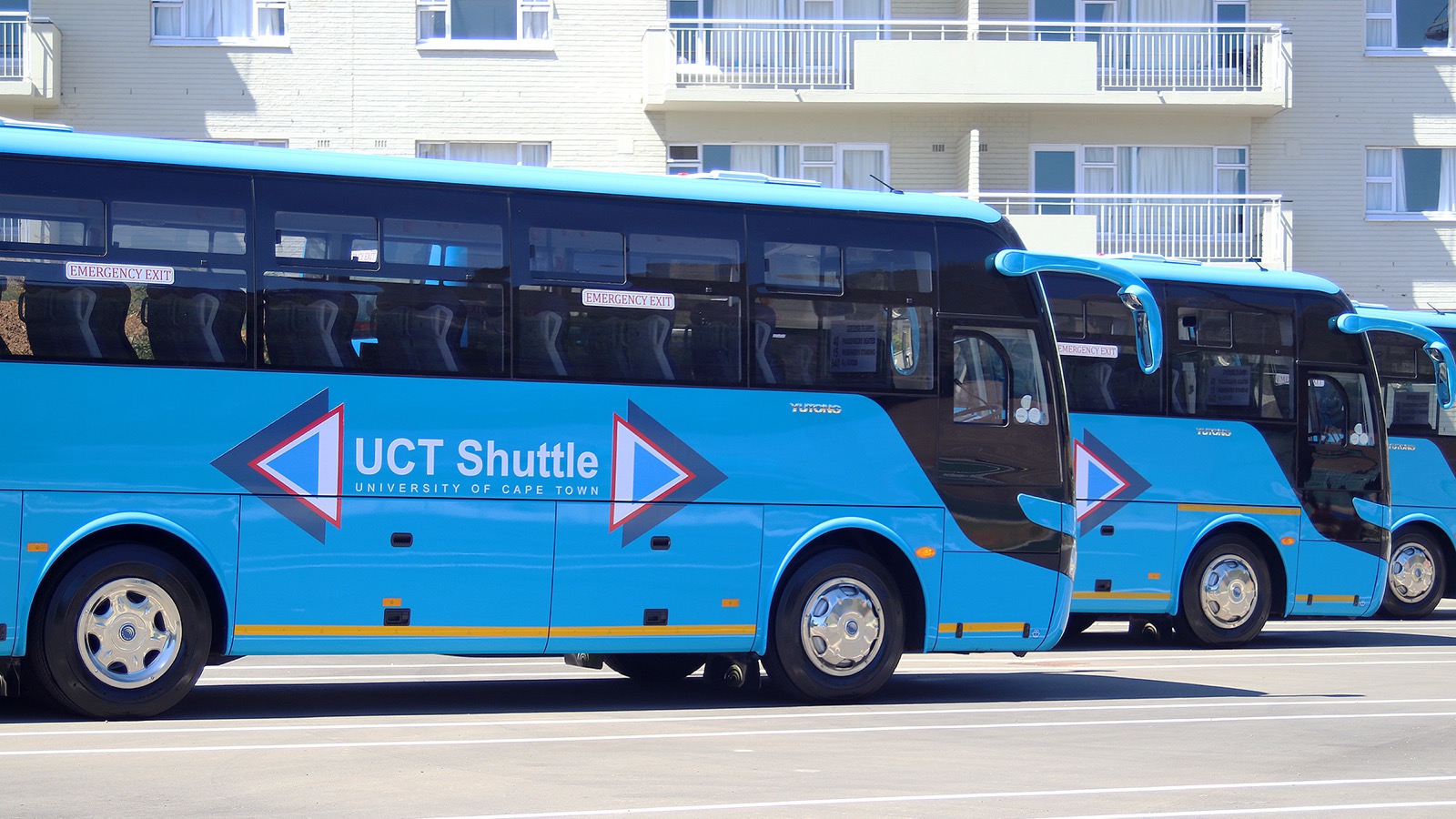
Following a competitive procurement process, Yutong buses were selected for their superior fuel efficiency and performance. The new fleet was due to be delivered in phases during 2025 and will include nine 40-seater and eighteen 65-seater buses, ensuring the provision of safe, reliable transport services for the UCT community.
Occupational Health, Safety and Environment (OHSE)
The UCT Occupational Health, Safety, and Environment (OHSE) strategy was approved in 2021 by the UCT Executive and refreshed in February 2024. The strategic intent is to attain an international standard of OHSE programmes and practices aligned with the International Organisation for Standardisation (ISO) 45001 and ISO 14001, while ensuring that adequate risk mitigation measures are implemented across UCT. The refreshed strategy was ratified by the Central Occupational Health and Safety Advisory Committee (COHSAC) and approved at the Risk Management Executive Committee (RMEC) meeting in May 2024.
Environmental Sustainability Directorate
The university continued to work actively towards becoming a more environmentally sustainable campus in 2024, aligned with its Vision 2030 strategy, directed by the Environmental Sustainability Strategy, which ultimately aims to guide the university towards becoming a net-zero carbon, water and waste-to-landfill campus by, or before, 2050. While positive progress has been made in 2024, substantial investments in sustainability initiatives will be required in the next few years to meet these long terms goals.
Carbon footprint
In 2024, UCT has remained a leader among South African universities in terms of public reporting on its carbon footprint, being only one of a handful of universities in the country to measure and report publicly on its annual carbon footprint. The report for 2023 was produced and published in 2024. The most important finding of the report is the 20% reduction in greenhouse gas emissions under scope 1 and 2 compared to the 2019 baseline. Substantial further investment in various initiatives over the next 15 to 20 years will be required for UCT to meet its long-term carbon footprint objectives.
Load shedding mitigation
UCT experienced much lower levels of load shedding in 2024. Despite this, the university continued to work on some of its large back-up power projects such as the large battery/solar/generator project at health sciences, for which a tender was awarded and contractor appointed. This project will see the entire health sciences campus backed up by one central battery system that will also include a diesel generator and solar power to support the battery system.
The university continued with its solar PV rooftop installation project in 2024, which saw the installation nearing completion at the Baxter Theatre, the UCT Graduate School of Business (GSB) and the Meulenhof administration building, totalling close to 300 kW peak. The health sciences solar PV system design was also started in 2024.
Energy wheeling
In December 2024, UCT issued a tender that would see the university wheel most of its energy supply for the main campus and health sciences campus from wind and solar energy farms around the country. The tender would be adjudicated in early 2025 but would likely only see such renewable energy being made available in late 2026 or early 2027. Renewable energy wheeling is an important component of UCT’s environmental sustainability and financial sustainability strategy, as it will allow UCT to purchase electricity from Independent Power Producers (IPPs), that could save the university a few million rands annually and tons of carbon emissions every year.
Green building and construction
In late 2024, UCT’s Hasso Plattner School of Design Thinking Afrika (d-school Afrika) achieved its second 6 Star Green Star rating from the Green Building Council South Africa (GBCSA), this time the 6 Star As Built rating – this is a first for any academic building on the continent.
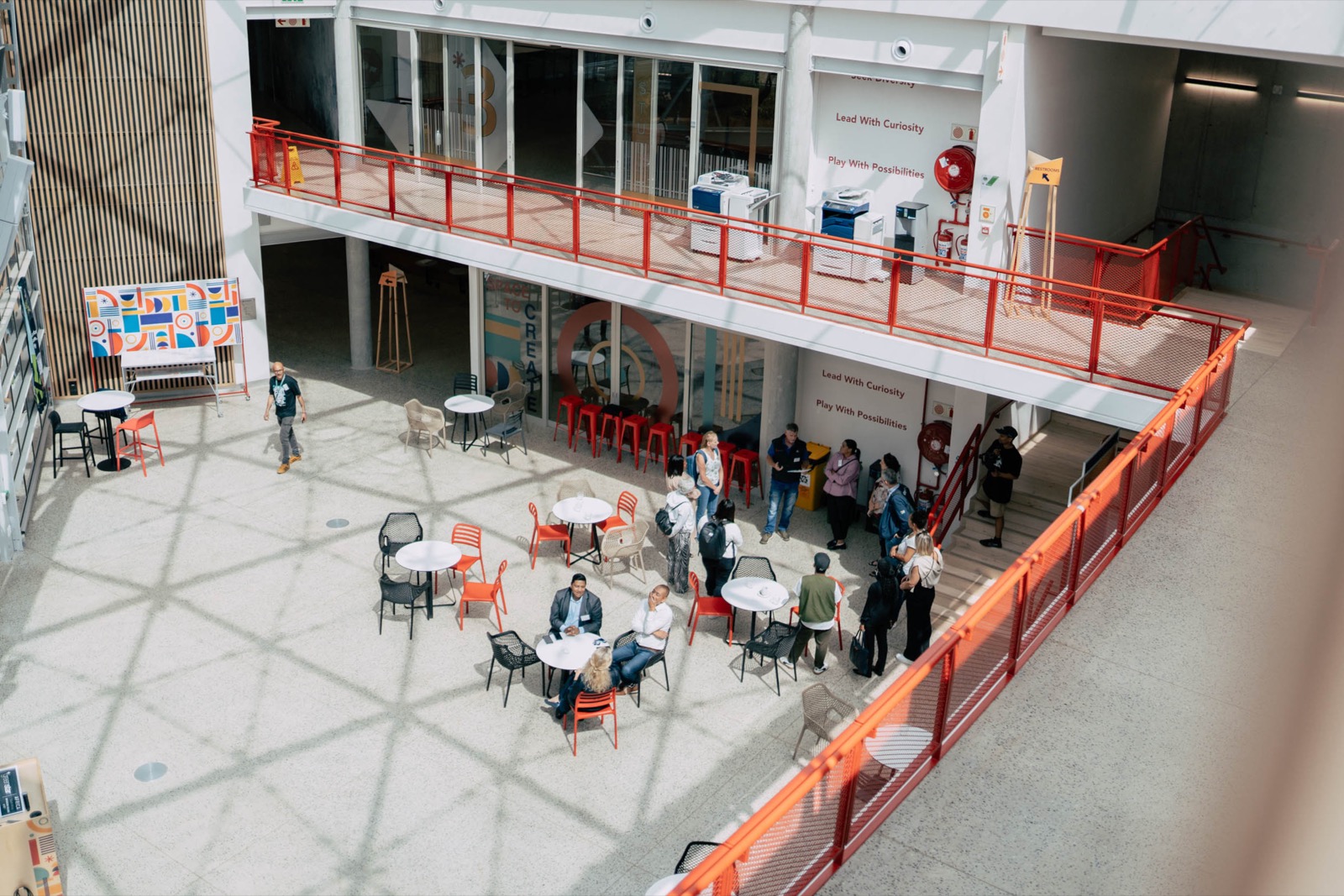
While no new buildings were built in 2024, there are several that are in their planning stages, all targeting green building certification, including the Nelson Mandela Memorial Centre & Public School of Governance on upper campus, the Arise Building on the health sciences campus, the refurbished library and the Green Precinct Water Recycling Facility, which is targeting a 4 Star Green Star certification and several net-zero ratings from the GBCSA.
Sustainable water management
The university’s Sustainable Water Management Strategy saw positive progress being made in 2024 on the design of the on-site sewage water recycling facility on lower campus next to the Kopano residence. This will be combined with a Future Water learning centre surrounded by a beautifully landscaped area for student amenity, cultural practices and places of respite. This will be a first for any university in the country and a global leading example of combining sustainable water management with education and places for respite and amenity. This “green precinct” is earmarked for completion at the end of 2025.
Khusela Ikamva
The vice chancellor’s (VC) Khusela Ikamva Sustainable Campus project continued to make positive progress in 2024, with constructive research collaborations continuing with key operational staff on campus, focused on energy, water, waste and more sustainable behaviours. The project has also had a significant impact on two recently appointed new contractors for Integrated Waste Management and for Integrated Pest Management, which is a first for any academic campus in South Africa.
Employment equity (EE) and diversity
P&S has an active Transformation andEE Committee representing all units, pay classes, genders, and race groups, to ensure diversity and inclusion. Meetings are held quarterly, creating a space to discuss EE matters; provide training; build culture; and plan initiatives. The P&S EE Plan set progressive targets for 2022–2026, with demographic data monitored across units against EE targets, and strategies being adjusted regularly to strengthen diversity efforts.
Information Communication and Technology Services (ICTS) Department
UCT ICT Strategy
The UCT ICT Strategy – approved by Council in late 2022 – aims to transition ICT from a technology-centric focus to a human-centric focus, in alignment with Vision 2030. Implementation is being carried out via 13 programmes of work, overseen by the ICT Strategy and Portfolio committee, a representative body including all major ICT stakeholders, with the purpose of prioritising projects and monitoring the execution of the strategy.
In 2024, the ICTS Project Register included between 62 and 114 projects, including multi-year CAPEX-funded projects. Twenty-two projects and 38 managed work items were completed. Many of these projects are owned by units outside of ICTS and are undertaken in collaboration with those units.
A sample of key projects nearing or at completion include:
- the upper campus data centre refurbishment
- the network renewal project
- storage infrastructure renewal
- the fifth and final phase of project Harambee
- SAP e-invoicing
- digital certificates portal for students and a verification portal for employers
- AI agent functionality for the UCT Cares chatbot
- phase 2 of the Online App Renewal which resulted in over 8 000 applications for 2025 admissions.
ICTS training
The ICTS training team ran 73 online training sessions attended by 869 UCT staff members, covering a range of IT applications and systems such as Drupal, Excel and Microsoft software. In 2024, 3 266 LinkedIn Learning online courses were completed, with 181 903 videos viewed. The most popular courses were Excel, Python and Graphic Design.
IT and classroom support services
The ICTS Service Desk resolved 48 470 incidents and service requests from IT users, and the university switchboard took 17 265 telephone calls. The Classroom Support Services team handled 2 926 support calls and continued their initiative to replace projectors. Unfortunately, they also had to replace equipment stolen just before the start of the 2025 academic year. ICTS has completed the planning and budget proposal for a multi-year project to refresh existing technology in 109 centrally bookable classrooms.
Information and cyber security
The implementation of multi-factor authentication has helped to counter account compromise.
UCT approved a multi-year programme to implement an Information Security Management System (ISMS) based on ISO/IEC 27001:2022. Consultation and stakeholder engagement on draft policy is complete and policies are currently being revised for submission into the UCT approval process.
Financial constraints, however, have resulted in a two-year extension (to July 2027) to the project’s end date.
ICTS-on-Main collaboration meeting room
The ICTS building was equipped with a new collaboration meeting room for use by UCT staff. It boasts reconfigurable movable furniture to facilitate interactive group work.
Events
At the First-Year Campus Reception, ICTS distributed 1 495 preconfigured laptops to new students. The training team also presented information about UCT’s IT services to 2 712 students.
ICTS once again hosted the 6th annual Cyber Security Symposium Africa, attended by almost 100 individuals from higher education, as well as the public and private sectors.
ICTS organised a tech extravaganza, the ICTS TechFest in September. The two-day event included informative presentations and provided UCT’s preferred IT vendors with the opportunity to showcase their latest product offerings.
Cost optimisation
ICTS continued efforts to optimise IT costs, despite cost-increasing changes in vendor pricing models and the growing use of ICTs in all areas of UCT activities.
ICTS prepared a procurement policy (taken to UICTC in 2025) that replaces the current “choose your own device” model with a standard device offering. This will reduce delivery and repair time, minimise procurement inconsistencies and waste, improve support and achieve a conservatively estimated R5 million annual saving. Importantly, the policy includes a simplified pathway for specialised research or teaching needs.
ICTS has been working with the Zero-Based Procurement stream of the Ivy Helix Project, examining top spend in hardware, software, networking, telephony, and printing.
A working group was established to respond to the increased cost of all forms of storage and to address policies of data retention.
Relationship management
A key initiative linked to the ICT strategy’s principle of user-centricity is maturing relationship management practices in ICTS. Progress includes a system to record such interactions, and the launch in 2025 of a “day in the life” project, which started with interviewing various members of the UCT community in different roles to understand their awareness and use of IT services and systems, their frustrations, their preferences, and their needs.
In its annual building visits effort, ICTS staff members spent four days visiting 380 UCT staff members in 10 buildings on upper campus. The teams provided the latest ICTS updates and offered one-on-one support and assistance.
ICTS staffing
ICTS made 27 appointments in 2024, bringing a diverse range of new talent to the department. As all of these were in line with EE targets, these appointments represent significant strides in advancing transformation.
Recruiting IT staff to higher education institutions in South Africa, however, continues to be challenging for scarce posts. The key barriers are a national shortage of skilled IT professionals and better offers from both national and international employers. In response, ICTS is developing a multi-pronged strategy in collaboration with the HR Business Partner (HRBP). Key elements including offering flexible work, benchmarking, streamlining hiring processes internally, accelerating career development opportunities for internal staff, regular ‘stay’ interviews and a staff recognition programme.
HR department
In 2024, the HR department continued to deliver core services across the employee lifecycle, ensuring stability and continuity of operations during a period of leadership transition, within HR and the executive. Key HR processes were maintained; however, progress on major strategic initiatives was limited.
Recruitment of leadership positions
HR strategically supported the appointment of key leadership roles – including the vice-chancellor, deputy vice-chancellor: Teaching & Learning, executive director: Communication & Marketing, and dean of the Faculty of Science – through inclusive, consultative processes that reflected UCT’s commitment to transformation, academic excellence, and institutional sustainability.
Talent management
Several pilot projects focusing on succession planning and career mobility were rolled out, the findings of which will be used to inform policy and practice in the future. Employee engagement tools (such as stay and exit interviews and transition planning toolkits) were implemented. An in-depth audit of scarce and critical skills and positions was conducted, allowing us to focus our talent management strategies on these key priority areas, as well as improve reporting to government bodies.
Staff development
The Department of Higher Education and Training (DHET) continued to provide support, funding six-month graduate internship opportunities that were facilitated through the Staff Learning Centre. This resulted in the successful placement of 29 graduate interns across 15 departments. Additionally, staff continued to benefit from access to Education, Training, and Development Practices (ETDP) SETA discretionary grant awards, providing accredited development opportunities. In collaboration with the UCT GSB, the Staff Learning Centre launched the Finance for Non-Finance Managers programme, and a second Digital Transformation leadership programme. Through a partnership with the ASISA Foundation, the Staff Learning Centre introduced the WageWise Financial Education Programme (for PC01–PC06 staff), for the development and enhancement of financial literacy skills. Succession mapping and career mobility practices were also piloted, utilising in-house technology developed by the Organisational Development team.
HR policies
The review of key HR policies was initiated to ensure alignment with institutional priorities and responsiveness to emerging needs. This includes the leave policy, a mental health policy to support employee well-being, and the retrenchment policy which seeks to align the UCT restructuring, redundant and retrenchment process with the provision of the Labour Relations Act. In addition, HR also initiated the review of the grievance policy which seeks to provide a uniform and consistent process for both PASS and academic staff and the incapacity policy which outlines the procedure to manage ill-health and injuries in the workplace.
Health and well-being
Counselling services were provided by the Lyra and the South African Depression and Anxiety Group (SADAG), supported by onsite psychologists and social workers. The Dis-Chem Wellness Centre was opened offering access to affordable healthcare through clinic services and a virtual doctor to Kaelo members.
Client services
HR client services undertook a review of the HRBP and HRBP manager portfolios to increase capacity to provide an improved, client-centric service to clients. This was implemented in February 2024 and is yielding positive progress to the client bases.
Wage negotiations and Commission for Conciliation, Mediation and Arbitration
(CCMA) matters
Wage negotiations between UCT and the Academic Union were successfully concluded in 2024. The agreement provided a 5.6% increase for lecturers and senior lecturers, and a 5.7% increase for associate professors and professors to address the gap to the 75th percentile. The agreement included a commitment to return all ranks of academic staff to the benchmark of the 75th percentile of our comparator circle over the next three years (2025 to 2027), using an incremental approach. The 5.6% was extended to employees on PASS conditions of service. Employee relations managed to successfully defend CCMA cases with 30% cases in favour of UCT and 63% pending cases due to CCMA turnaround time in closing matters. There were no labour court referrals for the reporting period.
Digitalisation and process improvements
The HR automation journey has progressed, albeit gradually, with a focus on leveraging existing system functionality to streamline manual processes. While broader system transformation remains a longer-term goal, targeted interventions have been implemented to reduce the administrative burden and enhance efficiency within current resource constraints.
 This work is licensed under a Creative Commons Attribution-NoDerivatives 4.0 International License.
Please view the republishing articles page for more information.