
Wamkelekile, Welkom
Universities must prepare graduates for a world of perpetual upskilling
30 September 2026 | Story Myolisi Gophe. Photos Je’nine May. Read time 7 min.
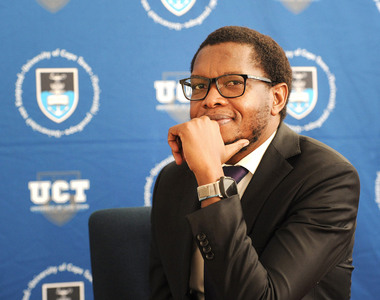
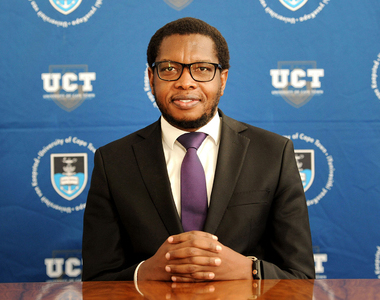
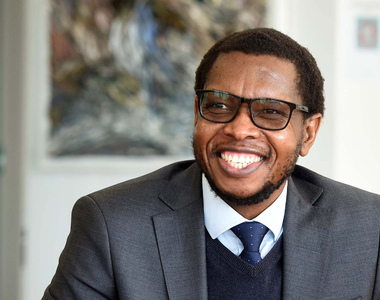
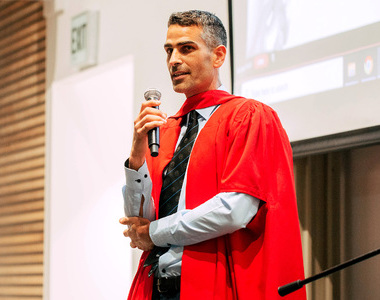
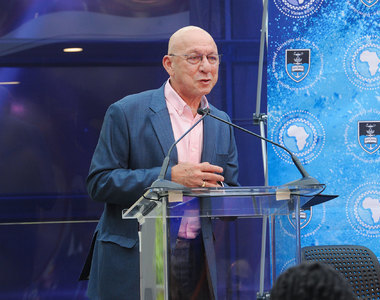
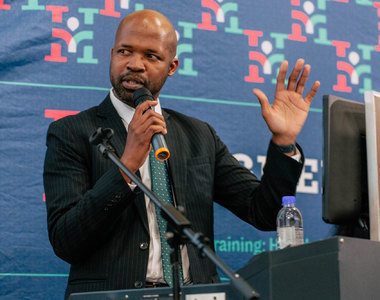
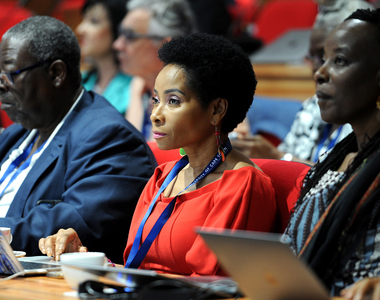
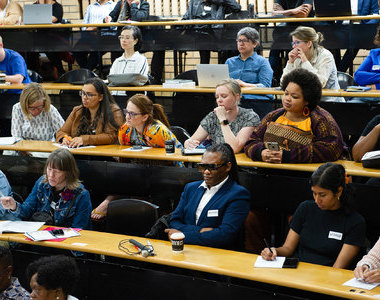
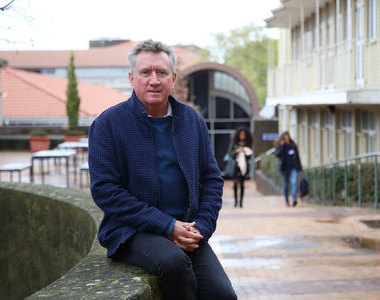
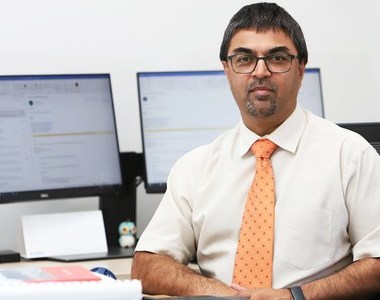
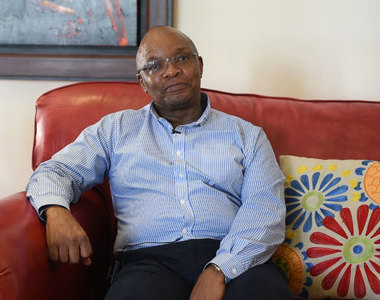
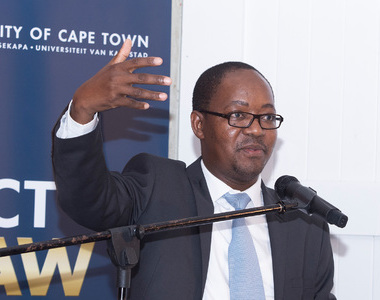
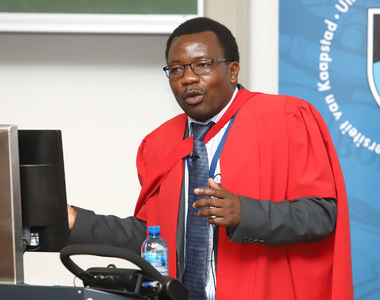
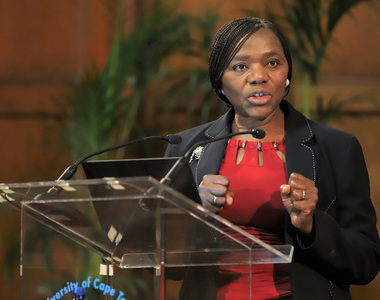
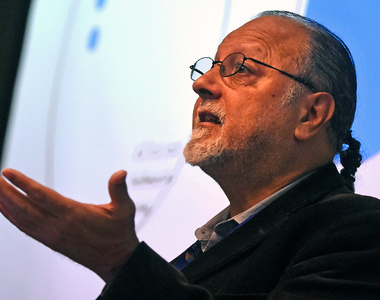
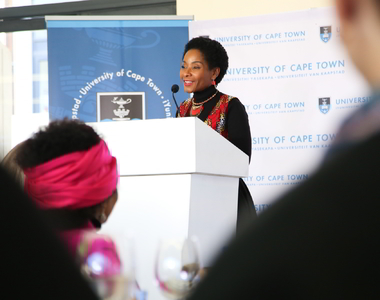
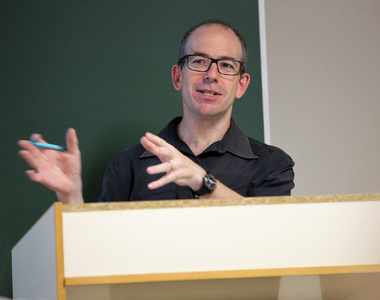
Universities must rethink how they prepare students for a rapidly changing world, moving beyond traditional notions of employability. They must foster innovation, entrepreneurship and a commitment to lifelong learning, Professor Thokozani Majozi told delegates at the Times Higher Education (THE) World Academic Summit in Cape Town.
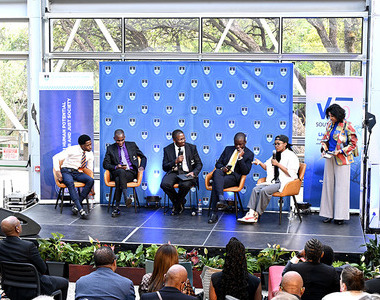
Speaking on a panel exploring “Purpose and public value: How can higher education and research keep pace with a modern world?”, the University of Cape Town’s (UCT) deputy vice-chancellor for Research and Internationalisation argued that innovation and entrepreneurship should be integral to the academic project, rather than treated as an add-on to research.
His intervention came amid a broader discussion about the changing relationship between universities and society, with panellists from institutions in Australia, Spain, Norway and Japan reflecting on public trust, artificial intelligence (AI), employability and universities’ responsibility to address societal challenges.
For Professor Majozi, trust is the starting point. “When we talk about public good, and talk about society as a whole, as an institution, we are talking about trust,” he said.
“AI becomes a problem when it is not only a tool but a master.”
Universities, he argued, need to ensure that the problems they seek to solve are genuinely rooted in the societies they serve.
“Our problem statement must be the same problem statement we would get if we were to ask our societies to explain it to us. It must not be our own imagination as a university community.”
The same principle, he said, should apply to the solutions universities produce. Research should not only address real-world problems but should also be communicated in ways that people beyond academia can understand and use.
“Language becomes another dimension in any of the trust,” he said, stressing the importance of making knowledge accessible beyond scholarly publications.
AI must remain a tool, not the master
This responsibility takes on added significance in the age of AI. While AI is rapidly changing how knowledge is accessed and produced, Majozi cautioned against allowing technology to dictate the purpose of universities.
“AI is a tool,” he said. “AI must make what we seek to deliver easier to do.”
The danger, he suggested, comes when the relationship is reversed.
“AI becomes a problem when it is not only a tool but a master.”
The test of technology is ultimately whether it helps universities serve society more effectively and improves the lives of communities.
This same emphasis on societal purpose informed his remarks on educating future graduates.
Responding to a discussion about preparing students for work in an unpredictable environment, Majozi highlighted the growing importance of innovation and entrepreneurship.
“The role of entrepreneurship and the role of innovation can be over-emphasised,” he said.

At UCT, this thinking is reflected in what Majozi described as a fourth mission for the university, alongside its traditional missions of teaching and learning, research and internationalisation, and people, country and society.
“The idea is that we place research and entrepreneurship at the centre of the academic project,” Majozi explained.
He cautioned against viewing innovation simply as an outcome of research or as something confined to particular academic programmes or research environments.
“Innovation is simply a product of out-of-the-box thinking and that can happen at any level,” he said.
A first-year student, for example, can develop an idea with significant potential. Innovation, therefore, should not be understood as the exclusive domain of established researchers or postgraduate students.
“Entrepreneurship is very, very important,” Majozi said, while also acknowledging that not every student will become an entrepreneur or innovator.
Preparing graduates for perpetual upskilling
What universities can do, he argued, is equip every graduate with the ability and mindset to continue lifelong learning.
“If there’s one thing we can all do for our students, it is to make sure that we train them for perpetual upskilling.”
A university degree, he said, should be understood as the beginning rather than the end of a person’s learning journey.
“The degree that they get is just the beginning. It cannot serve their entire career. They have to upskill themselves on an ongoing basis.”
This ability to continually acquire new knowledge and skills will be essential as technology, industries and societies change.
Majozi’s comments resonated with other panellists, who similarly challenged universities to reconsider what students need from higher education.
What’s needed from universities
Professor Dag Olsen, rector of UiT The Arctic University of Norway, argued that universities should not simply prepare graduates to fill existing jobs or adapt to change but also equip them to drive change. He emphasised critical thinking, analytical ability, creativity and entrepreneurship, as well as the ability to work across disciplinary boundaries and engage with real-world problems.
Professor Jessica Gallagher, deputy vice-chancellor for International and External Engagement at Adelaide University in Australia, highlighted the need for universities to focus on public value rather than institutional interests. Research and education, she said, create value when they are taken up, adapted and implemented in ways that make a tangible difference to people and communities.
Professor Joan Olmos, rector of the University of Barcelona, brought a historical perspective to the conversation, emphasising the values of universities – including democracy, transparency, academic freedom and knowledge – while calling for renewed attention to human skills in the age of AI.
Dr Ichiro Sakata, executive director, vice-president and vice-provost of the University of Tokyo, highlighted the rapid evolution from machine learning and deep learning to large language models and agentic AI, and the challenge this presents to universities’ ability to maintain trust in academic knowledge.
The importance of trust
Across these perspectives, trust emerged as a recurring theme.
For Majozi, however, trust is not something universities can claim simply by virtue of their institutional status. It must be earned through relevance, accessibility and tangible public value.
Universities are, after all, part of the societies they serve, he said. Their students come from those societies and return to them as graduates.
“We have a duty then to produce a product in the form of a graduate that understands the ethical dimensions of these individuals as they are,” Majozi said.
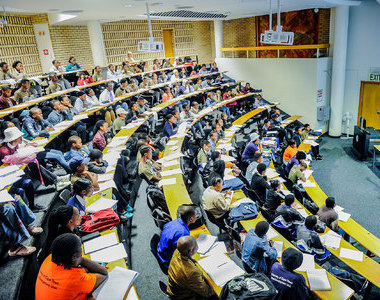
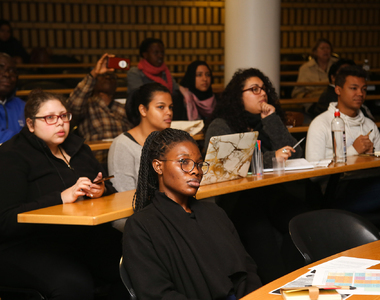
The discussion sparked debate in the audience, with questions about, among other issues, shorter attention spans and AI, which also prompted discussion about rethinking traditional lecture-based teaching. Panellists stressed that universities should create more flexible pathways, including micro-credentials and recognition of prior learning, while continuing to play a leading role in shaping the future of education.
 This work is licensed under a Creative Commons Attribution-NoDerivatives 4.0 International License.
Please view the republishing articles page for more information.