
Wamkelekile, Welkom
UCT project investigates thriving African harrier-hawks
29 October 2026 | Story Ridovhona Mbulaheni. Photo Melanie Cornelius. Read time 6 min.
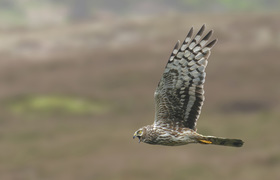
The African harrier-hawk, also known as the Gymnogene, is the focus of a University of Cape Town (UCT) research project investigating how the unusual raptor has established itself in the city and what makes the urban environment suitable for breeding.
This unusual bird of prey that was not known to breed in metropolitan Cape Town until the early 2000s is now nesting across the city, from Simon’s Town to Durbanville, including in leafy suburbs, built-up areas and the city centre.
Working with UCT’s FitzPatrick Institute of African Ornithology, master’s student Lorcan McHarry is leading the Cape Urban African Harrier-Hawk Project. Since the project appealed to the public for sightings in September, researchers have received more than 1 000 reports and have confirmed 13 nests in a matter of weeks.
“Historically, the species was fairly common across southern Africa but was not breeding in metropolitan Cape Town,” said McHarry.
The 13 confirmed nests represent a minimum, rather than an estimate of the city’s total breeding population. McHarry said that more nests remain undiscovered, and the project aims to build a clearer picture of how many breeding pairs the city supports.
A raptor adapted to urban life
The African harrier-hawk has unusual physical adaptations that help it find food in places other birds of prey cannot easily reach. Its narrow skull allows it to push its head into tight spaces, and its legs can bend in both directions at the intertarsal joint, enabling it to reach into nest holes and pull out eggs or chicks.
Its low wing loading also allows it to manoeuvre slowly through dense tree canopies and cling to tree trunks, weaver colonies and buildings while searching for food.
“The African harrier-hawk seems to treat the built environment itself as hunting ground.”
“In a city, those skills open up a huge number of food sources that are typically out of reach for most other birds of prey,” said McHarry. These include nests in roof cavities, gutters, underneath solar panels, in palm trees and in ornamental trees.
The birds appear to eat a wide variety of prey, including chicks of common birds such as weavers, pigeons and starlings, as well as rats, lizards and insects. McHarry and his team will record the prey brought to nests to understand what the birds eat and whether their diets differ between leafy suburbs and more densely built-up neighbourhoods.
“The African harrier-hawk seems to treat the built environment itself as hunting ground,” he said.
Understanding breeding success
The first phase of the study will focus on nesting and breeding, investigating where birds choose to nest in the city, which trees they use, the surrounding conditions and how these compare with what is recorded in natural habitats. It will also examine how successfully they breed in the city, including breeding timing, clutch size, hatching success and how many chicks fledge, as well as what might hold them back in an urban environment.
Most published information on this species comes from summer-rainfall regions of Africa, but Cape Town has a winter-rainfall, Mediterranean climate. The team wants to establish whether the birds have shifted their breeding season in the city.
Longer-term plans include using GPS tracking to understand movement patterns and territories and examining how diet and breeding success vary with urbanisation.
“If some cities can support healthy breeding populations, understanding why could become an important part of how we look after this species.”
The project also places Cape Town’s experience within a broader context of urban raptors. Black sparrowhawks are now well established in the city, crowned eagles breed in Durban’s suburbs, and peregrine falcons increasingly use urban buildings as substitutes for cliffs.
Although the African harrier-hawk is classified as Least Concern globally, its population is suspected of declining in parts of its range. Long-term road surveys have shown that many African raptors have declined sharply outside protected areas, and declines of more than 50% reported for this species in several regions.
“Habitat loss is a major driver,” said McHarry. “That is exactly what makes Cape Town interesting. If some cities can support healthy breeding populations, understanding why could become an important part of how we look after this species, and other wildlife, as Africa becomes more urbanised.”
Public help is key to finding nests
Residents are playing an important role in the research because nests are often high in dense trees and on private property, making them difficult for researchers to locate independently. “Residents see these birds every day,” said McHarry. “The public is effectively an extension of the research team, and their response has had a significant impact.”
Photographs and videos of birds carrying sticks, flying repeatedly to the same tree, carrying food, a pair seen together regularly in the same area and a large stick nest high in a tall tree, often a gum, can help researchers identify possible nest sites and learn more about their behaviour.
“Exact nest locations should be reported to the project rather than shared publicly.”
Residents who suspect a nest in their neighbourhood can report sightings at urbanharrierhawk.org. A photograph or short video, together with the location, is especially helpful.
The project asks residents not to disturb nesting birds. People should observe from a distance, avoid climbing trees or flying drones near nests, and refrain from using calls or recordings to attract birds.
“Exact nest locations should be reported to the project rather than shared publicly. Residents planning to prune or fell trees should check for active nests first and, where possible, wait until the breeding season has ended,” said McHarry.
 This work is licensed under a Creative Commons Attribution-NoDerivatives 4.0 International License.
Please view the republishing articles page for more information.