
Wamkelekile, Welkom
The ethics of artificial womb technology
26 October 2026 | Story Niémah Davids. Photo Unsplash. Read time 7 min.
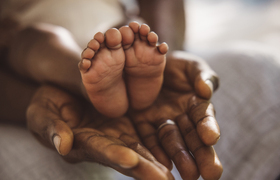
More than four million preterm births occur in sub-Saharan Africa every year. Wholly unprepared for this world, these little ones always need incubator care in a hospital’s neonatal intensive care unit (NICU).
But imagine a world where that transparent box that keeps the infant warm and protects them from germs and bright lights is replaced with artificial womb technology (AWT) – a type of technology that mimics the physiological support of a natural uterus. In brief, AWT is a fluid-filled environment (such as a polymer bag or tank) designed to replicate intrauterine conditions and support foetal physiology in extreme preterm birth cases. As scientists actively research its feasibility in humans, for some, AWT could be a welcome addition to modern medicine. For others, it’s an idea of a dystopian future.
“The scientific purpose and the primary research question at the moment is: can [AWT] improve the survival [rate] of extremely preterm babies?” asked Emeritus Professor Silke Dyer, a professor in obstetrics and gynaecology at the University of Cape Town (UCT).
Professor Dyer posed this question as she delivered a lunchtime lecture titled: “Artificial wombs and the ethics of ectogenesis”. Organised by UCT’s EthicsLab, the lecture was held in the Neuroscience Auditorium on Wednesday, 21 October.
Highlighting the benefits
As the title of her lecture suggests, Dyer focused her discussion on the ethics of partial ectogenesis – the process of growing a foetus outside the human body for a portion of its development. For clinicians and healthcare workers, she said, it’s easy to imagine that a lot of good could come from it. This includes:
- better outcomes for extremely preterm babies
- easier access to foetal therapy
- an alternative to unfavourable intrauterine conditions
- reduced maternal morbidity
- better obstetric and neonatal outcomes
- reduced cost of long-term health.
Elaborating specifically on what AWT means for improved obstetric outcomes for the mother and the baby, Dyer said it would allow early intervention if the mother is unable to carry her baby full-term due to certain health complications.
“I mean, I certainly recall many women in the labour ward who didn’t want to consent to therapy that was in their best interest. They would withhold permission for treatment that could affect the baby,” she said.
The drawbacks
Like with almost anything, there are disadvantages too. Dyer said AWT comes with its own risks and side-effects and the cost associated with the technology is very high. In addition, she said, the maternal–foetal disconnect that comes with partial ectogenesis and its effect on the mother and the baby is a huge concern.
“So, what we all know is that there is a lot more happening [in the uterus] than just gas exchange and an exchange of nutrients between the mother and the foetus,” she said. “But the literature is quite quiet about that, except to say that we don’t understand the full picture of the maternal–foetal ecosystem.”
Further, she added that AWT will also directly impact abortion. By listing several questions, she left her audience with some food for thought.
- Will new limits of viability narrow the window for abortion?
- Could future access to safe abortion be linked to mandatory use of AWT?
- What does the right to abortion imply – not to be pregnant or not to become a parent/mother?
- Will AWT provide greater rights for the genetic father?
“Is it possible that the artificial womb might lower the threshold between liability and viability [for abortion]? It could mean that the current window of access to safe abortion is going to be restricted. In our country, abortion is legal up to 22 weeks. So, maybe that window will come down to 20 weeks, or 18 weeks or 17 weeks. And that will have quite a restricted access on women,” Dyer said.
An impact on reproductive autonomy
Interestingly, Dyer said, the research also questions whether the future would involve governments ruling that access to safe abortions, particularly late safe abortions, should be linked to the mandatory use of the artificial womb.
This, she explained, shines a spotlight on a woman’s right to access abortion, which is underpinned by reproductive autonomy and refers to a woman’s right to make reproductive choices free from discrimination, coercion and violence.
“Is it the right not to be pregnant or is it the right not to become a genetic and biological mother?” she asked. “And that raises the question whether the genetic father, with this new health innovation, may be granted greater decision-making rights than he has at this moment. But reproductive autonomy is going to be impacted in many, many ways.”
The time is now
As she neared the end of her lecture, Dyer said engaging and understanding the topic better is crucial, even though AWT has not entered human trial yet.
“The time is now,” she said.
“Lest we forget, not everything that can be done, should be done.”
As the research continues in earnest, the four pillars of the AREA Framework – a tool used in science to conduct responsible research and innovation – have become increasingly important. Dyer said the framework highlights the importance of anticipating potential difficulties and the impact of new health innovation before they arrive; reflecting on what scientists are doing and why; engaging with all stakeholders; and actively incorporating the technology and insight into adopting and using health innovation and health technology innovation.
“Whether this technology is going to provide net benefit or net harm will also fundamentally depend on the answers to these questions and how the answers and questions are prioritised. Equally, it will depend on how this technology will be incorporated and that speaks to the ethics of caution,” she said. “Lest we forget, not everything that can be done, should be done. And that speaks to the ethics of desirability.”
To date, AWT has not been clinically trialed on humans, and all research thus far has been conducted on animals.
 This work is licensed under a Creative Commons Attribution-NoDerivatives 4.0 International License.
Please view the republishing articles page for more information.