
From the Vice-Chancellor
Addressing the public issuing of judges’ reports
26 October 2026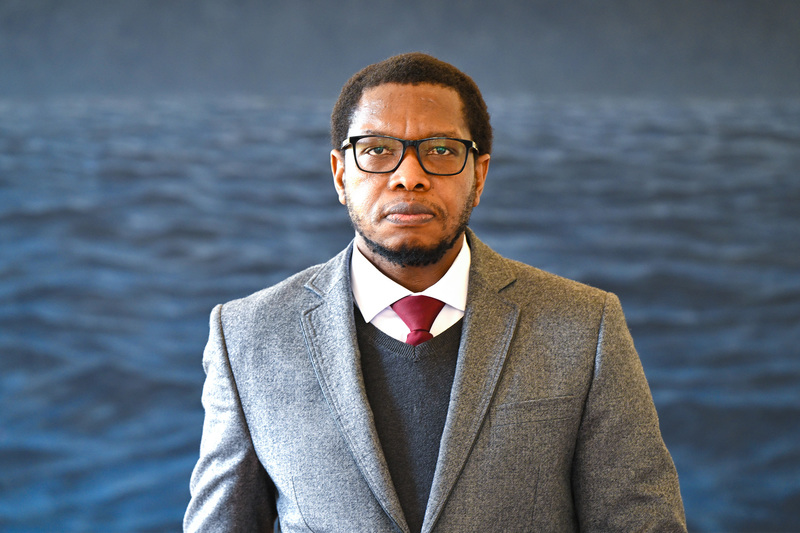
Dear colleagues and students
On 20 October 2026, a Chair's Desk communication from Council was issued, which included links to the reports of Judges Navsa and Wallis on their investigations into complaints against members of Council. One of the reports contained confidential information from the process that led to the appointment of Professor Mohamed Paleker as Dean of the Faculty of Law, including comments made during selection committee and Council deliberations.
Council has since withdrawn the links and apologised to those adversely affected. These were the right steps, and I welcome them. Withdrawal cannot, however, recall what may have already been read, downloaded and shared by some. For the people concerned, the harm is real and it continues.
Over the past few days I have heard from many colleagues, students and alumni who are distressed by what has happened. Their concern is justified. The representations they have raised deserve careful consideration as Council considers the matter further.
Council has a proper and important duty to be open about how this university is governed. When complaints are made against members of a governing body, our community has a legitimate interest in knowing how they were investigated and what was found. I do not question that principle, nor do I question the work of the judges who conducted these investigations.
Transparency must, however, be exercised with care. These principles are not mutually exclusive. Our commitment to transparency must be accompanied by an equally firm commitment to protecting confidential information and the people whose interests may be affected by its disclosure.
The public interest in the investigations did not remove the need to protect personal information about people who were not under investigation. The concern, therefore, is whether adequate safeguards accompanied publication: careful redaction, proper attention to the protection of personal information and consideration for those who would be named.
I want to speak directly about Professor Paleker. He was not the subject of either investigation, and his appointment was not under investigation. It is important that this distinction is clearly understood, both within the university and by those outside it who may have encountered the reports. I chaired the selection committee that recommended him. I remain fully confident in that recommendation and stand unequivocally behind his appointment as Dean. He has my complete confidence and support.
Professor Paleker has served the University of Cape Town (UCT) for 26 years and has made significant contributions as a legal academic, scholar and practitioner. Confidential deliberations concerning his appointment have entered the public domain in circumstances unrelated to any investigation into his conduct or suitability for office. No member of our community should be put in that position. I am deeply sorry for what he has experienced, and I know that many in the Faculty of Law – among its staff, students and alumni – share that distress.
I am also mindful of the impact this has had on colleagues in the faculty, as well as on the reputation of the faculty itself. The Faculty of Law has a long-standing reputation for academic excellence. As South Africa’s oldest law school, the faculty is recognised as a leading centre for legal education and research on the African continent, consistently featuring among the top 150 law schools worldwide. The faculty’s international profile is further strengthened by a range of agreements with universities and institutions across Africa, Europe, North America and Australia, facilitating student and staff exchanges and collaborative research.
I am further mindful of the members of the selection committee and others whose confidential contributions have been exposed. Selection committees depend on the assurance that deliberations will be treated confidentially and that information will be disclosed only where lawfully authorised and appropriately safeguarded. That trust protects the fairness of every appointment we make. To everyone who serves on, or comes before, a selection committee at UCT: confidentiality remains a firm commitment of this university.
What has happened must lead to practical improvement. This calls for clear protocols for the review, redaction and release of sensitive material, including appropriate procedures for notifying affected individuals where legally permissible and reasonably practicable. As Vice-Chancellor and a member of Council, I remain committed to working constructively with our governance structures to ensure that these safeguards are strengthened.
UCT asks a great deal of the people who serve it. In return, they are entitled to expect that every part of this institution, its Council and its executive alike, will treat their dignity with care. Openness and respect for people are both part of who we are, and we must hold ourselves to both. I am confident that we will learn from this together, and that the university will be stronger for it.
Sincerely
Professor Mosa Moshabela
Vice-Chancellor
Read previous communications:
 This work is licensed under a Creative Commons Attribution-NoDerivatives 4.0 International License.
Please view the republishing articles page for more information.