
Wamkelekile, Welkom
South Africans spend up to R1m on weddings and R140K on tombstones
08 October 2026 | Story Thami Nkwanyane. Photo iStock. Read time 6 min.
South Africans’ love for celebration is driving a multibillion-rand economy, but a “party now, worry later” mindset is putting increasing pressure on household pockets. A new study by the University of Cape Town’s (UCT) Liberty Institute of Strategic Marketing titled “The Celebrations Economy 2026” explores why South Africans celebrate, how much they spend and what this means for businesses and marketers.
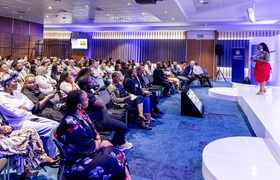
At the launch of the study at UCT’s School of Economics in the Faculty of Commerce on Friday, 2 October 2026, attendees heard that South Africans spend hundreds of billions of rands on celebrations every year.
The study estimates that celebrations are an economic driver, with over R500 billion spent on them annually. Consumers are expected to spend R289 billion this festive season, according to the Wonga Summer Spending Survey.
“The study shows that South Africans continue to embrace celebrations, and it’s easy to see why. Beyond being a significant economic driver, celebrations keep us connected, strengthen our relationships and provide a much-needed release from the pressures of everyday life. They are also one of the few times when we come together as equals, and social hierarchies temporarily fall away,” said Paul Egan, managing consultant at the UCT Liberty Institute.
The study also found examples of people who can spend up to R1 million on their wedding, R70 000 on a homecoming ceremony (initiation) and R140 000 on a tombstone unveiling.
A related study found that 9 000 weddings were held over 32 days between 1 April and 2 May in South Africa’s nine provinces, with Gauteng leading the pack with 2 070 weddings, followed by the Western Cape at 1 970, KwaZulu-Natal at 1 200, North West at 810, Eastern Cape at 780 and Limpopo at 690.
Mpumalanga, the Free State and the Northern Cape registered the fewest weddings at 580, 540 and 360 respectively.
Important source of economic development
“In a country dealing with high unemployment, the celebration economy has become an increasingly important source of economic development,” said Associate Professor James Lappeman of UCT’s Liberty Institute.
“I think overseas people don’t realise the importance of celebrations to us. It’s a chance to escape our harsh realities,” one of the respondents to the study said. “I’ve lived all over the world and there are few people that celebrate like we do,” said another respondent.
The ZCC Moria pilgrimage is said to inject R5 billion into the economy with R2.5 billion going to the taxi and bus industries, R1.5 billion to food vendors and retail, and R1 billion to church missions and local trade.
“My mom scrolling on Instagram dm’ed a lady who recommended the elderly man for the intonjane.”
Speakers at the launch covered a number of themes, including what defines a celebration; the technology and digital platforms used to plan and execute celebrations; and the various forms of celebrations, including but not limited to baby showers, baptisms, birthdays, imbeleko, Ramadan, graduation parties, ukuthwasa, weddings, ulwaluko, intonjane and Diwali.
Some of the respondents in the study shared their experiences with how digital platforms are used in celebrations: “I don’t know how people planned parties before WhatsApp”; “We shared information on where and when on Instagram”; and “My mom scrolling on Instagram dm’ed a lady who recommended the elderly man for the intonjane”.
Findings
The study found that many celebrations have become more modern, often bigger and more elaborate, and influenced by global trends. Younger generations are said to often make celebrations more expensive and stylish.
Success is usually framed around guest enjoyment and how people feel. When asked what best described how respondents felt after the most recent celebration, 66.3% said they felt pure joy, 57.7% gratitude, 55.4% excitement, 41.9% deep connection and 16% said the celebrations came with a bit of stress.
“Celebrations are an economic driver … They are powerful, consistent drivers of spend.”
The study found that for most South Africans, celebrations are a social necessity rather than a luxury. They buy connection, recognition and inclusion.
“The Celebration Economy challenges us to stop looking at consumers only through income and demographics. To truly understand South Africa, we need to understand the rituals, emotions, relationships and cultural meanings that influence how people spend,” said Dr Tumelo Chaka, chief marketing officer of United Stations and one of the speakers at the launch of the study.
Social fabric of society
Martin Neethling, former chief marketing officer at PepsiCo-Africa and currently a consultant, said celebrations are far more important to the social fabric of our country. “Celebrations are much more than what appears on the surface. Celebrations are an economic driver, and I guess that’s why we’ve got some interest in this. They are powerful, consistent drivers of spend.
“They reflect what people care about. But where I’m going to start is suggest to you that celebrations are much more important than that. The driver here is much deeper and it reflects something of our human condition. And to ground that, let’s just think for a moment what a world would be like without celebration. Imagine that. What would life be without celebrations?” he asked.
Neethling said COVID-19 taught us that life is unpredictable and that we should use every opportunity to celebrate moments.
“Well, we really need to connect with people. That was the fundamental learning out of this. So, let’s just then pause and ask what appears to be rhetorical in celebrating good for us,” he said.
 This work is licensed under a Creative Commons Attribution-NoDerivatives 4.0 International License.
Please view the republishing articles page for more information.