
Wamkelekile, Welkom
UCT summit to open doors for Africa
29 September 2026 | Story Myolisi Gophe. Photo Times Higher Education. Read time 8 min.
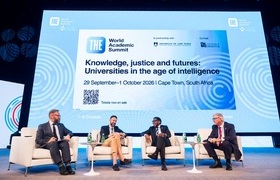
The University of Cape Town’s (UCT) decision to host the Times Higher Education (THE) World Academic Summit could deliver benefits far beyond the institution’s own campus. The event is expected to strengthen Cape Town’s global profile, create new academic partnerships and give African universities a bigger voice in shaping the future of higher education.
The summit, which started on 29 September, will bring together university leaders, policymakers, industry representatives, civil society and student leaders from around the world.
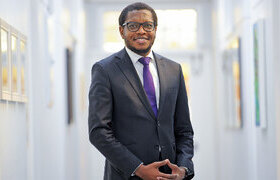
For UCT Vice-Chancellor (VC) Professor Mosa Moshabela, however, the significance of hosting the gathering lies not simply in attracting influential figures to Cape Town, but in what the university and the continent can do with the platform.
“It’s one thing being a leader on the continent on paper because of rankings from Times Higher Education, but it’s another thing being a leader in terms of creating platforms and space for others on the continent to partake in that space,” Professor Moshabela said.
He said hosting the summit allows UCT to use its international standing and networks to ensure that African and Global South perspectives are represented in discussions that will influence the future of universities.
UCT is ranked as Africa’s leading university by THE, making the relationship with the global rankings organisation strategically important to the institution.
But Moshabela said the university’s leadership role should not be measured only through rankings.
He described the summit as an opportunity for UCT to exercise its “convening power” by creating space for universities across Africa to participate in a high-level international forum.
“We see that as a privilege,” he said.
The long-term ambition is for the experience to encourage other universities on the continent to host major international academic gatherings themselves.
“We can share these lessons with them,” Moshabela said. “They can also host major events. We can partner with them and work with them for them to do this.”
A boost for Cape Town and the Western Cape
The impact is also expected to extend beyond higher education.
With international university leaders and other delegates travelling to Cape Town, the summit is likely to benefit the city’s hospitality, tourism and events industries while showcasing the Western Cape’s ability to accommodate major international gatherings.
Moshabela said UCT’s partnership with the City of Cape Town and the wider events industry was key to making the summit possible.
“There is a lot of support. So, we are contributing a lot to the economy of the Western Cape in doing so,” he said.
“If they have, for example, considered forming partnerships with certain institutions … they will have an opportunity to meet, greet and connect with those leaders.”
He pointed to the involvement of hotels, tourism companies and event organisers in discussions about the importance of attracting major events to the province.
For Cape Town, the summit therefore represents an opportunity to reinforce its position as a destination not only for leisure tourism, but also for global academic and intellectual exchange.
Moshabela said the event could also show that UCT and Cape Town have the infrastructure and expertise to host events of international scale, potentially opening the door to more conferences and global gatherings in future.
“There will be more events that are coming to UCT and to Cape Town,” he said.
Partnerships that could outlast the summit
Perhaps the most significant long-term benefit for UCT and participating institutions could come through the relationships established during the summit.
The event will place university leaders from countries and regions across the globe in the same space, creating opportunities for new research collaborations, student exchanges, institutional agreements and other partnerships.
The VC urged delegates to make full use of the networking opportunities.
“If they have, for example, considered forming partnerships with certain institutions, whether it be in Colombia, be it in Kazakhstan, be it in China or Japan or on the continent, they will have an opportunity to meet, greet and connect with those leaders,” he said.
He described these relationships as an important form of social capital that can increase universities’ impact on society.
UCT’s own partnership with the University of Bristol, which is co-hosting the summit, illustrates the potential value of such international relationships.
“It’s not every day that you will have the many university leaders in one room.”
Moshabela said partnerships could ultimately become a vehicle for universities to expand their reach and impact long after delegates leave Cape Town.
The summit will also allow UCT to influence global discussions about what universities should look like in the future.
Its theme focuses on knowledge and higher education in the “age of intelligence”, with artificial intelligence expected to be among the forces shaping discussions about the sector.
But the agenda will also touch on innovation, entrepreneurship, geopolitics, migration, academic mobility and the changing relationship between universities and society.
Moshabela believes universities must evolve beyond their traditional roles of teaching, research and service.
“The fourth-generation university has to now add innovation and entrepreneurship as a core mission of what a university does,” he said.
He sees the summit as a rare opportunity to place these questions before a concentration of global higher education leaders.
“It’s not every day that you will have the many university leaders in one room,” he said.
A platform for difficult conversations
Hosting the summit could also allow South Africa and the continent to elevate issues that directly affect the future of higher education.
Moshabela highlighted migration and the movement of students and academics as issues that universities can no longer afford to treat as peripheral.
He said restrictions on mobility could threaten universities’ ability to attract and retain talent and participate in international academic networks.
The summit, he argued, can create a space for university leaders, policymakers and diplomatic representatives to confront these challenges and potentially influence future policy.
“The fourth-generation university has to now add innovation and entrepreneurship as a core mission of what a university does.”
“If our academics or our students struggle with movement, not just here on the continent, but across the world, it can threaten the future of our universities. So, the World Academic Summit needs to create that space to benefit long-term decisions and interventions in response to some of the challenges we face.”
UCT is also seeking to extend the summit’s reach beyond those able to attend in person.
While not every session will be open to a wider audience, he said the university is committed to ensuring the summit is as inclusive as possible.
The approach is consistent with UCT’s broader ambition: to use the event not simply as a showcase for the university, but as a platform with wider continental impact.
For Moshabela, the real measure of success will therefore be what remains after the international delegates have departed: stronger partnerships, greater visibility for African universities, more opportunities to host global events and a stronger voice for the continent in determining the future of higher education.
 This work is licensed under a Creative Commons Attribution-NoDerivatives 4.0 International License.
Please view the republishing articles page for more information.