
Wamkelekile, Welkom
‘Innovation without access is pointless’
07 September 2026 | Story Thulani Gqirana. Photo Lerato Maduna. Read time 6 min.
The University of Cape Town’s (UCT) Holistic Drug Discovery and Development (H3D) Centre has added another accolade to its growing success. The centre has received significant funding to participate in a US$60 million global consortium to fight antimicrobial resistance (AMR).
The centre will receive more than £1.5 million over three years from the Wellcome Trust and they already have plans for it. The grant and grant activities form part of the broader Gram-Negative Antibiotic Discovery Innovator (Gr-ADI) initiative, which is a joint effort on the part of Wellcome, the Gates Foundation and the Novo Nordisk Foundation.
The Gates Foundation separately provided six months bridging funding to H3D for the team to get started with the research while the Wellcome funding process was going on separately. Announcing the funding earlier this year, Wellcome, the Gates Foundation and Novo Nordisk Foundation said projects would receive funding based on their potential to transform antibiotic discovery for Gram-negative bacteria, one of the leading drivers of AMR-related deaths worldwide.
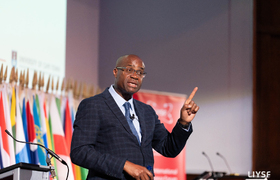
Professor Kelly Chibale, the director of H3D, said the funding is a major boost to the centre’s ongoing research efforts and will benefit not just the university but potentially the man on the street.
The centre’s focus for this project is precision antibiotics against a single pathogen and the global Gr-ADI consortium they are now working with will function as a first-of-its-kind consortium focused on discovering novel antibiotics to combat AMR.
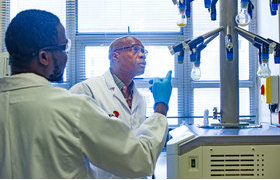
Professor Chibale is very proud of the centre’s work in getting the funding. He said the application process was brutally competitive, with hundreds of applicants from around the world. But he believes they got it because of several factors, including H3D’s proposed project, the team, track record, and experience. “As a team, we bring to the consortium industry-standard drug discovery expertise and experience.”
He’s very passionate about their work and can spend 30 minutes or more (and did) explaining pathogens, membranes, cells and their significance to the human body.
The science
Using bacterial infections, which can be picked up from various sources including hospital settings, Chibale explained the importance of novel antibiotics to combat AMR.
“If a certain type of bacteria infects and lives inside a human cell, the antibiotic not only needs to have the ability to cross the membranes of the human cell, but to also get inside it and then get across the bacterial membranes. Bacteria build these cell membranes around them to restrict antibiotic entry by lowering membrane permeability. This way bacteria stop antibiotics from accumulating inside themselves. Even when they can cross the bacteria membranes, they may not accumulate as bacteria can actively remove them via what we call efflux pumps. It is noteworthy that not all bacteria go inside cells and many stay outside on tissue surfaces and in body fluids where they either cause damage by releasing toxins (also known as poisons) or form protective layers known as biofilms,” he explained.
“The significance of this [funding] is that it has scaled our work.”
“If we are successful in the research we are doing, then we will be contributing to an arsenal of novel antibiotics. When I say novel, [I mean] these pathogens have never seen them before, and as such would not immediately figure out how to resist them. This would give us a window of opportunity and buy time before other forms of the pathogen resistant to the once novel antibiotic emerge to render the antibiotic useless.”
He explained that chemotherapy or surgery can lead to patients picking up infections in hospital settings, which are resistant to the antibiotics prescribed. “Whether you are suffering from cancer or any disease that requires you to be hospitalised, in those hospital settings people can pick up these bugs and they can be fatal because they may not respond to existing antibiotics.”
This is what they want to address. “If it is not addressed, this could be worse than COVID-19. The significance of this [funding] is that it has scaled our work in this area, building on our Centre for Translational AMR Research (CTAR) that was already established with initial funding from LifeArc.”
Why this is important
There is a lot of work that goes into novel antibiotics. They don’t just have to think about the infection the patient is carrying, but how the genetic diversity of both the pathogen and human host will affect the effectiveness of the antibiotic.
“Considering this, it’s important to do the work where the patients are to address their unique unmet medical need and ensure access. Innovation without access is pointless,” Chibale said.
Which is why it is so important for a centre working from an African university to be part of this global consortium.
“We urgently need bold innovation and new tools to transform the way we discover antibiotics.”
When they look back at their work at the end of the three-year cycle, they are not expecting miracles. They are not aiming to fast-track a cure or get their names in the spotlight. What they are aiming for is a start.
“At the end of the three years, we need to deliver leads that overcome the permeability and accumulation barriers that have led to antibiotic resistance and provide confidence that we could in future find a candidate [novel antibiotic] that can go into clinical trials,” he said.
“At the end of the three years, the bar is not a cure. It is delivering a starting point or lead. And how do we optimise that lead? What are the issues that need to be addressed around efficacy and safety?”
Alexander Pym, director of infectious disease at Wellcome, said: “Drug resistance is one of the greatest global health threats, particularly for those most vulnerable to infectious diseases. We urgently need bold innovation and new tools to transform the way we discover antibiotics.”
 This work is licensed under a Creative Commons Attribution-NoDerivatives 4.0 International License.
Please view the republishing articles page for more information.